
Quick answer: A SLAP tear is damage to the labrum at the top of the shoulder socket, right where the biceps tendon attaches, and it typically causes deep shoulder pain along with catching or clicking during overhead movement. SLAP tear physical therapy treatment is genuinely the right starting point for most cases, though how well it works depends on the grade of the tear and how it happened. More severe or unstable tears sometimes need surgical repair, which is why a proper assessment matters before assuming either outcome.
If you’re an overhead athlete, a thrower, swimmer, or weightlifter, dealing with deep shoulder pain or a clicking sensation that doesn’t quite match ordinary rotator cuff pain, you’ve probably already come across the term SLAP tear and a fair amount of conflicting advice about what to do next. Some sources make it sound like surgery is inevitable, others suggest physical therapy alone sorts it out completely, and neither extreme is honestly accurate. Here’s a clear, structured look at what a SLAP tear actually is, how SLAP tear physical therapy treatment fits into recovery, and when surgery genuinely becomes part of the conversation.
What A SLAP Tear Actually Is
SLAP stands for superior labrum, anterior to posterior, and it describes a tear in the labrum, the ring of cartilage that lines the rim of your shoulder socket and helps keep the ball of your upper arm bone seated properly. The top, or superior, portion of the labrum is also where your biceps tendon attaches, which is exactly why SLAP tears and biceps symptoms so often show up together.
Overhead and throwing motions place enormous repetitive stress on this specific part of the labrum, particularly during the late cocking phase of a throw, when the arm is positioned back and rotated outward under significant load. This is why SLAP tears are especially common in throwers, swimmers, and weightlifters, sports that ask this exact structure to handle high force through an extreme range of motion, over and over, session after session.
It isn’t purely a throwing athlete’s injury though. A SLAP tear can also happen suddenly, from a fall onto an outstretched arm, a heavy weightlifting attempt, or a forceful pull on the arm, and a more gradual, degenerative version of labral fraying can develop over years in people who never play an overhead sport at all, simply from general wear as the tissue ages. The mechanism behind your specific tear genuinely influences both the type of tear you’re likely dealing with and the treatment approach that makes sense.
Symptoms That Suggest Your Labrum, Not Just Your Rotator Cuff
Most articles on shoulder pain blend labrum symptoms in with general rotator cuff or impingement symptoms, which is genuinely unhelpful if you’re trying to work out which structure is actually behind your pain. A SLAP tear tends to produce a deep, somewhat hard-to-pinpoint ache, often felt more toward the front of the shoulder near the biceps tendon, rather than the more lateral, top-of-shoulder pain typical of a rotator cuff issue.
The genuinely distinguishing feature is mechanical, a catching, popping, or clicking sensation felt deep inside the joint itself during overhead motion, rather than a straightforward ache or weakness in one direction. Pain that specifically flares during the late cocking phase of throwing, or during any position combining shoulder abduction with outward rotation, points more toward the labrum than the rotator cuff. It’s also genuinely common for both to be involved at once, a SLAP tear alongside rotator cuff irritation, and radiating pain down the arm can suggest that overlap, which is exactly why a proper assessment matters rather than assuming it’s purely one or the other.
A clinician assessing for a possible SLAP tear will typically combine your description of when and how the pain shows up with specific hands-on tests that load the labrum and biceps anchor in particular positions, alongside your history of how the pain started. This combination is genuinely more reliable than any single symptom on its own, which is part of why trying to diagnose a SLAP tear purely from an online symptom list rarely gives a confident answer either way.
How SLAP Tears Are Graded
SLAP tears are classified into four main types, and understanding roughly where yours sits matters more than jumping straight to worst-case assumptions. A type one tear involves fraying and wear at the edge of the labrum without it actually detaching, and is seen more often in older or more degenerative shoulders. A type two tear, the most common type by far, involves the labrum being genuinely torn away from the socket, often following a specific traumatic event like a shoulder dislocation or a forceful pull.
A type three tear is sometimes called a bucket-handle tear, where a torn flap of labrum hangs loose into the joint and causes genuine mechanical locking or catching. A type four tear extends into the biceps tendon itself, combining labrum and tendon damage. Knowing which type you’re dealing with, which only a proper clinical assessment and often an MRI can confirm, genuinely changes what treatment makes sense.
Treatment Options, Conservative And Surgical
Type one tears typically respond well to conservative management, and sometimes only need simple debridement if surgery is ever pursued at all. Type two tears, being the most common, are also the type where the conservative-versus-surgical decision is genuinely most individual, many respond well to a proper trial of SLAP tear physical therapy treatment focused on rotator cuff and scapular strengthening, while others, particularly in younger, higher-level throwing athletes, may eventually need surgical repair if symptoms and instability persist despite good rehab.
Type three and four tears, given the genuine mechanical locking and, in type four’s case, the biceps tendon involvement, more often do require surgical repair, though this is still a decision made on your specific presentation rather than a fixed rule. None of this means the reader can self-select a treatment path from a grade alone, it genuinely takes a proper assessment weighing your age, activity level, and how the shoulder is actually behaving to land on the right approach.
Age and activity level genuinely shift this decision too. A younger, competitive throwing athlete with a type two tear and ongoing instability might be steered toward surgical repair sooner than a recreational gym-goer with the same grade, simply because the demands they’re placing on the shoulder, and how much instability they can tolerate before it affects performance, are so different. This is exactly why two people with what sounds like “the same tear” can reasonably end up on different treatment paths.
How Sports Rehab Supports SLAP Tear Recovery
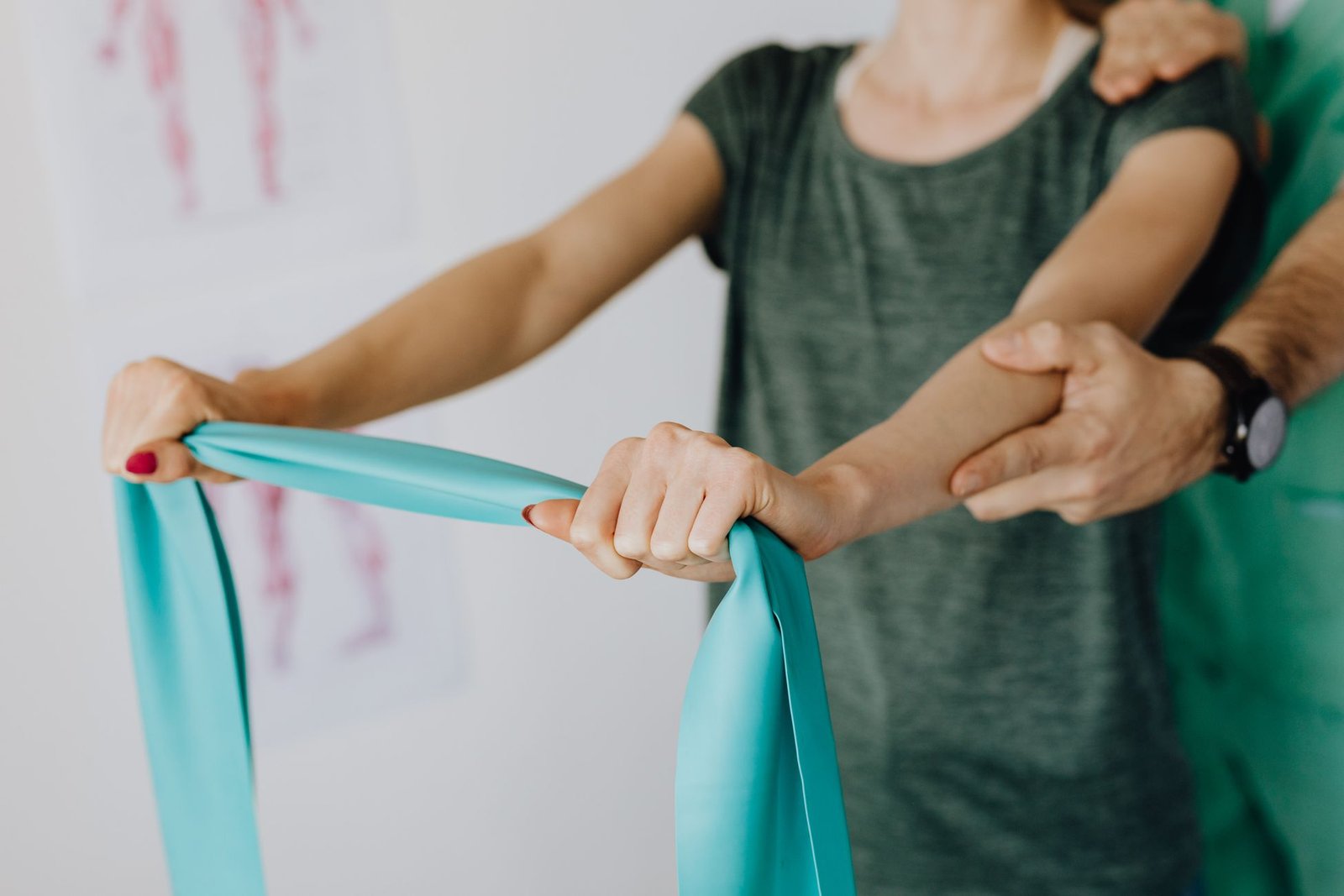
Whichever path a SLAP tear ends up taking, guided rehab plays a real role either way. At Impact Sports Rehabilitation, a Rehabilitation Consultation builds a plan around strengthening the rotator cuff and scapular stabilising muscles that share the load-bearing job with the labrum, which can genuinely reduce strain on a tear that’s being managed conservatively, or support a safe, structured recovery after surgical repair.
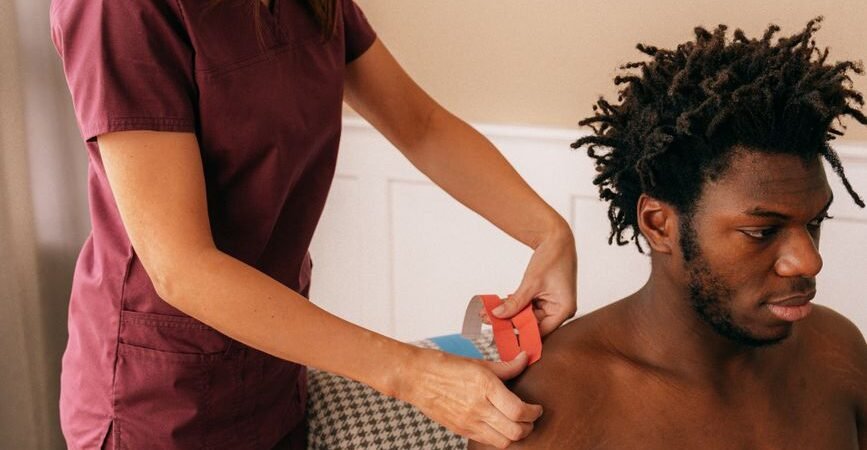
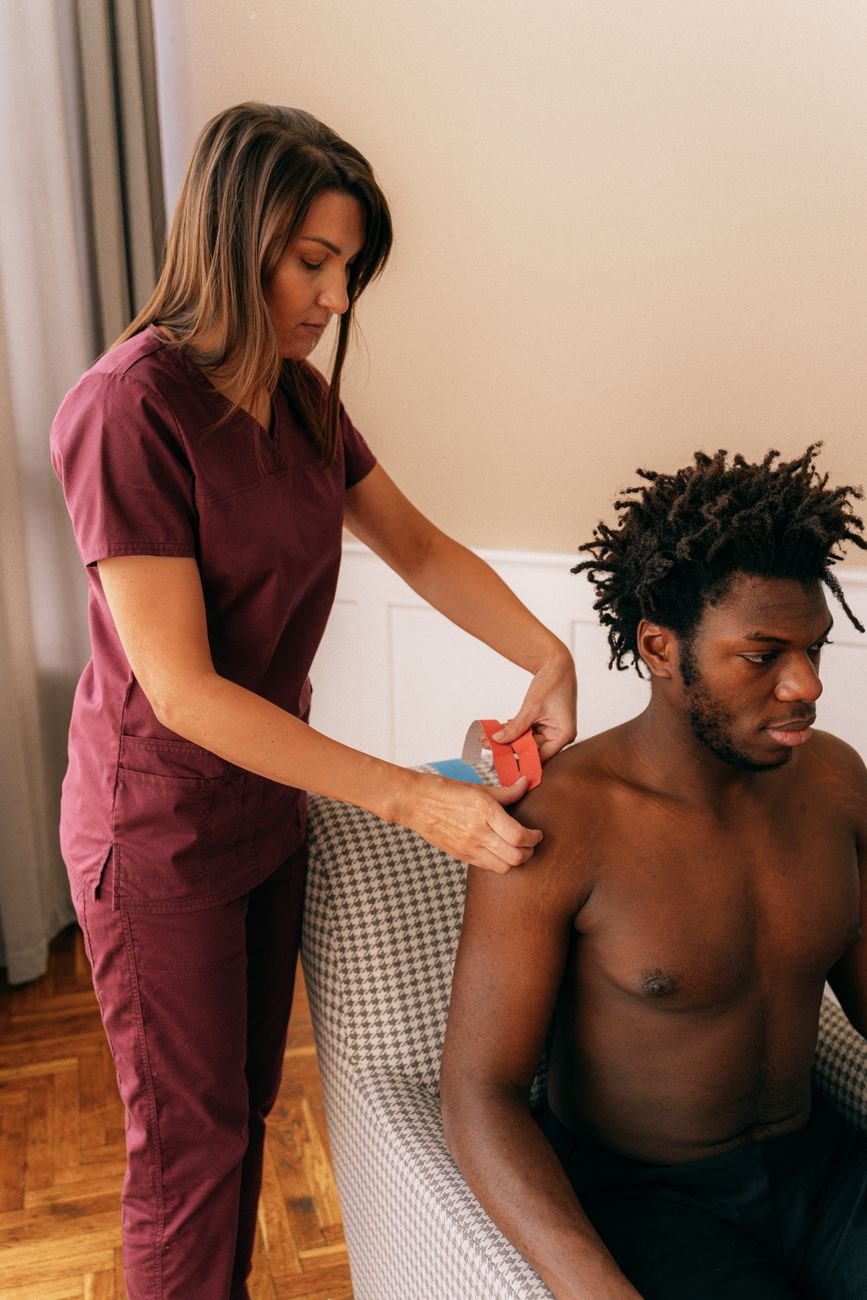
Rocktape taping is something many overhead athletes find genuinely useful for proprioceptive feedback during the strengthening phase, helping reinforce good shoulder positioning as strength rebuilds. Sports massage can also help manage the compensatory tightness that tends to build up through the neck, chest, and upper back while the shoulder is protecting itself.
Returning To Overhead Sport Safely
Getting back to throwing, swimming, or overhead lifting after a SLAP tear genuinely needs a structured, graded progression rather than jumping straight back to full training volume once the pain has eased. Throwing programmes in particular tend to build up distance, then velocity, then full competitive intensity in stages, precisely because the late cocking position that originally stressed the labrum is exactly what a rushed return exposes it to again.
Rebuilding rotator cuff and scapular strength thoroughly before reintroducing high-velocity overhead movement is what actually protects the repair or the healing tissue, rather than pain settling down being treated as the only signal that it’s time to go back to full training.
For throwers specifically, that usually means a structured interval throwing programme, starting with short-distance, low-effort throws and building distance before intensity, rather than pace before distance. Rushing straight back to full-velocity throwing or competitive overhead lifting before that foundation is properly rebuilt is one of the more common reasons a SLAP tear that felt genuinely better ends up flaring again once real training load returns.
If deep shoulder pain or clicking during overhead movement has you wondering whether this is a SLAP tear, Impact Sports Rehabilitation works with throwers, swimmers, and overhead athletes across Eccles, Salford, Trafford, and the wider Greater Manchester area on exactly this kind of shoulder assessment. Book a Rehabilitation Consultation for a proper look at what’s going on, or ask about an online consultation if you’re further afield.
Frequently Asked Questions
Could the clicking in my shoulder just be normal joint noise?
It’s possible, plenty of shoulder clicking is harmless and unrelated to any tear, but clicking that’s accompanied by deep pain, particularly during overhead or throwing motion, is worth getting properly assessed rather than assumed to be nothing. The combination of the two together is what’s genuinely worth flagging.
Do I need surgery just because it’s called a tear?
No, plenty of SLAP tears, particularly type one and many type two tears, are managed successfully with SLAP tear physical therapy treatment alone, without ever needing surgery. Whether surgery becomes necessary depends on the grade, your activity level, and how the shoulder responds to a proper rehab trial first.
How long should I try physical therapy before considering surgery?
This genuinely depends on your specific tear and how your symptoms are progressing, so we wouldn’t want to give a blanket timeframe that might not fit your situation. Many clients at Impact Sports Rehabilitation find a structured trial of guided rehab, reassessed regularly, gives a much clearer answer than picking an arbitrary cutoff point in advance.
Is it safe to keep training while I figure out what’s going on?
This depends on how irritable the shoulder currently is and what’s driving it, which is exactly what a proper assessment helps clarify. Continuing to load a shoulder into the same painful position that’s aggravating a SLAP tear is generally not a good idea until you’ve had it looked at.
Will a SLAP tear ever fully heal on its own without any treatment?
The labrum has a relatively limited blood supply, particularly at the superior portion, so a torn labrum genuinely isn’t likely to heal itself the way some other tissues might, but many people manage their symptoms very well long term through appropriate strengthening rather than needing the tear itself to close up. Getting properly assessed helps set realistic expectations either way.
Can a SLAP tear happen without throwing or an obvious injury?
Yes, while throwing and overhead sport are common causes, a SLAP tear can also happen from a fall onto an outstretched arm or a sudden forceful pull, and some develop more gradually through repetitive strain even outside of a throwing sport. The mechanism matters less than getting the actual symptoms properly assessed.
This article is provided for general educational purposes by Impact Sports Rehabilitation and does not constitute medical advice, diagnosis, or treatment. SLAP tears range from minor fraying to significant tears requiring surgical repair, and a proper clinical assessment and imaging are needed to determine the right treatment path rather than self-diagnosing from symptoms alone. Always seek the guidance of a doctor or other qualified health provider with any questions about your specific injury.