
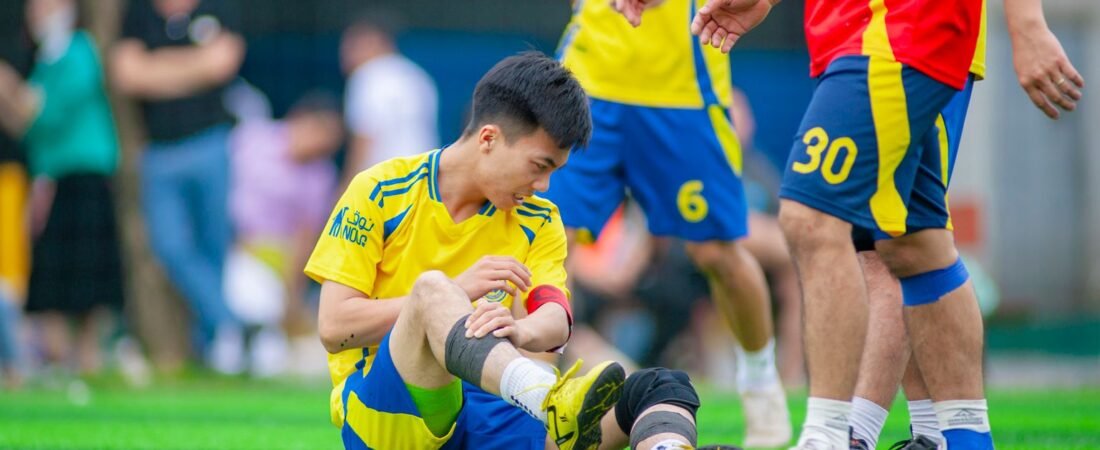
Quick answer: Pain on the inner side of the knee usually comes from the MCL, the medial meniscus, or the tendons crossing that area, and how your pain actually started and behaves gives real clues about which one is most likely involved. Sudden-onset pain during activity, gradually building pain, and pain with clicking or locking each point toward a different pattern. This isn’t a substitute for a proper diagnosis, but working through these questions yourself can genuinely help you describe your symptoms more usefully and decide whether it’s time to get assessed.
When something starts hurting on the inner side of your knee, it’s natural to want to work out what’s actually going on before deciding what to do next. This guide walks you through the same kind of questions a clinician would ask during a real assessment, so you can compare your own symptoms against common patterns and get a genuinely clearer picture of what you might be dealing with.
The Questions Worth Asking Yourself First
Rather than jumping straight to a list of possible diagnoses, it’s more useful to start with a few honest questions about your own pain. How did it start, suddenly during a specific activity, or gradually without one clear moment? How does it behave day to day, is it constant, or does it change with specific movements or activities? And what genuinely makes it worse, twisting, stairs, prolonged standing, or something else entirely?
These three questions, onset, behaviour, and aggravating factors, form the backbone of how a proper assessment actually works, and walking through them yourself first genuinely helps you describe your symptoms more usefully, whether that’s to a clinician or just to yourself while deciding what to do next.
There’s a fourth question worth adding to the list: has anything changed recently, in your training, your footwear, your work routine, or your general activity level, in the weeks before the pain started. A lot of inner knee pain, particularly the gradually-building kind, has a genuine trigger buried in a recent change that’s easy to overlook when you’re focused purely on the knee itself rather than what led up to it.
If It Started Suddenly During Activity
Most inner knee pain content lists causes in isolation without connecting them to how you’d actually recognise your own pattern, so here’s a more useful way through it. If your pain started suddenly, during a twist, a pivot, a direct knock to the outside of the knee, or an awkward landing, that points toward an acute event affecting the MCL or medial meniscus, since both respond to that kind of sudden mechanical stress.
An audible pop or a feeling of something giving way at the moment of injury leans more toward the MCL specifically, while pain paired with a catching or locking sensation immediately afterward leans more toward the meniscus. Swelling that develops within the first few hours, rather than the next day, is also more typical of an acute ligament or meniscus injury than an overuse pattern.
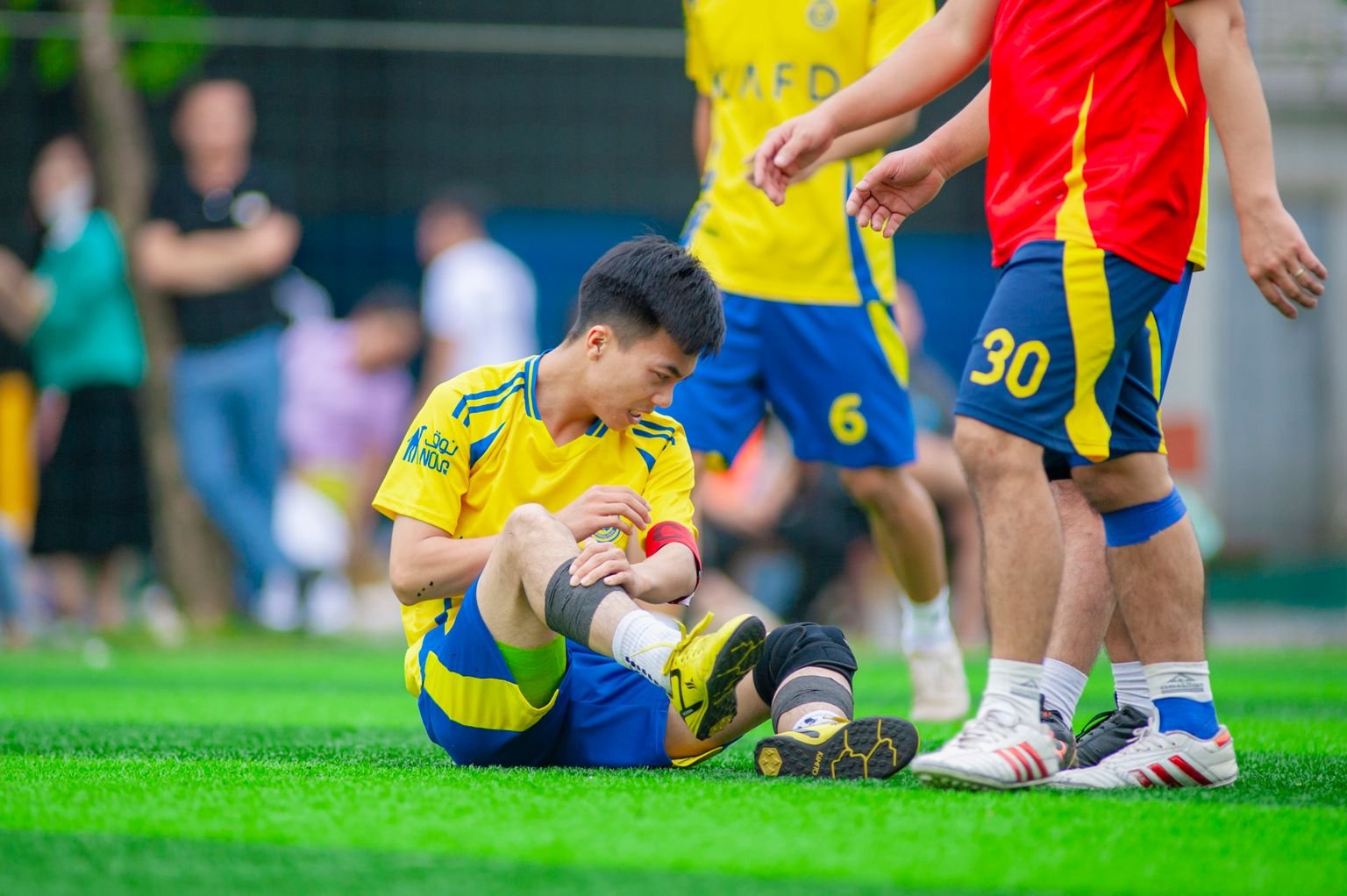
Contact and non-contact mechanisms give a further clue too. A direct blow to the outside of the knee, forcing it inward, is the classic MCL mechanism, while a non-contact twist or pivot with the foot planted, common in football, netball, and combat sports, can strain either the MCL or the meniscus depending on exactly how the knee was loaded at that moment. If you can recall roughly which of these happened, that’s genuinely worth mentioning at any assessment, since it meaningfully narrows down what a clinician will test for first.
If It’s Been Building Up Gradually
If there wasn’t one clear moment, and your pain has instead built up slowly over days or weeks, that pattern points more toward an overuse-related cause. This typically involves the tendons crossing the inner knee, sometimes grouped together as the pes anserine, or general strain from repetitive load without adequate recovery between sessions.
Gradual-onset inner knee pain is genuinely common in runners increasing their mileage too quickly, people who’ve recently changed their training surface or footwear, or anyone whose activity level has stepped up faster than their knee has had time to adapt to. It typically feels more like a dull ache that worsens with continued activity and eases somewhat with rest, rather than the sharper, more specific pain associated with a sudden injury.
This pattern also tends to respond differently to simple tests than an acute injury does. Gradual-onset pain often eases noticeably after a few days of reduced activity, then flares back up once training resumes at the same level, which is a genuinely useful clue in itself, since it points toward the knee’s current capacity not yet matching the demands being placed on it, rather than a structural injury that needs to heal before any loading resumes at all.
If There’s Clicking, Locking, Or Giving Way
Mechanical symptoms, a genuine sense of the knee catching, locking in a specific position, or giving way unexpectedly, are worth paying particular attention to, since they suggest something more structural is involved rather than simple strain. This pattern is more commonly associated with a meniscus tear, where a torn fragment of cartilage can physically catch or block normal movement of the joint.
A knee that genuinely locks, meaning it gets stuck and you have to work to straighten it again, rather than just feeling stiff, is a meaningfully different and more significant symptom than general stiffness, and it’s specifically worth mentioning at any assessment rather than describing your symptoms in vaguer terms.
A genuine sense of instability, the knee actually giving way rather than just feeling weak or achy, is a related but distinct symptom worth separating out too. Giving way without pain sometimes reflects a strength or control issue rather than a structural tear, while giving way that’s clearly tied to a specific movement or accompanied by sharp pain leans more toward a mechanical cause. Neither should be worked through with more exercise alone until it’s been properly looked at, since pushing on regardless can genuinely aggravate a torn or unstable structure further.
How Sports Rehab Works Through These Same Questions
The self-check framework above genuinely mirrors how a proper clinical assessment works, just without the hands-on testing that confirms things rather than estimates them. At Impact Sports Rehabilitation, a Rehabilitation Consultation starts with exactly this kind of structured history, how your pain started, how it’s behaved, and what makes it worse, before moving into hands-on testing that can actually confirm which structure is involved rather than just narrowing down the possibilities.
Many clients find that thinking through their own answers to these questions beforehand, using the patterns above, makes the actual assessment more efficient and genuinely helps get to the right answer faster. The hands-on part matters just as much as the history though, since specific tests for ligament stability, meniscus involvement, and general joint movement can confirm or rule out possibilities that a history alone can only narrow down, and it’s this combination, structured questioning plus physical testing, that gets to a genuinely confident answer rather than an educated guess.

What To Do With What You’ve Worked Out
If your pattern points toward a sudden, acute onset, our Medial Knee Pain complete guide covers the fuller picture of MCL and meniscus injuries in more depth. If your pain has built up gradually, our Inside Knee Pain treatment guide walks through the practical steps that actually help overuse-related pain specifically. If you’re just starting to make sense of things and want the simplest possible starting point, our Inner Knee Pain explainer is the place to begin.
Whatever pattern you’ve recognised in yourself, if there’s genuine clicking, locking, giving way, an inability to weight-bear, or pain that’s significant or worsening, that’s the point where working through it yourself should give way to a proper assessment rather than continuing to guess.
It’s also worth being honest that self-check patterns like these are genuinely useful for narrowing things down, but they’re not infallible, symptoms can overlap between causes, and more than one structure can occasionally be involved at once. Treat your own conclusion as a reasonably informed starting point for the conversation with a clinician, not the final word on what’s actually going on in your knee.
If you’ve worked through these questions and want a proper answer rather than an educated guess, Impact Sports Rehabilitation works with everyday athletes and active people across Eccles, Salford, Trafford, and the wider Greater Manchester area on exactly this kind of assessment. Ask about an online consultation if you’re further afield.
Frequently Asked Questions
I can’t remember one specific moment my knee started hurting, does that rule out an injury?
Not necessarily, plenty of genuine injuries, particularly to the meniscus, can happen from something as simple as an awkward twist that doesn’t feel dramatic at the time. Not remembering a specific moment more often points toward a gradual, overuse-related pattern, but it isn’t a guaranteed rule either way.
Is it bad if my knee only hurts sometimes rather than all the time?
Not necessarily bad, but it’s genuinely useful information, since intermittent pain that’s clearly tied to specific movements or activities points toward a more mechanical cause than pain that’s constant regardless of what you’re doing. Either pattern is worth mentioning specifically if you do get assessed.
How do I know if the clicking in my knee is something to worry about?
Clicking on its own, without pain, swelling, or a sense of catching, is genuinely common and often not something to worry about. Clicking paired with pain, a locking sensation, or a feeling of the knee giving way is the combination worth getting checked rather than the clicking alone.
Should I try to figure this out myself or just book an assessment straight away?
Both are reasonable approaches, working through the questions above can genuinely help you understand your own symptoms better and decide how urgent it feels, but if anything about your pain concerns you, going straight to a proper assessment is never the wrong call. Impact Sports Rehabilitation is happy to see people at either stage.
Can stress or being generally run down make knee pain feel worse than it actually is?
General fatigue and stress can genuinely affect how pain feels day to day, but they wouldn’t create knee pain on their own without an underlying physical cause. It’s worth mentioning if you’ve noticed this pattern, but the physical cause still needs identifying rather than being dismissed as purely stress-related.
This article is provided for general educational purposes by Impact Sports Rehabilitation and does not constitute medical advice, diagnosis, or treatment. This guide helps you understand possible patterns but is not a substitute for a proper diagnosis; persistent or significant symptoms, locking, instability, or an inability to weight-bear should be assessed by a qualified clinician rather than self-diagnosed. Always seek the guidance of a doctor or other qualified health provider with any questions about your specific symptoms.