Quick answer: Osgood-Schlatter disease is a common, generally harmless cause of knee pain in growing children and teenagers, caused by repeated pulling of the thigh muscles on a soft growth area just below the kneecap. It typically causes a tender, sometimes visibly bony bump that’s worse with running, jumping, or kneeling, and it isn’t a sign of anything seriously wrong with your child’s knee. Most cases resolve on their own once the growth plate matures, usually without needing to stop sport completely, though a proper assessment is still worth getting to confirm the diagnosis.
If your child has come to you with a painful, slightly bony bump just below their kneecap, particularly if they’re an active ten to fifteen year old who plays a lot of sport, you’re probably searching for answers about what this means, whether they need to stop playing entirely, and how long this is going to last. The good news, genuinely, is that Osgood-Schlatter disease is one of the most common and best-understood causes of knee pain in growing athletes, and while it deserves a proper look to confirm the diagnosis, it’s rarely a sign of anything seriously wrong. Here’s a clear, honest guide for both you and your young athlete.
What Osgood-Schlatter Disease Actually Is
Osgood-Schlatter disease happens at the tibial tuberosity, the bony bump just below the kneecap where the tendon from the thigh muscles attaches to the shin bone. During childhood and the early teenage years, this area is still made up partly of growing cartilage, a softer, weaker tissue than the mature bone it will eventually become, and it’s this growth area that gets irritated in Osgood-Schlatter disease.
It’s genuinely important for parents to hear this clearly, this is not a sign of a serious underlying problem, a structural weakness, or anything your child did wrong. It’s an extremely common, well-understood condition related entirely to normal growth, and the vast majority of children who develop it go on to have completely normal knees as adults.
Sometimes the irritation is significant enough that a small amount of the growth cartilage separates slightly, which is part of why a visible, sometimes fairly prominent bump can develop and, in some children, remain permanently after the pain itself has resolved. This bump is a cosmetic remnant of the growth process, not an ongoing injury or a sign that anything is currently wrong, and it’s worth explaining this to your child too, since a visibly larger bump than a friend’s can understandably feel worrying to a young athlete without that context.
Why It Happens During Growth Spurts
This condition develops specifically because of repeated pulling from the patellar tendon, the tendon connecting the powerful thigh muscles to the shin bone, right at the point where it attaches to that still-growing area below the kneecap. During a growth spurt, bones tend to lengthen faster than the surrounding muscles and tendons can comfortably keep up with, which increases tension through this tendon attachment at exactly the time it’s least able to handle it.
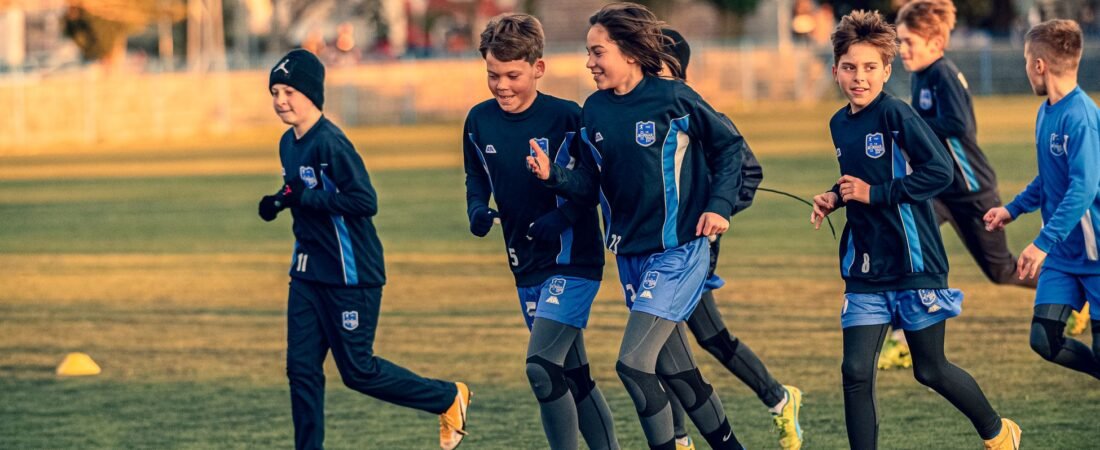
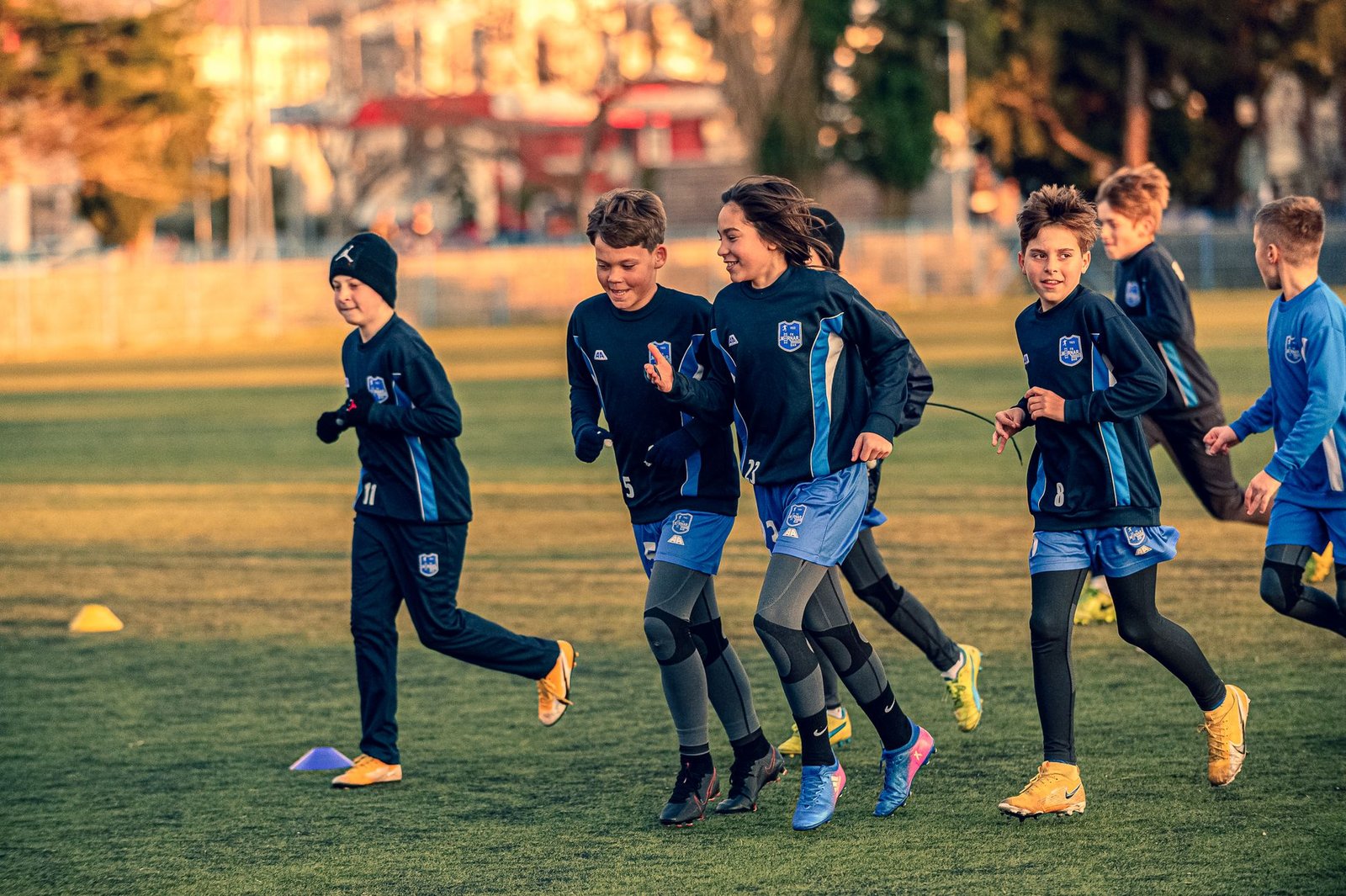
This is why Osgood-Schlatter disease shows up specifically during the growth spurt years, typically around ten to twelve in girls and twelve to fourteen in boys, since girls generally hit their growth spurt somewhat earlier. It’s also why it’s so strongly associated with active, sporty children specifically, running, jumping, and kicking all repeatedly load this exact tendon attachment, and a child doing a lot of this kind of activity during a growth spurt is placing more repeated demand on an area that’s already under more tension than usual.
This also explains why Osgood-Schlatter disease is so common across such a wide range of sports, football, basketball, gymnastics, athletics, and dance all involve exactly the running, jumping, and repeated knee-bending that load this tendon attachment repeatedly. It isn’t specific to any one sport, it’s specific to the combination of a growing body and repetitive lower-body loading, which is why so many otherwise unrelated sports show up commonly alongside this condition.
Symptoms Parents And Young Athletes Should Recognise
The hallmark sign is a tender, sometimes visibly enlarged bony bump just below the kneecap, which can feel warm and be genuinely painful to press directly. Pain typically worsens with activities that load the tendon repeatedly, running, jumping, squatting, and kneeling are all classic aggravating activities, and climbing stairs can be uncomfortable too.
Symptoms often affect one knee more than the other, though it’s genuinely common for both knees to be affected to some degree, particularly in very active children. The pain tends to build up during and after activity rather than appearing out of nowhere at rest, and many children describe it easing off with a period of sitting or lying down, only to flare again once they’re back on their feet and moving.
It’s worth knowing that symptoms can genuinely fluctuate quite a bit over the weeks and months, a period of relatively mild discomfort can be followed by a flare-up during a particularly heavy training block or a growth spurt speeding up again, without anything specific having gone wrong. This up-and-down pattern is a normal feature of the condition rather than a sign it’s getting steadily worse, though tracking how your child’s symptoms are trending over time is still useful information to share at any follow-up assessment.
How It’s Diagnosed And Managed
Osgood-Schlatter disease is usually diagnosed through a clinical examination, a clinician checking the specific location and pattern of tenderness at the tibial tuberosity, alongside your child’s age and activity history. This is genuinely straightforward for an experienced clinician in most cases, though a proper assessment is still worth getting, since not every case of knee pain in this age group turns out to be Osgood-Schlatter, and ruling out other causes matters.
General management focuses on symptom relief, ice after activity and simple pain relief can help during flare-ups, alongside stretching of the thigh muscles, which can ease some of the tension pulling on the irritated area. Beyond symptom relief, the real question most parents actually want answered is what to do about sport, which is exactly what the next section addresses directly.
Does Your Child Need To Stop Sport Completely
This is the question most Osgood-Schlatter articles are frustratingly vague about, and it deserves a clear, practical answer rather than a generic “rest it” response. The genuinely reassuring evidence here is that continuing to participate in sport, guided by your child’s own pain levels, does not cause long-term damage to the knee, this is a condition managed by symptom tolerance, not one where pushing through pain risks permanent harm the way some other injuries might.
That said, “manage by symptoms” isn’t the same as “ignore it and carry on regardless.” Relative rest, easing off the specific activities that clearly aggravate it most, high-impact running, jumping, and deep kneeling in particular, during a genuine flare-up, tends to help symptoms settle faster than pushing through significant pain. Many families find a practical middle ground works well, staying involved in training and modifying the most aggravating drills or reducing volume during a flare, rather than sitting out entirely for months at a time. The right balance genuinely depends on how significant your child’s specific symptoms are, which is exactly why a proper assessment, rather than a blanket rule found online, is worth getting for your child’s situation specifically.
It’s also worth having an honest, age-appropriate conversation with your child about this themselves, rather than only discussing it with you as the parent. Many young athletes cope better with a flare-up when they understand why modifying training temporarily makes sense, rather than experiencing it as an unexplained, frustrating restriction imposed on them, and involving them in that decision-making tends to help with both compliance and their own confidence around managing the condition long term.
How Sports Rehab Supports Young Athletes Through It
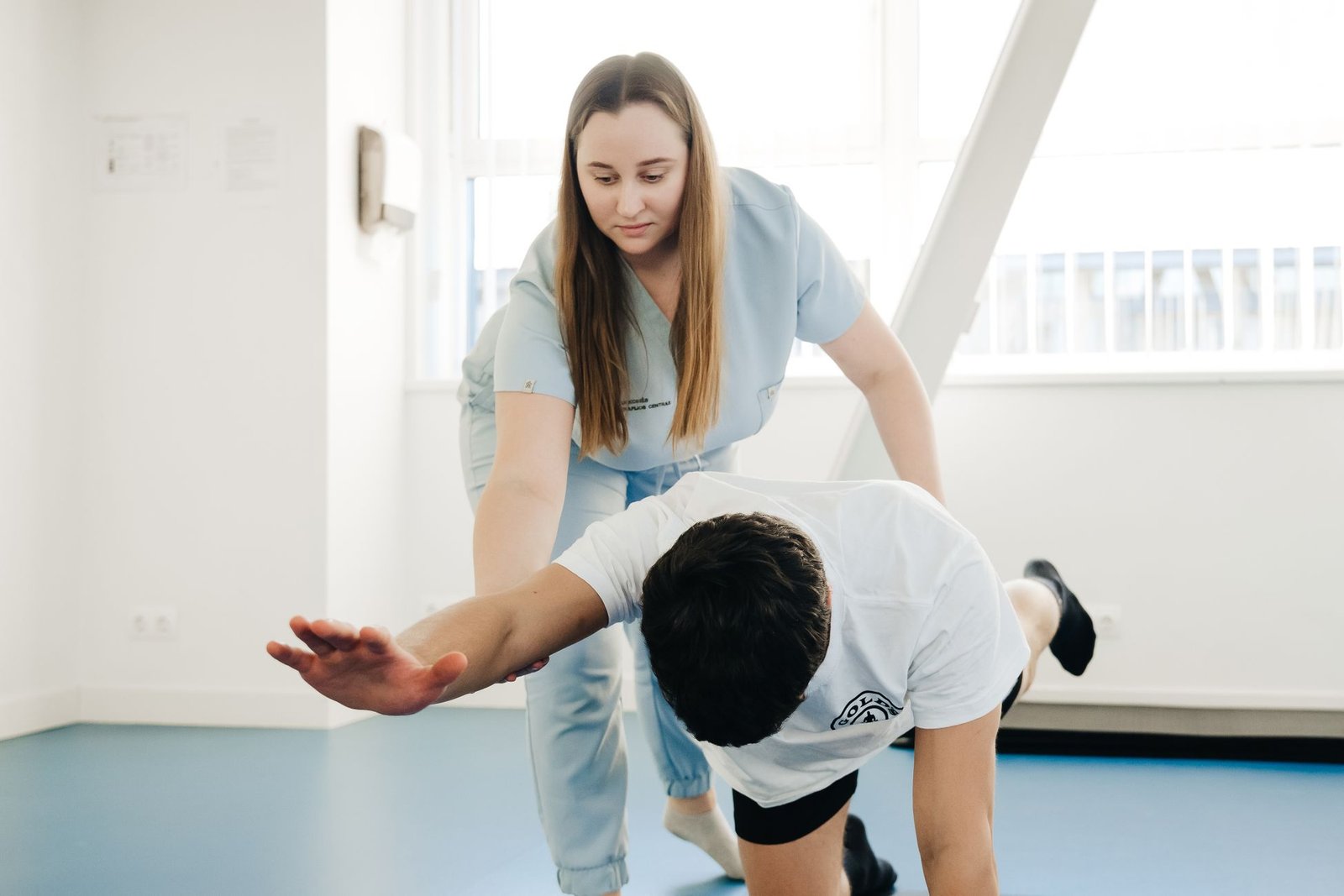
A guided approach can genuinely help a young athlete stay as active as is comfortable while managing symptoms sensibly. At Impact Sports Rehabilitation, a Rehabilitation Consultation can help confirm the diagnosis, guide appropriate stretching and load management, and give your family clear, practical guidance on activity levels specific to your child rather than generic advice found online.
Where supportive treatments like taping are considered for a young athlete, this is always something to discuss directly with a clinician experienced in working with children specifically, rather than applying adult treatment approaches casually to a growing child’s knee.
If your child has knee pain that sounds like it could be Osgood-Schlatter disease and you’d like a proper assessment and some practical, honest guidance on managing sport around it, Impact Sports Rehabilitation works with young athletes and their families across Eccles, Salford, Trafford, and the wider Greater Manchester area. Book a Rehabilitation Consultation, or ask about an online consultation if you’re further afield.
Frequently Asked Questions
Is my child going to have knee problems forever?
No, the great majority of children with Osgood-Schlatter disease go on to have completely normal knees as adults once the growth plate matures, usually somewhere between fourteen and eighteen. A bony bump may remain visible afterward in some cases, but this is a harmless, cosmetic remnant rather than an ongoing problem.
How long is this actually going to last?
This varies quite a bit between children, but it commonly runs somewhere between twelve months and a couple of years, resolving as the growth plate matures and fuses. Some children have a shorter, milder course, and a smaller number have symptoms that persist longer, which a proper assessment can help you understand for your child specifically.
Should I stop my child playing sport entirely until this goes away?
Not necessarily, and this is genuinely one of the most reassuring parts of this condition, continuing sport guided by your child’s own pain tolerance doesn’t cause long-term damage. Relative rest from the most aggravating activities during a genuine flare tends to help more than complete cessation for months at a time.
Could this actually be something more serious than Osgood-Schlatter?
It’s worth getting properly checked rather than assuming, since not every case of knee pain in a growing child turns out to be Osgood-Schlatter specifically. A proper assessment is genuinely reassuring either way, confirming the diagnosis or catching something else that needs different management.
Is it normal for my child to still be limping after activity?
Some discomfort and a limp after particularly aggravating activity is common with this condition, but persistent or worsening symptoms are worth mentioning at a follow-up assessment. It doesn’t automatically mean anything has gone wrong, but it’s worth having it looked at again rather than assumed to be expected.
Will my child need surgery for this?
Very rarely, the great majority of Osgood-Schlatter cases are managed successfully without any surgical treatment at all, through activity modification and time as the growth plate matures. Surgery is occasionally considered only in a small number of cases with ongoing symptoms into adulthood, and this would be a specialist decision made well down the line, not an early concern.
This article is provided for general educational purposes by Impact Sports Rehabilitation and does not constitute medical advice, diagnosis, or treatment. Osgood-Schlatter disease is common and generally self-limiting, but a clinical assessment is recommended to confirm the diagnosis and rule out other causes of knee pain in a young athlete. Always seek the guidance of a doctor or other qualified health provider with any questions about your child’s specific condition.