
Quick answer: These thumb and wrist pain 6 self-treatment tips cover activity modification, targeted stretching, gentle strengthening, support and load management, and knowing when to stop self-treating, genuinely practical steps for pain from repetitive gripping, typing, or phone use. Gentle strengthening, not just stretching, is often what’s actually needed for lasting relief. Pain that’s severe, persistent despite self-care, or accompanied by significant swelling or an inability to grip needs proper clinical assessment.
Combined thumb and wrist pain, especially from repetitive gripping, typing, or phone use, deserves genuinely practical, specific self-care rather than vague “rest it” advice that doesn’t actually tell you what to do differently. Here are six real, usable steps that go beyond that.
Why Thumb And Wrist Pain Often Show Up Together
The thumb and wrist are genuinely closely connected anatomically, several of the tendons controlling thumb movement pass directly through the wrist on their way from the forearm, which means irritation or strain in one area frequently affects the other. Repetitive gripping, pinching, or the kind of sustained thumb movement involved in typing and scrolling places demand on this shared tendon pathway, which is exactly why thumb and wrist symptoms so often show up as a combined complaint rather than one isolated to a single joint.
A specific tendon sheath at the base of the thumb, where two of these tendons pass through a narrow tunnel on their way to the thumb, is a particularly common site for this kind of irritation, since repetitive thumb movement combined with any wrist motion places genuine friction through this specific structure. Understanding this shared anatomical pathway is genuinely useful, since it explains why treating the thumb and wrist as one connected system, rather than two separate complaints needing entirely separate approaches, tends to produce better results.
Self-Care Tip One: Activity Modification That Actually Helps
Identifying the specific repetitive movement actually driving your pain, rather than vaguely “resting your hand” in general, is genuinely the first and most useful step. Pay attention to which specific activities, typing, scrolling, a particular grip pattern at work or in a hobby, most reliably bring on or worsen your symptoms, since that specific movement is what actually needs modifying, not necessarily every hand movement across your whole day.
This distinction genuinely matters practically, avoiding all hand use isn’t realistic for most people’s daily lives, and it isn’t actually necessary either, targeted modification of the specific aggravating movement tends to be both more achievable and more effective than a blanket, unsustainable attempt to rest the hand entirely.
Small, practical changes tend to matter more than complete avoidance, adjusting your phone grip to reduce repetitive thumb strain, taking more frequent breaks during typing-heavy work, or changing how you grip a tool or piece of equipment that’s aggravating things, address the actual mechanical driver rather than just waiting for generalised rest to help.
Keeping a genuinely honest, brief mental note, or even a quick written log for a few days, of exactly when your symptoms flare can be surprisingly revealing, people are often surprised to find the actual trigger is something they hadn’t consciously connected to their pain, a specific gaming session, a particular task at work, or even how they’re holding their phone while lying down in bed. This kind of honest, specific identification is genuinely more useful than a generic instruction to simply “use your hand less.”

Self-Care Tips Two And Three: Targeted Stretching And Gentle Strengthening
This is genuinely the part most self-care lists for this area get wrong, offering a handful of generic stretches and stopping there. Gentle wrist and thumb stretching, moving through a comfortable range without forcing anything, genuinely helps maintain mobility and can ease acute tightness, a simple thumb stretch, gently pulling your thumb back into extension and holding briefly, is a reasonable starting point.
But stretching alone often isn’t enough, and this is the genuinely underused piece, gentle strengthening matters just as much, since pain and reduced use frequently lead to genuine weakness in the surrounding muscles, and that weakness itself can perpetuate the problem if it’s never specifically addressed. Isometric holds, gently pressing your thumb against resistance without actually moving it, are a well-tolerated, low-irritation starting point for rebuilding this strength. Light grip strengthening, using a soft stress ball or similar, progressed gradually as tolerated, rebuilds the broader hand and wrist capacity that supports the thumb during everyday tasks, rather than leaving the thumb to compensate for a weaker surrounding structure on its own.
Progression genuinely matters here just as much as the exercises themselves, starting with brief, low-effort holds and gradually building duration and resistance as things feel more tolerable, rather than jumping straight to a firm grip trainer or aggressive stretching from day one. A useful general guide is watching how the area feels the following day rather than judging purely by sensation during the exercise itself, mild, settling discomfort that’s back to baseline within a day suggests you’re progressing appropriately, while pain that’s noticeably worse the next morning suggests scaling back slightly.
Self-Care Tips Four And Five: Support And Load Management
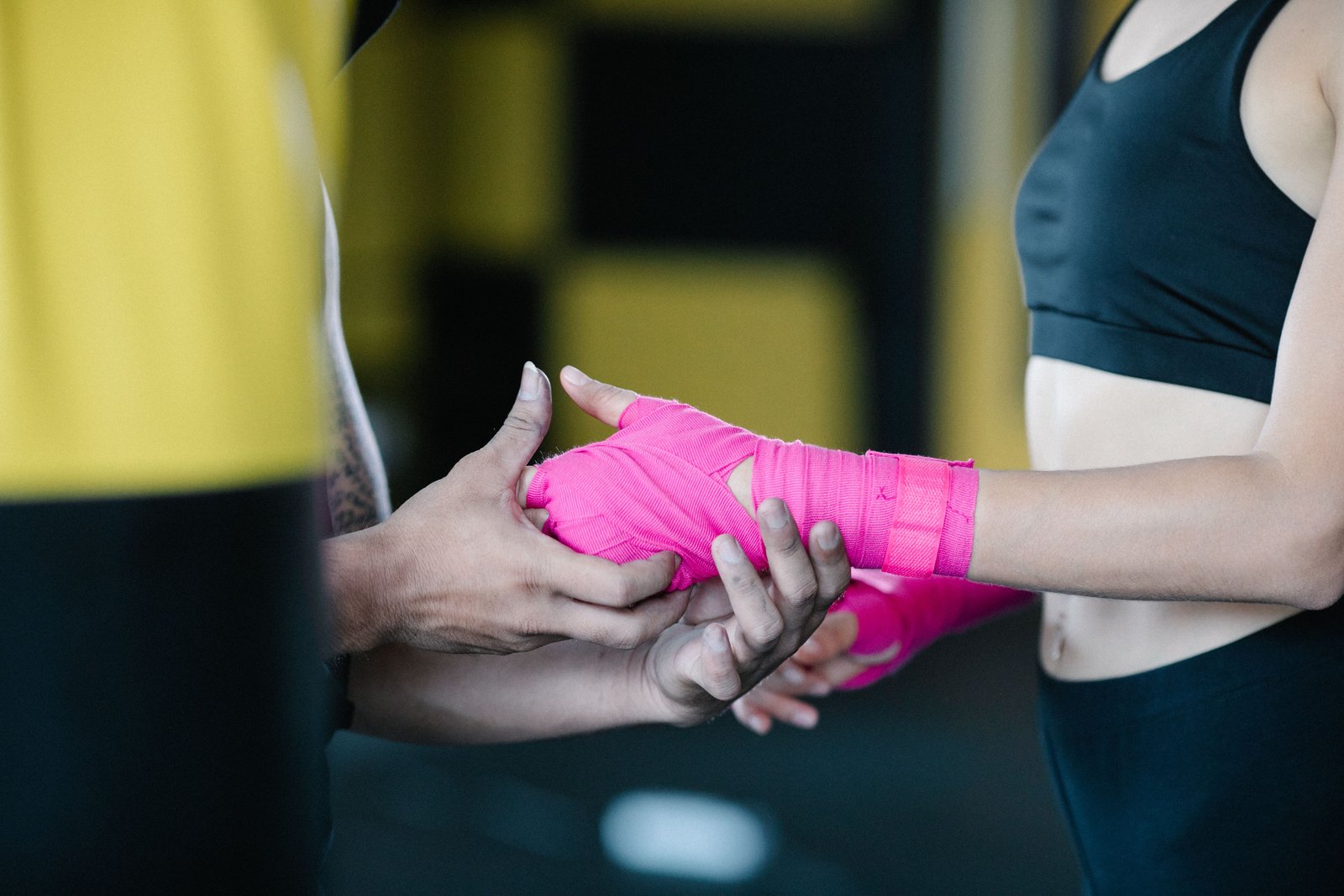
A supportive splint or brace, worn during specifically aggravating activities rather than necessarily all day, can genuinely help by reducing strain on the affected tendons while they settle, giving irritated tissue a genuine break during the activities that provoke it most. Rocktape kinesiology taping is another supportive option some people find genuinely useful for light, ongoing support during daily activities without the bulk of a full brace, particularly for people who need to keep using their hand for work but want some added support through the day.
Adjusting your daily load on the thumb and wrist, genuinely spreading demanding tasks across the day rather than doing them all in one intensive block, and switching hands or grip patterns where practically possible, reduces the sustained, repetitive strain that’s often driving the underlying problem in the first place.
Ergonomic adjustments to how you actually work or use devices deserve specific mention too, a phone or tablet stand that reduces how much you’re gripping and holding a device for extended periods, or a keyboard and mouse setup that keeps your wrist in a more neutral position rather than bent or angled, genuinely reduces the cumulative daily load on these structures. These changes take a small amount of upfront effort to set up, but they work continuously in the background afterward, unlike the active exercises above which need ongoing deliberate effort to keep doing.
Self-Care Tip Six: Knowing When To Stop Self-Treating
Being direct about this matters, self-care has genuine limits, and knowing when you’ve reached them is itself a genuinely important part of managing this well. Pain that’s severe, rather than a mild, manageable ache, is a signal to stop self-treating and get properly assessed. Symptoms persisting despite genuinely consistent, several-week efforts at the steps above, rather than improving even gradually, suggest something needs more targeted attention than self-care alone can provide.
Significant swelling, or a genuine inability to grip normally, both warrant proper clinical assessment rather than continued self-management, since these can indicate something beyond straightforward overuse, De Quervain’s tenosynovitis or early arthritis among the possibilities worth properly ruling out.
A useful mental checkpoint, worth genuinely applying honestly rather than talking yourself out of it, is asking whether things are trending in a clearly positive direction, even slowly, or whether they’ve genuinely plateaued or are getting worse despite consistent effort. The first pattern generally supports continuing with self-care a little longer, while the second is a clear enough signal that professional input, rather than more of the same self-care, is what’s actually needed next.
How Sports Rehab Helps When Self-Care Isn’t Enough
When these six steps haven’t fully resolved things, or your symptoms suggest something needing more targeted attention from the start, a proper assessment identifies exactly what’s actually going on rather than continuing to guess. At Impact Sports Rehabilitation, a Rehabilitation Consultation builds a more targeted plan around your specific presentation, identifying which structures are actually involved rather than continuing to guess, and Rocktape taping and sports massage can be used as supportive tools alongside this guided approach where appropriate.
If thumb and wrist pain hasn’t resolved with self-care, Impact Sports Rehabilitation works with clients across Eccles, Salford, Trafford, and the wider Greater Manchester area on building a genuinely targeted plan. Ask about an online consultation if you’re further afield.
Frequently Asked Questions
Should I just rest my hand completely until the pain goes away?
Complete rest genuinely isn’t usually necessary or even particularly helpful, targeted activity modification, addressing the specific movement driving your pain, tends to work better than avoiding all hand use. Gentle, appropriate movement generally supports recovery better than complete inactivity.
Is it actually true that I need strengthening, not just stretching?
Yes, genuinely, this is one of the most commonly overlooked parts of self-care for this area. Pain and reduced use often lead to real weakness that stretching alone doesn’t address, so gentle strengthening alongside stretching tends to bring more complete relief.
How long should I try self-care before deciding it’s not working?
Several consistent weeks is a genuinely reasonable trial period before deciding self-care alone isn’t sufficient, provided your symptoms are mild to moderate rather than severe from the start. If there’s no gradual improvement across that time, it’s worth getting a proper assessment.
Could my thumb and wrist pain actually be something specific like De Quervain’s?
It’s possible, along with a few other genuine possibilities, arthritis or a repetitive strain injury among them. We wouldn’t want to diagnose your specific cause without an assessment, but persistent symptoms despite self-care are worth having properly evaluated.
Is taping or a brace actually going to help, or is it just a comfort thing?
Many people find genuine functional benefit from support during specifically aggravating activities, not just psychological comfort, since it can reduce strain on irritated tendons during exactly the movements that provoke symptoms. In our experience, it works best alongside the other self-care steps, not as a standalone fix.
This article is provided for general educational purposes by Impact Sports Rehabilitation and does not constitute medical advice, diagnosis, or treatment. Combined thumb and wrist pain can have several causes, including De Quervain’s tenosynovitis, arthritis, or a repetitive strain injury. Pain that is severe, persistent despite self-care, or accompanied by significant swelling or an inability to grip requires clinical assessment. Always seek the guidance of a doctor or other qualified health provider with any questions about your specific symptoms.