

Quick answer: A medial ankle sprain happens when the deltoid ligament on the inside of the ankle is stretched or torn, usually from the foot rolling outward rather than the inward roll behind the far more common lateral sprain. Mild grade one injuries often settle in two to four weeks, moderate grade two sprains typically take four to eight weeks, and severe grade three tears can run three months or longer, especially since the deltoid ligament is thick and strong enough that a forceful injury to it often involves the bone as well. If your ankle rolled outward rather than inward, that alone is worth mentioning to whoever assesses you, since it changes what they’ll be checking for.
If you’ve rolled your ankle outward instead of the usual inward twist, and every article you find online is about the “normal” kind of sprain, you’re not imagining things. A medial ankle sprain is genuinely less common and less written about than a lateral sprain, which makes it frustratingly hard to find information that actually matches your symptoms. This guide is specifically about the inside of the ankle, not a lateral sprain article with one paragraph swapped out.
What Makes A Medial Ankle Sprain Different
Most ankle sprain content online is really about the lateral ligaments on the outside of the ankle, because that’s how the vast majority of sprains happen, from the foot rolling inward under you. A medial ankle sprain involves the deltoid ligament complex on the inside of the ankle instead, injured when the foot rolls outward, called eversion, or from a forceful twisting mechanism.
Here’s the detail almost nothing online explains clearly: the deltoid ligament is considerably thicker and stronger than the lateral ligaments, precisely because it has more work to do stabilising the inside of the joint. That strength is exactly why an isolated medial ankle sprain is less common than you’d expect. Often, the force required to injure this ligament is enough to break the fibula bone as well, which is part of why any suspected medial ankle sprain deserves a proper look rather than being assumed to be “just a sprain” the way a lateral roll often is.
Grading The Injury, Mild To Severe
Like most ligament injuries, a medial ankle sprain gets graded by severity. A grade one sprain means the ligament has been stretched without any real tearing, usually with mild swelling and the ability to bear at least some weight. A grade two sprain involves a partial tear, with more noticeable swelling, bruising, and pain that makes weight-bearing genuinely uncomfortable.
A grade three sprain means the deltoid ligament has torn completely, and this is where things get more serious: significant swelling, an inability to bear weight, and, as mentioned above, a real possibility of an associated fracture that needs to be ruled out with imaging. Never assume you can grade your own injury from how it feels, especially with a medial sprain, since the line between a severe grade two and a grade three with a hidden fracture isn’t something you can reliably judge without a proper assessment.
It’s worth noting how the mechanism itself can hint at severity too. A slow roll during an awkward step tends to produce milder injuries than a high-force eversion during a tackle, a bad landing, or a scramble on the mat, where the ankle is loaded hard and fast. That doesn’t replace a proper assessment, but it’s part of why the story behind the injury matters just as much as how it feels the next morning.
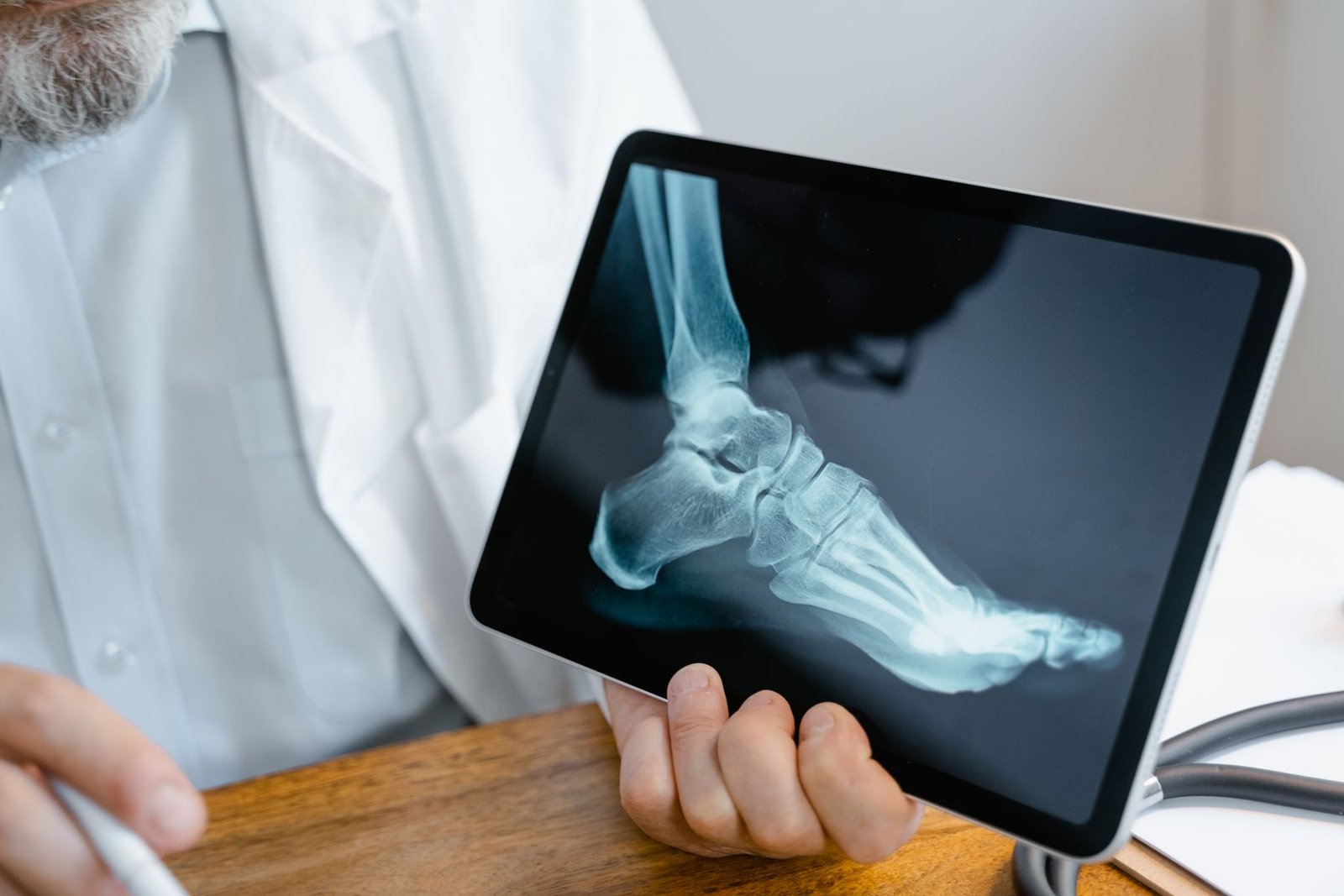
Medial Ankle Sprain Recovery Timeline By Grade
Mild, grade one medial ankle sprains often settle within two to four weeks with rest, ice, and gradual movement as pain allows. Grade two sprains typically take somewhere around four to eight weeks, with a more deliberate early protection phase before rehab ramps up. Severe grade three tears, particularly if a fracture was involved or surgery was needed, can take three months or considerably longer.
Research suggests medial ligament injuries can be slower to heal than an equivalent-grade lateral sprain, partly due to the thickness of the tissue involved and partly because the ankle relies on this ligament heavily during normal weight-bearing. These are typical recovery ranges rather than guarantees, and your own timeline depends heavily on the grade, whether bone was involved, and how consistently you stick with rehab once you’re cleared to start.
When To Get It Checked By A Professional
Get a proper assessment rather than treating this at home if you can’t bear any weight at all, if swelling and bruising are significant, or if you’re simply unsure how severe the injury is. Given how often a forceful medial ankle sprain travels with a fibula fracture, this isn’t an injury to self-grade as “probably just a sprain” the way people sometimes do with a milder lateral roll. Imaging is often the only way to know for certain whether the bone is involved.
How Guided Rehab Helps You Heal Properly
Once a clinician has assessed the injury and ruled out anything requiring more urgent care, guided rehab makes a genuine difference to how well this heals. A Rehabilitation Consultation builds a plan specific to the grade of your injury and which structures were actually involved, rather than a generic sprain protocol that assumes the more common lateral pattern.
As healing progresses, Rocktape kinesiology taping is often introduced to give the joint extra support and proprioceptive feedback while strength and stability are rebuilt. Most clients notice that a guided approach, rather than a generic printed sheet, makes a real difference to how confident the ankle feels by the time training resumes.
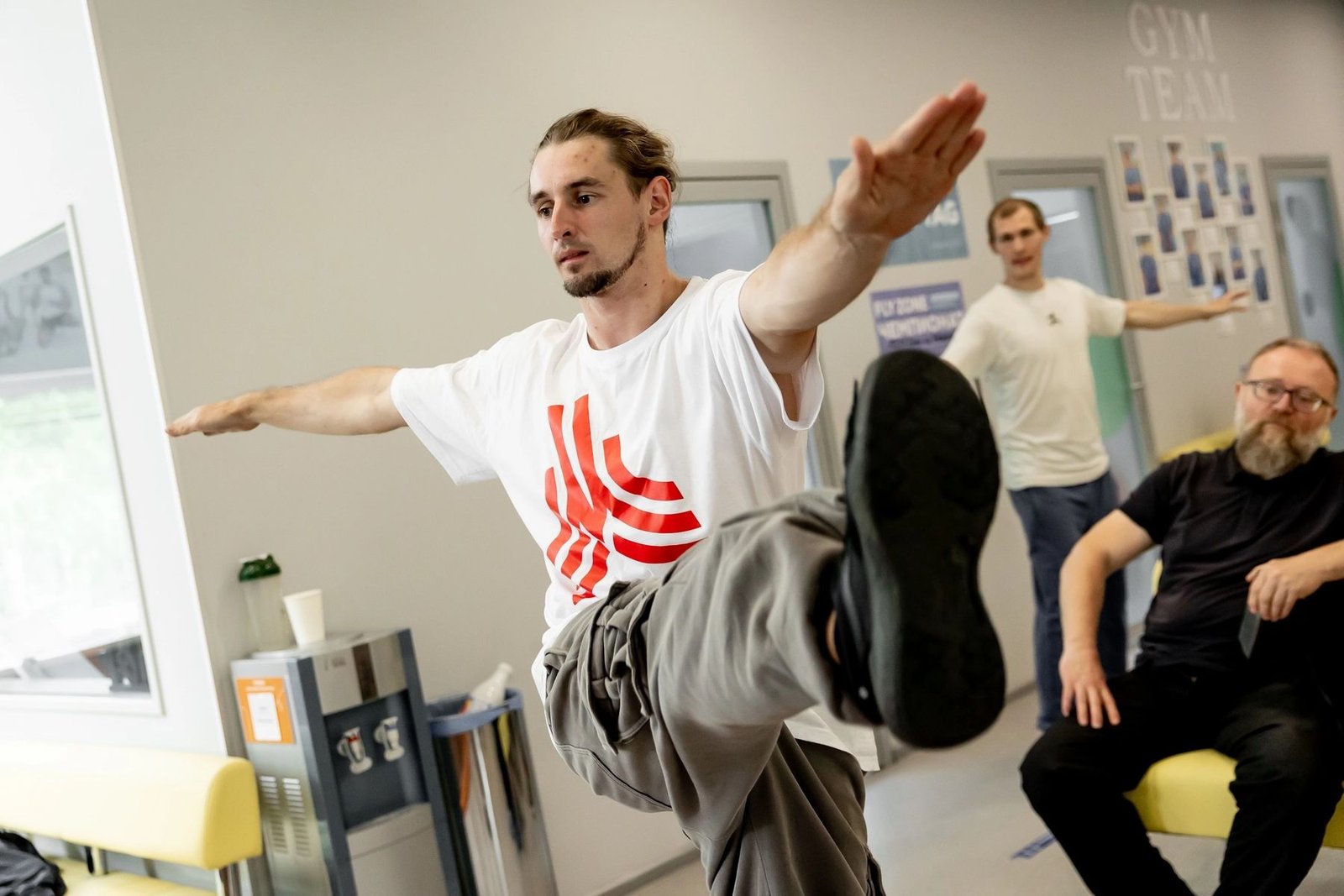
Returning To Sport Without Re-Injury
A genuinely ready ankle after a medial sprain has pain-free range of motion close to the other side, strength that’s reasonably symmetrical, and it holds up through sport-specific movement, cutting, pivoting, or grappling scrambles, without giving way or feeling hesitant. Rushing this stage is one of the more reliable ways to end up with a chronically unstable ankle that keeps rolling.
Balance and proprioception work matters just as much here as straightforward strength, since the deltoid ligament plays a real role in your ankle’s sense of where it is in space. Many people find that skipping this part of rehab, even after the pain has fully resolved, is exactly what leaves the joint vulnerable to rolling the same way again.
If you’ve rolled your ankle outward and want a plan that actually accounts for a medial ankle sprain rather than a generic lateral sprain protocol, Impact Sports Rehabilitation works with athletes across Eccles, Salford, Trafford, and the wider Greater Manchester area on exactly this. Ask about an online consultation if you’re further afield.
Frequently Asked Questions
Is a medial ankle sprain worse than the usual kind?
Not automatically worse, but it can behave differently, since the deltoid ligament is thicker and a forceful injury to it more often involves an associated fracture than a typical lateral sprain does. That’s exactly why getting a medial ankle sprain properly assessed matters, rather than assuming it will follow the same course as a standard inward-roll sprain.
Why can’t I find much information about my type of ankle sprain?
Medial ankle sprains are genuinely less common than lateral sprains, since the ligament involved is stronger and requires more force to injure, so most generic ankle sprain content online is really written about the lateral kind. That gap in easy-to-find, accurate information is exactly why a dedicated medial ankle sprain resource matters.
How do I know if I’ve also broken a bone?
You genuinely can’t tell this from how the ankle feels or looks alone, which is part of why any suspected medial ankle sprain deserves an X-ray if there’s significant swelling, bruising, or an inability to bear weight. In our experience, this is one injury where “wait and see” isn’t the safest first move.
Will my ankle ever feel fully stable again after this?
Most people who follow through with proper grading, rest, and a genuine rehab progression get back to a stable, trustworthy ankle, though some notice mild awareness of the joint in certain conditions long after the injury has technically healed. Consistent balance and strengthening work, the kind built into a plan at Impact Sports Rehabilitation, is what makes the biggest difference to how stable it ultimately feels.
When can I start walking normally again?
This depends heavily on the grade of the sprain, with milder grade one injuries often allowing near-normal walking within a couple of weeks, while grade two and three injuries need a more cautious, staged return to full weight-bearing. Many people find pushing this ahead of what the injury actually allows tends to prolong the swelling and discomfort rather than speeding anything up.
This article is provided for general educational purposes by Impact Sports Rehabilitation and does not constitute medical advice, diagnosis, or treatment. A suspected medial ankle sprain, particularly a severe one, should be assessed by a qualified medical professional to rule out an associated fracture; nothing in this article should be used to self-diagnose or self-treat. Always seek the guidance of a doctor or other qualified health provider with any questions about your specific injury or condition.