If your fingers are constantly sore, stiff, or a little swollen from years of gripping gi fabric and limbs, that’s a genuinely different situation from a single jammed finger, and it deserves a different approach. This is about the chronic, cumulative wear-and-tear that builds up from years on the mats, not one specific acute injury, and here’s what genuinely helps.
Jiu Jitsu Fingers: What Actually Works To Keep Them Healthy
Anyone who’s trained gi for a while knows the feeling, fingers that never quite feel “normal” anymore, a bit stiff first thing in the morning, occasionally swollen after a heavy grip-fighting session, sometimes just a general sense your hands have “aged” faster than the rest of you. This article looks at why that happens and what genuinely helps, as distinct from dealing with one specific acute jammed finger, which our jammed finger treatment coverage addresses separately.
Why Grappling Fingers Take This Kind Of Cumulative Toll
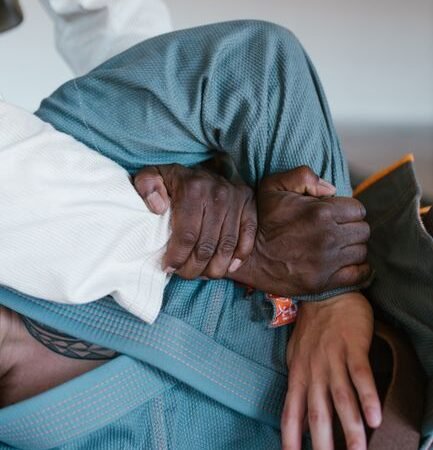
Gi grips place the small joints and tendons of the fingers under genuinely significant, repeated load, gripping collars, sleeves, and pant legs forces the fingers into positions and loads they weren’t really designed to sustain constantly. Unlike a single acute injury with one clear moment of onset, this is about repeated, smaller stress accumulating over months and years of training, which is exactly why it can feel like your fingers have “just gotten like this” rather than tracing back to any specific incident.
Gi grips in particular, spider guard grips, collar and sleeve control, and lapel work, tend to load the fingers in fairly extreme, flexed positions under real resistance, repeatedly and for extended periods within a single session. No-gi grip fighting, hand fighting, and wrist control add their own cumulative load too, so it’s genuinely not just a gi-specific issue, though the gi’s fabric grips tend to place the most concentrated stress directly through the fingers themselves, particularly during scrambles where a grip is held under real resistance for an extended, sustained period rather than briefly.
What’s Actually Happening Inside Your Fingers Over Time
This is genuinely underexplained in most grappling injury content, which tends to focus on single acute injuries rather than the slower, cumulative picture. Repeated heavy loading affects the fibrous pulleys that hold the finger’s flexor tendons close to the bone, small pulley strains that never fully resolve between sessions can gradually thicken or weaken these structures over time. The joint’s own synovial fluid, which lubricates and nourishes the joint surfaces, can also be affected by chronic, repeated stress, and this is part of the genuine link between years of heavy grip sport and an increased risk of joint changes, including early arthritic changes, in the fingers over the long term.
None of this means every long-term grappler is destined for serious joint problems, plenty of people train for decades without significant issues, but it does mean the cumulative loading genuinely matters and deserves more proactive attention than “it’s just part of training” often gets it. Catching and addressing chronic overload patterns earlier, rather than only reacting once symptoms are already significant, tends to make a genuine difference to how your hands hold up over a long grappling career.
Signs Your Fingers Are Dealing With Chronic Overload
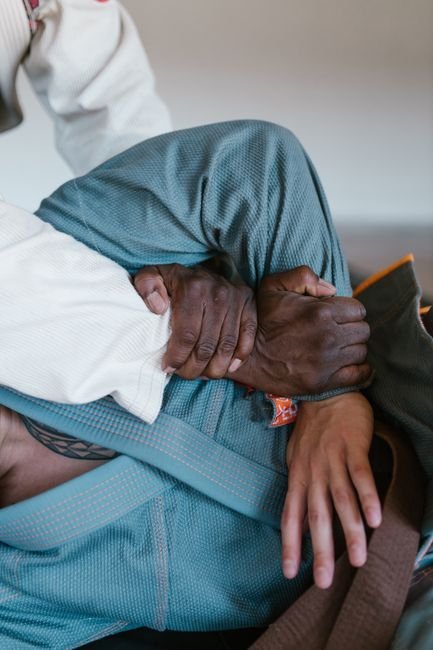
Morning stiffness that eases as you move through the day, mild ongoing swelling around specific knuckles, or a sense that certain grips just don’t feel as strong or reliable as they used to are all genuinely common signs of accumulated finger stress in long-term grapplers. This is different from the sudden pain and swelling of a single jammed or dislocated finger, and it’s worth recognising the distinction, since a one-off acute injury and a chronic overload pattern generally call for different approaches.
A subtle but genuinely useful sign to watch for is a gradual change in finger shape or alignment over months or years, slight thickening around a knuckle, or a joint that no longer sits quite as straight as it used to. These changes tend to happen slowly enough that they’re easy to miss day to day, which is exactly why periodically comparing your hands against how they looked and felt a year or two ago can be a genuinely useful, low-effort way to catch a developing pattern early.
What Genuinely Helps Long Term
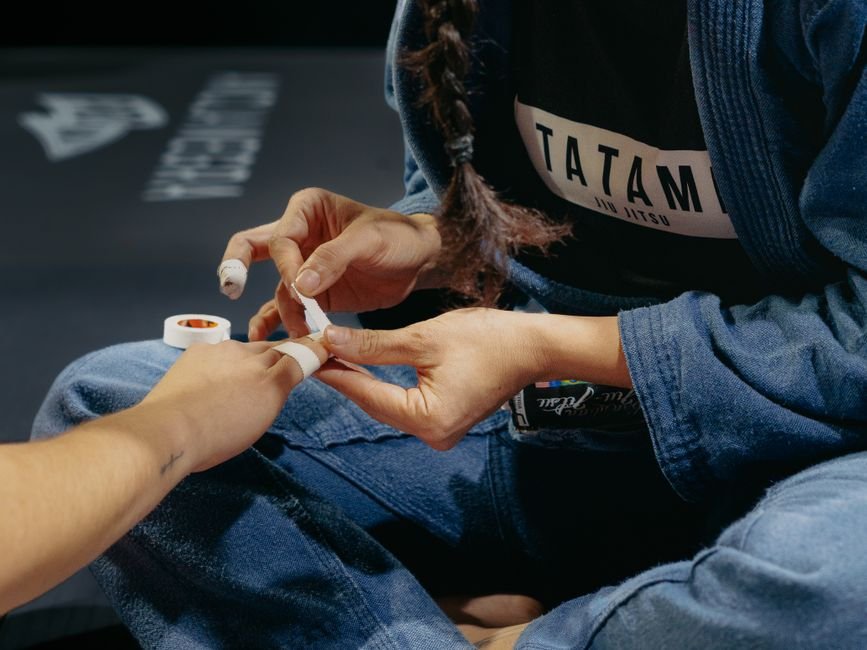
Taping fingers before training is a genuinely useful, low-cost habit many long-term grapplers find helps, providing some additional support to the pulleys and joints during heavy gripping without meaningfully limiting mobility. Buddy taping two fingers together, or taping around the base of a joint to provide a small amount of extra support without fully restricting movement, are both common approaches, and many people find it worth experimenting with what actually feels supportive for their own hands rather than assuming one method suits everyone. Building grip and forearm strength through targeted exercise, rather than relying purely on training itself to build this strength, can also genuinely help the surrounding muscles and tendons better tolerate load. This is worth doing deliberately, outside of training, since relying purely on the gripping you already do on the mats means the muscles supporting your fingers are only ever being loaded in the same repetitive pattern that’s causing the wear in the first place, rather than being genuinely strengthened in a more controlled, progressive way.
Managing overall training volume and allowing genuine recovery time between heavy gripping sessions matters too, since chronic overload is, by definition, a problem of accumulated stress outpacing recovery. A useful, practical marker many experienced grapplers use is paying attention to whether soreness from one session has genuinely settled before the next heavy gripping session, rather than training through accumulating fatigue purely because a class is scheduled. Rotating grip styles, and not always defaulting to the most finger-intensive grips available, is a smaller but genuinely useful habit some experienced grapplers build into their training over time.
Gentle mobility work for the fingers themselves, moving each joint through its full range regularly rather than only ever loading them in the flexed, gripping position training demands, is another genuinely underused habit. Since grip training itself constantly reinforces one specific pattern of movement, deliberately working the fingers in the opposite direction, extension and full straightening, helps counterbalance that repetitive loading rather than letting it go entirely unaddressed between sessions.
How Sports Rehab Supports Long-Term Grappling Hand Health
At Impact Sports Rehabilitation, an assessment for ongoing finger discomfort looks at how your hands are genuinely coping with training over time, not just whatever’s bothering you on a given day, and builds a plan around your specific grip demands and training volume. This runs alongside our rehabilitation consultations, and given the clinic’s genuine familiarity with BJJ and grappling, the advice reflects the real demands of training rather than generic hand-care tips. This can include practical guidance on grip strengthening and mobility work tailored to a grappler’s actual hands, rather than a generic hand-therapy programme that doesn’t account for the specific loads gi and no-gi grips place on your fingers.
Free tool: Kinesiology Taping Selector
Taping it yourself? Our free kinesiology taping selector shows step-by-step patterns for the ankle, knee, shoulder, lower back and BJJ fingers, with the stretch and anchor points for each.
If years of gripping have left your fingers feeling less reliable than they used to, Impact Sports Rehabilitation works with clients across Eccles, Trafford, and Salford. Ask about an online consultation if you’re further afield.
Frequently Asked Questions
Is it normal for my fingers to be stiff every morning after years of training?
This is a genuinely common pattern among long-term grapplers, particularly those training heavily in the gi, though it’s still worth mentioning at an assessment rather than simply accepting it as inevitable. Many people find targeted support, like taping and managed training load, genuinely helps.
Should I be worried about arthritis from grappling?
Chronic, heavy grip stress over years is genuinely linked to an increased risk of joint changes in the fingers, though this doesn’t mean it’s inevitable for everyone who trains grip-heavy sport. Managing training load and addressing symptoms early, rather than ignoring them for years, is a sensible way to reduce this risk.
Does taping my fingers actually make a difference, or is it just a habit?
Many long-term grapplers find taping genuinely helps provide some additional support to the pulleys and joints during heavy gripping, though it’s a supportive measure alongside good training habits rather than a complete solution on its own. It’s a reasonable, low-cost thing to try.
How is this different from a jammed finger?
A jammed finger is typically a single, acute injury with a clear moment of onset, sudden pain and swelling from one specific incident, our jammed finger treatment coverage addresses that directly. This article is about the slower, cumulative wear that builds up over years of training, which calls for a genuinely different approach.
Should I stop training gi if my fingers are constantly sore?
Not necessarily, but persistent or worsening symptoms are genuinely worth getting assessed rather than simply pushing through indefinitely, since ongoing overload without addressing it can contribute to longer-term joint changes. A proper assessment can help you figure out a sustainable approach rather than an all-or-nothing choice.
This article is provided for general educational purposes by Impact Sports Rehabilitation and does not constitute medical advice, diagnosis, or treatment, and does not diagnose the reader’s specific condition. Persistent or worsening finger stiffness, swelling, or pain should be properly assessed rather than assumed to be a normal part of training.