Quick answer: The most useful exercises to prevent shin splints strengthen the calves, the tibialis anterior at the front of the shin, and the hips, so the lower leg is better at absorbing the impact of running. Just as important is building your training load gradually, since sudden jumps in mileage or intensity are one of the biggest risk factors for shin splints. Exercises work best as part of that wider plan rather than on their own.
If you’ve had shin splints before, you probably remember exactly how frustrating they were, and you’ll want to avoid going through that again. Doing the right exercises to prevent shin splints is a smart move, but most prevention advice stops at a list of calf raises and toe taps. Those exercises help, and we’ll cover them properly, yet the evidence and our experience in clinic both point to something else as the biggest factor: how quickly you increase your running. This guide is written for runners who are currently pain-free and want to stay that way, whether you’re training for your first 10k, coming back after a break, or building towards a marathon.
An important note before we start. This is a prevention guide, not a treatment plan. If your shins already hurt when you run, or they’re tender to touch along the bone, please get them properly assessed first, because shin pain can sometimes be a bone stress injury that needs a very different approach. Our guide to shin splints treatment is the better starting point if you’re currently injured.
Why Shin Splints Are So Common Among Runners
Shin splints, known clinically as medial tibial stress syndrome, usually show up as a dull, spreading ache along the inside edge of the shinbone. Every time your foot lands, the tibia and the muscles attached to it absorb a load of two to three times your body weight, repeated thousands of times per run. Muscles, tendons, and bone all adapt to that load and get stronger, but only if they’re given enough time between sessions to recover and remodel. Shin splints tend to appear when the load arriving at the shin outpaces how fast those tissues can adapt.
That’s why the same groups of runners keep turning up with them. New runners, people returning after time off, runners who suddenly add speed work or hills, and anyone who ramps up mileage for an event are all asking their legs to cope with more than they’re currently prepared for. Other things can tip the balance too, including weaker calves and hips, running mostly on hard surfaces, worn-out shoes, and a history of previous shin pain. The good news is that most of these factors are things you can influence, which is where prevention comes in.
Calf And Tibialis Anterior Strengthening, The Core Exercises To Prevent Shin Splints
Strong calves act like shock absorbers. The bigger calf muscle and the soleus beneath it control how your heel lowers and your body moves over your foot, and when they tire or lack strength, more load is passed down to the shinbone. Start with double-leg calf raises off the edge of a step, rising up for a count of two and lowering for a count of three, and progress to single-leg raises once you can manage three sets of fifteen comfortably. Do some with the knee straight and some with the knee slightly bent, since the bent-knee version shifts the work into the soleus, which takes a huge share of the load during running.
The tibialis anterior runs down the front of your shin and controls how your foot lowers to the ground after heel strike. Two simple exercises train it well. For wall toe raises, stand with your back against a wall and your heels about a foot in front of you, then lift the front of your feet up towards your shins and lower slowly. For heel walks, lift your toes off the floor and walk on your heels for twenty to thirty steps. Both can feel surprisingly hard at first, which tells you how underused this muscle often is.
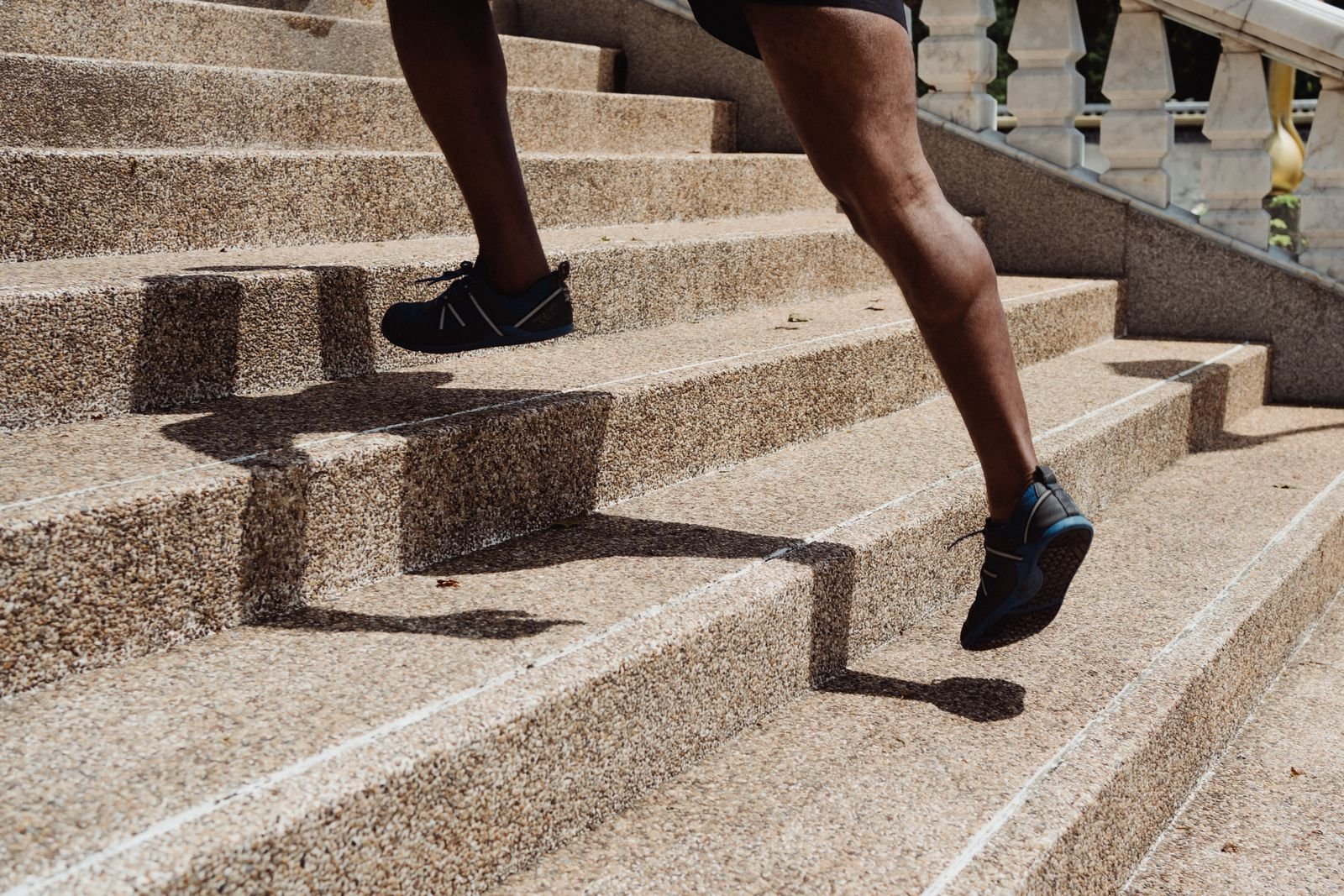
Don’t stop at the shin. Weakness around the hips, particularly the glute muscles on the side of the pelvis, can let the knee and foot collapse inwards when you land, which changes how load reaches the lower leg. Single-leg balance work, step-ups, and side-lying leg raises two or three times a week are a sensible addition. Aim to do your strength work on easy days or after shorter runs rather than right before a hard session.
Training Load Management, The Most Overlooked Prevention Tool
If you only take one thing from this article, make it this: research consistently points to sudden spikes in training as one of the strongest risk factors for shin splints and other running injuries. A widely used way of thinking about this compares the running you did this week with your average over the previous three to four weeks. When this week is roughly similar to, or slightly more than, that recent average, the risk appears to stay relatively low. When it jumps well above it, for example doubling your mileage because you felt good or squeezing in extra sessions before a race, the risk climbs sharply.
The popular 10 percent rule is a reasonable starting point, but in practice the bigger issue is usually not steady growth, it’s the sudden jumps. A runner who goes from fifteen to thirty kilometres in a week, or who adds hills, intervals, and a long run all at once, is asking their bones to adapt faster than they physically can. Bone remodels more slowly than muscle, so your shins may lag a few weeks behind the fitness your heart and lungs are telling you that you have.
A few practical rules help. Change one thing at a time, so if you’re adding distance, keep the pace easy, and if you’re adding speed work, hold the mileage steady. Build for two or three weeks, then take a lighter week. After a break of more than a couple of weeks, restart lower than you think you need to. Some research also suggests that slightly increasing your step rate, by around five to ten percent, can reduce the load on the lower leg with each stride. Finally, make sure you’re eating enough to fuel your training, since consistently under-fuelling is a recognised risk factor for bone stress injuries.
Footwear And Surface Considerations
There’s no single perfect shoe for preventing shin splints, and research hasn’t found one type that works for everyone. What matters more is a shoe that feels comfortable on your foot and hasn’t lost its cushioning. Many runners find their shins complain when shoes pass several hundred kilometres, so keeping a rough log, or rotating between two pairs, is worth doing. Big switches in footwear, such as jumping straight into minimalist or carbon-plated shoes, should be introduced gradually because they change how load is shared through the lower leg.
Surfaces matter too. Running every session on pavement means the same hard, repetitive impact every time. Mixing in some grass, trails, or a running track, and avoiding lots of running on steeply cambered roads, spreads the load more evenly. Keep in mind that a sudden switch to a new surface is itself a change, so introduce it gradually as well.
How Sports Rehab Builds Exercises To Prevent Shin Splints Around You
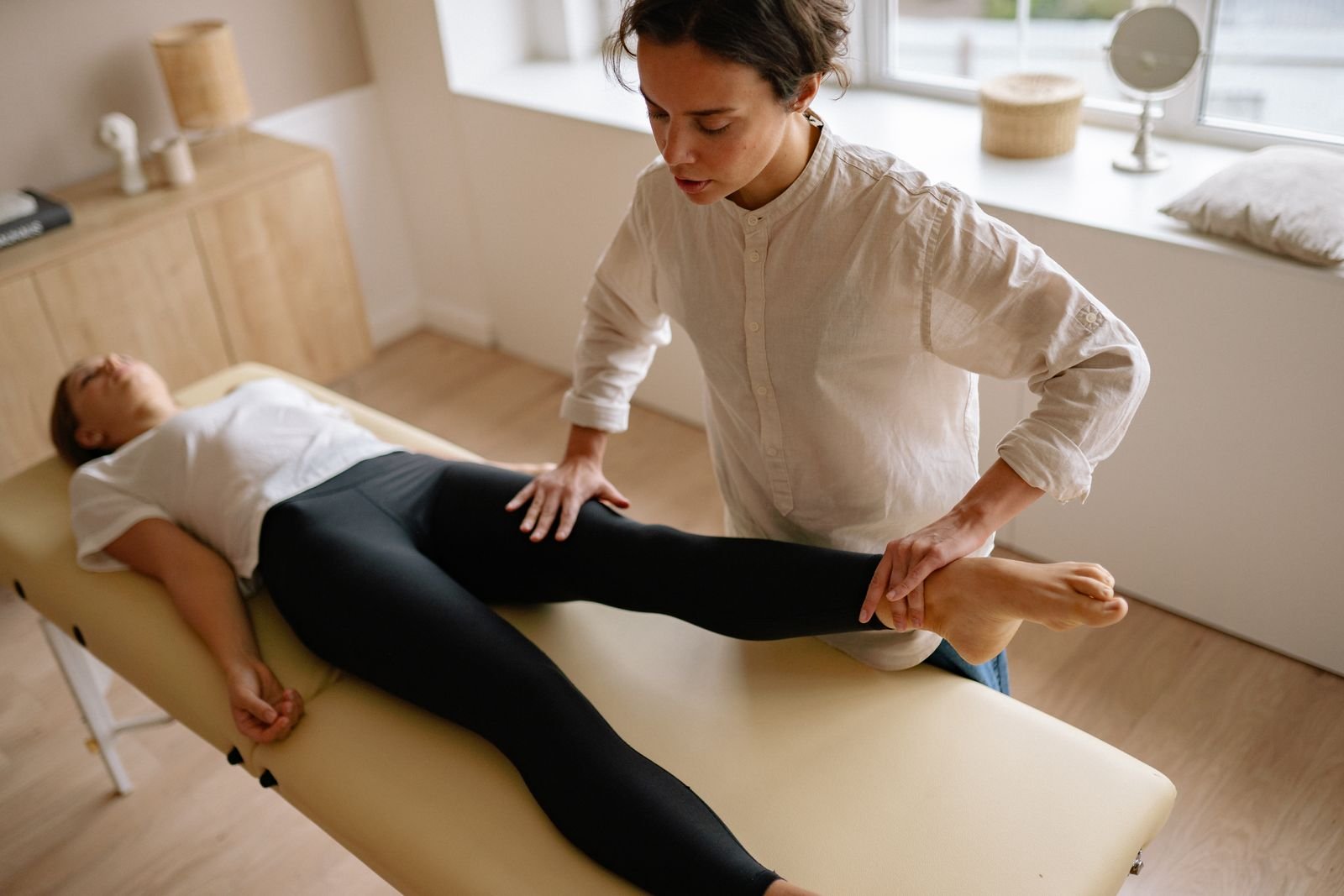
Generic advice only goes so far, because two runners with the same weekly mileage can have very different risk profiles. When we build a prevention plan in a rehabilitation consultation, we start with your running history, any previous shin problems, your current training and upcoming goals, and the realities of your week. We then look at how you move, including calf and hip strength, single-leg control, ankle mobility, and often your running pattern itself.
From there, we set out a strength routine matched to your weak links and a training progression you can actually follow, with sensible build and recovery weeks planned around your event. Supportive tools can have a place too, such as sports massage during heavy training blocks to help tight calves feel looser, but they work alongside the strength and load planning rather than replacing it.
Warning Signs To Catch Early, Before They Become A Problem
Shin splints rarely appear out of nowhere. Most runners notice early warnings first, and catching them is the easiest form of prevention. Watch for a mild ache along the inner edge of the shin that appears during a run and fades afterwards, tightness or soreness in the shins the morning after a session, or tenderness when you press along the bone. These are signals that your load is running slightly ahead of your recovery, and backing off for a few days at that point is usually far easier than dealing with a full flare-up later.
Some signs need more caution. Pain that’s sharp and confined to one small spot on the bone, pain that’s getting worse rather than better as you run, pain at rest or at night, or swelling over the shin should be properly assessed, since these can suggest a stress fracture rather than shin splints. If you’re already experiencing symptoms, our articles on shin pain treatment and shin splint exercises cover what to do next.
Free tool: ACWR Calculator
Ramping up your training? Our free ACWR calculator compares this week with your recent average and shows whether you are in the sweet spot or building too fast. No email needed.
If you want to keep running without your shins holding you back, Impact Sports Rehabilitation in Eccles, Greater Manchester can build a prevention plan around your training, your history, and your goals. We work with runners across Eccles, Salford, Trafford, and the wider Manchester area, and online consultations are available if you’re training further afield. Book in before your next training block and give your shins the best possible start.
Frequently Asked Questions
Can exercises really stop shin splints from coming back?
No exercise programme can guarantee you’ll never get shin splints again, but research suggests that stronger calves and hips, combined with sensible training progression, can meaningfully reduce the risk. In our experience, the runners who stay injury-free tend to be the ones who keep up their strength work and avoid big jumps in mileage.
How often should I do shin splint prevention exercises?
Two to three strength sessions a week is a realistic target for most runners. They don’t need to be long, twenty minutes after an easy run is plenty, and consistency over months matters far more than how hard any single session is.
Is it okay to run through mild shin pain?
A mild ache that fades quickly can be an early warning rather than an injury, but it’s a sign to ease off for a few days rather than push on. If the pain is sharp, getting worse, or there at rest, stop running and get it checked, as it may not be shin splints.
Do compression socks prevent shin splints?
Some runners like how compression socks feel, and they’re unlikely to cause harm, but the evidence that they prevent shin splints is limited. They’re best seen as an optional extra rather than a substitute for strength work and careful training progression.
I’m getting back into running after a long break, how do I avoid shin splints?
Start with less than you think you need, often a mix of walking and running, and build gradually over several weeks while adding calf and hip strength work alongside it. Impact Sports Rehabilitation can help map out a return-to-running plan if you’ve had shin problems in the past and want some structure.
Are shin splints caused by flat feet?
Foot shape can play a part for some people, but flat feet on their own don’t mean you’ll get shin splints. Training load, strength, footwear, and running surfaces usually matter just as much, which is why an individual assessment is more useful than focusing on foot type alone.
This article is for educational purposes only and is not a substitute for professional medical diagnosis or treatment. If you currently have shin pain, please seek a proper assessment rather than following a prevention routine. Impact Sports Rehabilitation offers in-person and online consultations to help runners train safely.