Quick answer: An elbow dislocation happens when the bones of the elbow joint are forced out of their normal position, most often from a fall onto an outstretched arm or a direct collision, and it needs to be put back into place by a medical professional immediately rather than at home. Once properly reduced and assessed, recovery genuinely progresses in stages, with early gentle movement in the first few weeks followed by a longer strengthening phase, and most people regain good function, though full recovery can realistically take several months. How fast that happens depends heavily on whether the dislocation was straightforward or involved additional fracture or nerve damage.
An elbow dislocation is a genuinely dramatic injury, whether it just happened to you in a fall or a collision, or you’re a few weeks into recovering from one and trying to understand what actually happened and how long this is realistically going to take. It’s a significant injury and it deserves to be treated as one, but it also isn’t something that has to derail your training for good. Here’s an honest, grounded look at what happens during an elbow dislocation, why it needs urgent care, and what recovery genuinely looks like once that’s been taken care of.
What Actually Happens When You Dislocate Your Elbow
Your elbow joint relies on a close, stable fit between the end of your upper arm bone and the two bones of your forearm, held together by a network of ligaments and the joint capsule surrounding it. A dislocation happens when a force, usually a fall onto an outstretched hand or a direct blow during a collision, pushes these bones out of their normal alignment, tearing or significantly stretching the surrounding ligaments and capsule in the process.
Dislocations are generally described as either simple or complex. A simple dislocation involves the ligaments and soft tissue without an accompanying fracture, while a complex dislocation involves a fracture of the elbow, most often the radial head, the ulna, or a small bone fragment at the front of the joint, alongside the ligament damage. This distinction matters quite a lot for how the recovery is likely to unfold.
Most elbow dislocations happen in one of two directions, with the forearm bones displaced backward relative to the upper arm being by far the most common pattern, typically from landing on an outstretched hand with the elbow slightly bent. Contact sports, gymnastics, cycling falls, and general trips or falls onto the arm are all common everyday mechanisms, and it’s worth knowing that this injury doesn’t require an especially dramatic or unusual mechanism, an ordinary fall at the wrong angle is often enough.
Why This Needs Immediate Medical Attention
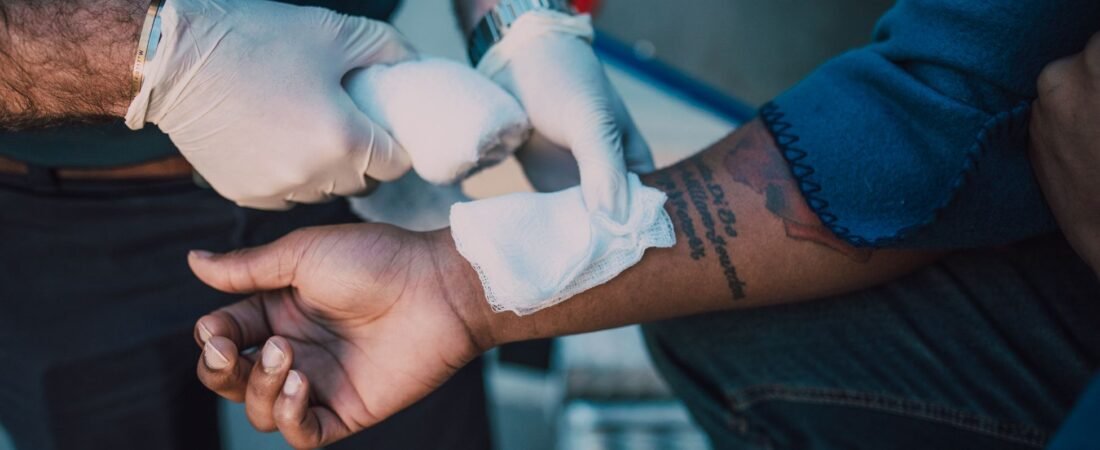
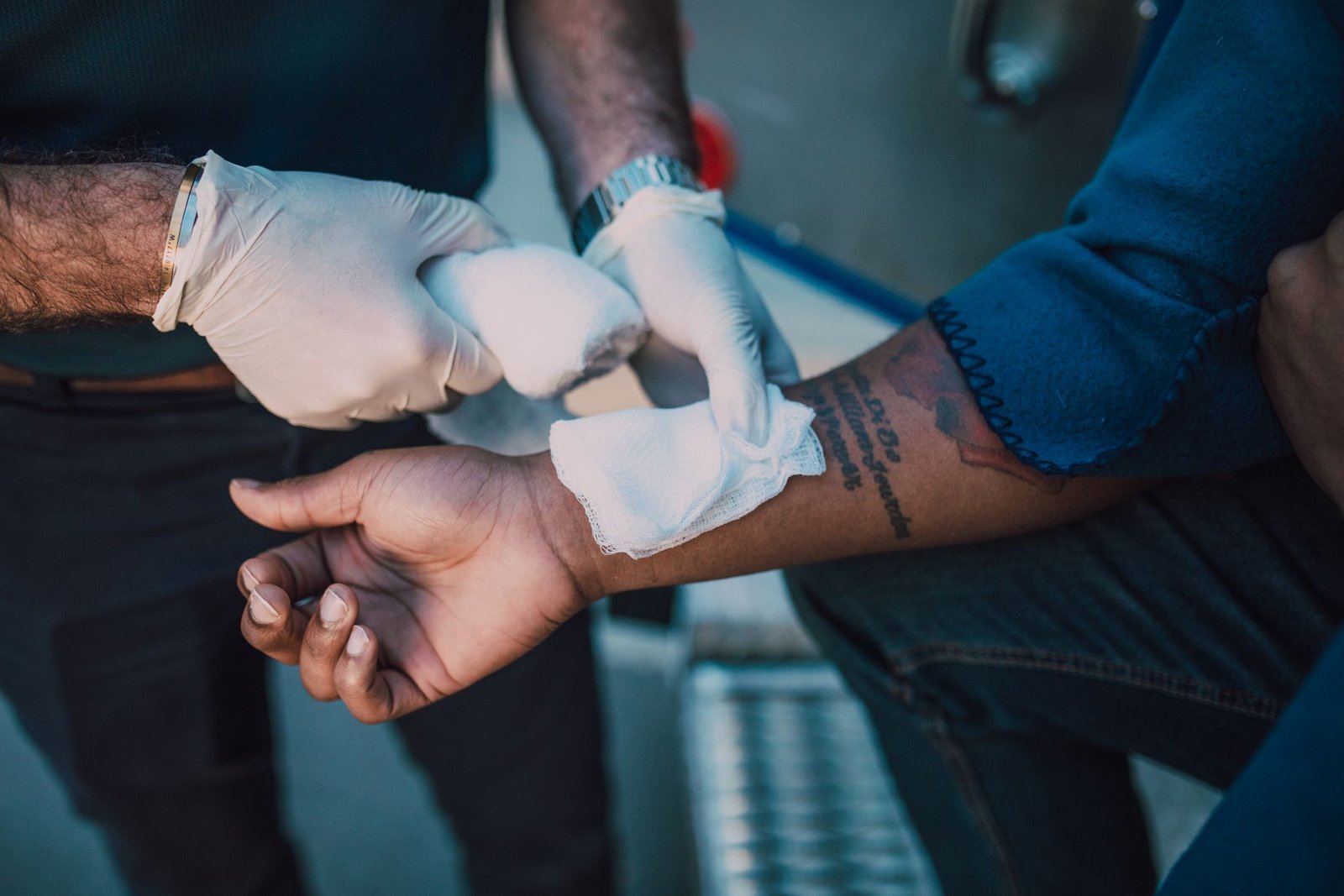
An acute elbow dislocation is a genuine medical emergency, and this needs to be said clearly, it must be reduced, put back into its normal position, by a trained medical professional at A&E or urgent care, never at home, on the sideline, or by anyone without the proper training. Attempting to reduce it yourself or having someone untrained attempt it risks causing further damage to the surrounding nerves, blood vessels, and soft tissue.
Beyond the reduction itself, prompt assessment is essential to check for associated fractures, and for damage to the nerves and blood vessels that run close to the elbow joint, since a dislocation can occasionally affect these structures alongside the ligaments. This is exactly why anyone with a suspected fresh elbow dislocation should get to emergency medical care immediately rather than waiting to see how it feels, and everything from this point in the article onward assumes the elbow has already been properly reduced and assessed by a medical professional.
After reduction, the treating team will typically check circulation and sensation in the hand and forearm, take imaging to look for any associated fracture, and assess the joint’s stability before deciding on the right immediate management, whether that’s a period of splinting or an earlier introduction of protected movement. This initial assessment genuinely shapes everything that follows, which is another reason self-managing a dislocation, even after the joint feels like it’s back in place, isn’t a substitute for proper medical care.
The Real Recovery Timeline, Stage By Stage
Immediately after reduction, the elbow is typically protected in a splint or sling for a short period, often somewhere in the region of five to ten days, alongside standard measures to manage pain and swelling. Current evidence genuinely favours starting gentle movement relatively early rather than prolonged immobilisation, immobilising a stable, simple dislocation for longer than around three weeks has actually been linked to worse long-term range of motion compared with starting early, gentle motion sooner, once a clinician has confirmed it’s appropriate to do so.
From there, rehabilitation typically progresses over roughly six to twelve weeks. The early phase focuses on gentle, protected range of motion to prevent the joint stiffening up, a genuinely common risk after this injury. As things settle, strengthening work builds progressively, and the later stage introduces more functional and, where relevant, sport-specific movement patterns. Many people regain a good, functional range of motion within a couple of months, though many clients also find some residual stiffness lingers longer than that, and returning to heavier labour or sport is often realistic somewhere in the three to four month range, with full, complete recovery sometimes taking up to six months depending on the severity of the original injury.
What Affects How Fast You Heal
Whether your dislocation was simple or complex makes a genuine difference here. A simple, ligament-only dislocation in an otherwise healthy joint generally has a strong chance of regaining full range of motion, while a complex dislocation involving a fracture, or one where nerve involvement was found on assessment, an injury to the ulnar nerve is a recognised, though not universal, complication of this injury, typically needs a longer and more carefully staged recovery.
Age, general activity level, and how consistently the rehab plan is followed all genuinely influence the pace too. Elbow stiffness in particular tends to respond well to consistent, appropriately dosed movement work started at the right time, and skipping sessions or pushing too aggressively both tend to work against a smooth recovery in different ways. It’s worth being honest that even straightforward, simple dislocations can leave some residual stiffness or discomfort for a good while after the joint is technically “healed,” which is a normal part of this injury’s recovery rather than a sign something has gone wrong. Research following people after simple dislocations has found a genuinely large proportion still report some residual pain or stiffness well into their recovery, so if that’s where you are, it doesn’t automatically mean your recovery has gone off track.
How Sports Rehab Supports Recovery After Reduction
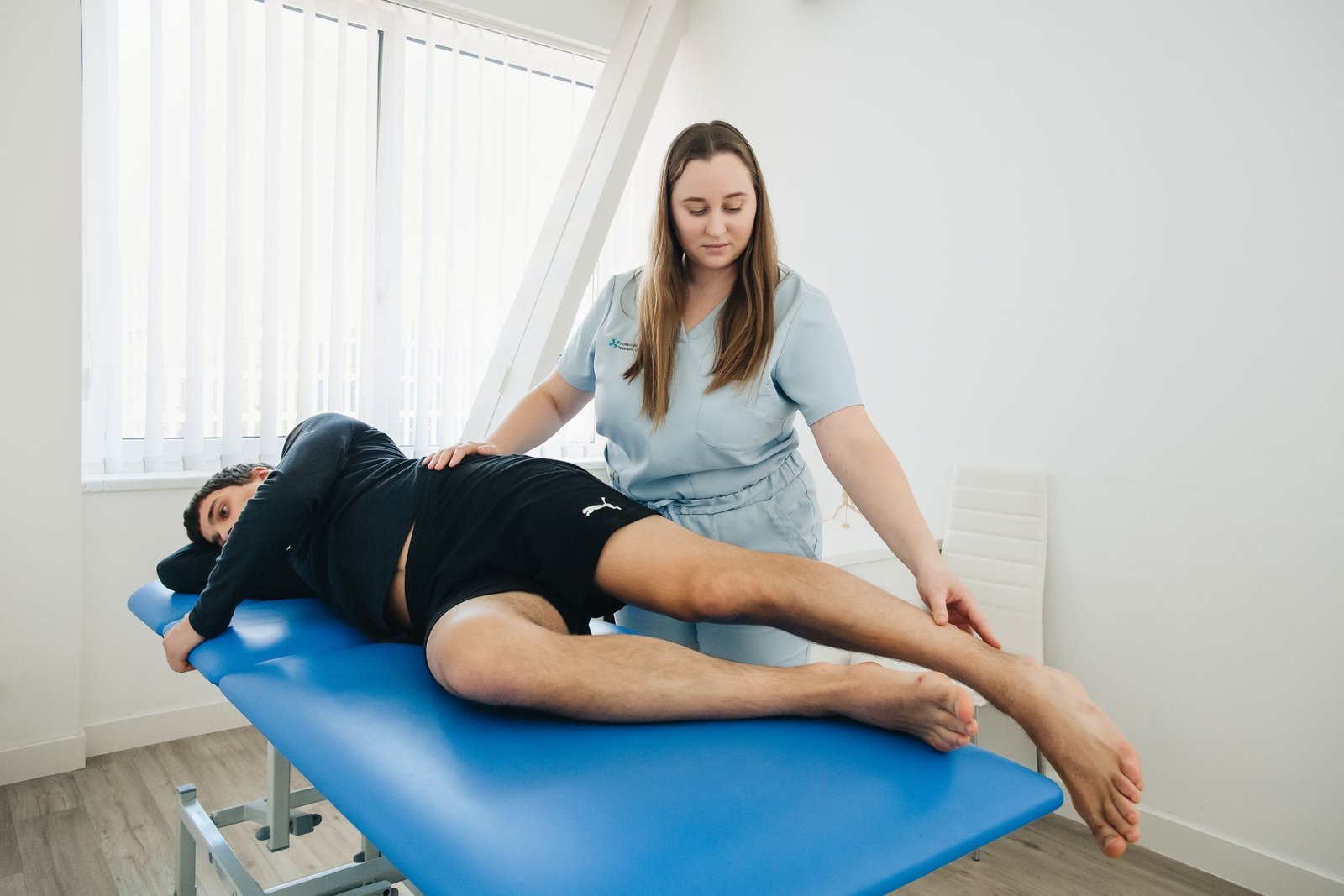
Once your elbow has been medically reduced, assessed, and cleared to begin rehabilitation, guided recovery plays a genuinely important role in getting the joint moving safely without either stiffening up or being pushed too hard too soon. At Impact Sports Rehabilitation, a Rehabilitation Consultation builds a staged plan around your specific injury, whether it was simple or complex, and how your elbow is responding as movement is reintroduced.
Rocktape taping is something many clients find genuinely useful for extra support and proprioceptive feedback as strength and confidence rebuild, and sports massage can help manage the compensatory tightness that often builds up in the forearm and shoulder while the elbow is protecting itself during recovery.
Returning To Sport Safely
Returning to sport after an elbow dislocation, particularly a contact sport or anything with a genuine falls risk, needs to be graded carefully given the elbow’s higher risk of a repeat injury while it’s still rebuilding full strength and stability. Full, pain-free range of motion and good strength through the joint are generally the markers worth reaching before returning to anything with real contact or fall risk, rather than pain alone settling being treated as the green light.
For throwing sports specifically, the demands on the elbow are high enough that a longer, more gradual return, sometimes with a period of relative rest measured in months rather than weeks, followed by a structured strengthening and throwing progression, tends to be the realistic path rather than an early return to full intensity.
If you’re recovering from an elbow dislocation and want a proper, staged plan to get back to full strength and training safely, Impact Sports Rehabilitation works with everyday athletes and contact-sport players across Eccles, Salford, Trafford, and the wider Greater Manchester area on exactly this kind of recovery. Book a Rehabilitation Consultation once you’ve been medically cleared, or ask about an online consultation if you’re further afield.
Frequently Asked Questions
Is it ever okay to just push my elbow back into place myself?
No, this should never be attempted by anyone without proper medical training, doing so risks further damage to the nerves, blood vessels, and soft tissue around the joint. Get to A&E or urgent care immediately for a fresh dislocation rather than attempting anything at home.
Will my elbow ever straighten fully again after this?
Many people, particularly with a simple, ligament-only dislocation, do regain a full or near-full range of motion, though it genuinely depends on the severity of your specific injury and how early, appropriately dosed movement work was started. Some residual stiffness is common and doesn’t necessarily mean the outcome will be poor.
How do I know if my dislocation was simple or complex?
This is determined through imaging and clinical assessment at the time of your injury, since a complex dislocation involves an accompanying fracture that isn’t something you could tell from symptoms alone. Your treating clinician should be able to tell you clearly which category your injury falls into.
Is numbness or tingling in my hand something to worry about?
Yes, this should be reported to your medical team promptly, since nerve involvement, while not universal, is a recognised feature of some elbow dislocations and needs proper assessment rather than being assumed to settle on its own. This is especially important to mention if it’s new or getting worse.
How soon can I start moving my elbow after it’s been put back in place?
This depends entirely on your specific injury and what your treating clinician advises, since starting appropriate movement at the right time genuinely matters for the outcome, neither too early nor unnecessarily delayed. Many clients at Impact Sports Rehabilitation begin gentle, guided movement work once medically cleared to do so, often sooner than people expect.
Will I need surgery for my elbow dislocation?
Not necessarily, many simple dislocations are managed successfully without surgery, while complex dislocations involving significant fracture or instability sometimes do require surgical treatment. This is a decision made by your treating orthopaedic team based on your specific injury, not something that applies universally to every dislocation.
This article is provided for general educational purposes by Impact Sports Rehabilitation and does not constitute medical advice, diagnosis, or treatment. An acute elbow dislocation is a medical emergency requiring prompt reduction by a trained professional at A&E or urgent care, and this article only discusses rehabilitation in the context of an elbow that has already been medically reduced and assessed. Always seek the guidance of a doctor or other qualified health provider with any questions about your specific injury.