Quick answer: A dislocated shoulder happens when the top of the arm bone is forced out of the shoulder socket, usually from a fall, a heavy tackle, or the arm being forced into an awkward overhead position, and it needs prompt medical reduction rather than any attempt to put it back in place yourself. Once it’s been properly reduced, recovery typically follows a staged process, protection and pain control first, then gradual range of motion, then progressive strengthening, with full recovery genuinely taking anywhere from twelve weeks to several months depending on age, severity, and how closely the rehab plan is followed.
Whether your shoulder dislocated recently and has already been reduced, or you’re further along in recovery and trying to understand what actually helps, a dislocated shoulder is a genuinely significant injury that deserves a proper, structured approach rather than guesswork. This article covers what actually happens during a shoulder dislocation, why the reduction itself needs to happen at A&E rather than at home, what a realistic recovery timeline and staged rehab process actually look like, and a genuinely important factor, your age at the time of injury, that most generic recovery guides don’t explain clearly.
What Actually Happens During A Shoulder Dislocation
The shoulder joint has an unusually large range of motion, which is part of why it’s also the joint most prone to dislocating, the top of the arm bone, the humeral head, sits in a relatively shallow socket, and a sufficiently forceful movement, a fall onto an outstretched arm, a heavy tackle, or the arm being forced backward and overhead, can push it fully out of position. Most shoulder dislocations happen in the forward, or anterior, direction, and alongside the obvious deformity and severe pain, there’s often a noticeable loss of normal shoulder shape, an inability to move the arm normally, and sometimes numbness or altered sensation further down the arm. Because significant force is usually involved, a shoulder dislocation can also injure surrounding structures, the labrum, the joint capsule, or nearby nerves, at the same time as the joint itself moving out of place, which is part of why proper medical assessment matters beyond simply getting the joint back into position.
Why This Needs A&E, Not A DIY Reduction
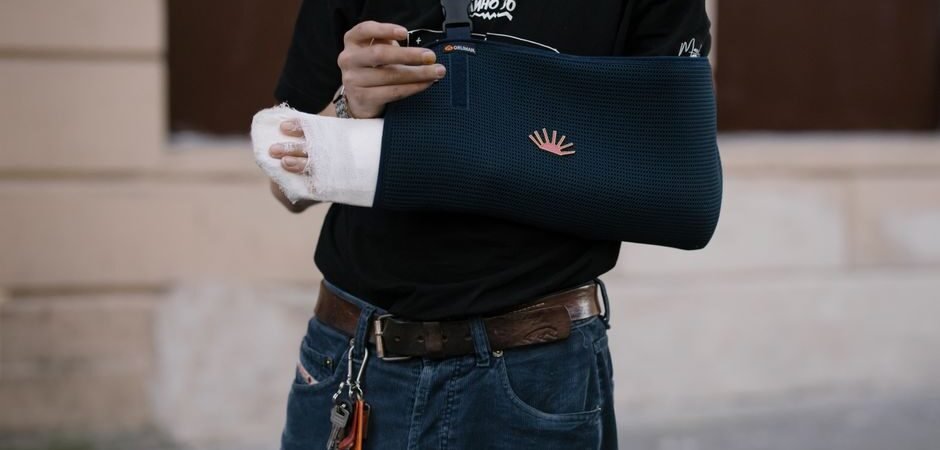
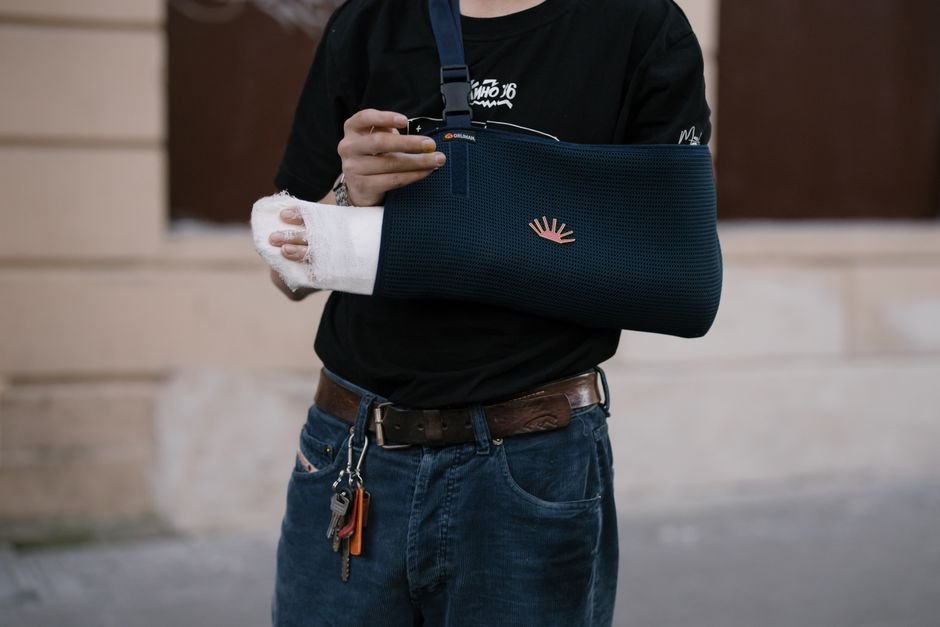
If your shoulder has just dislocated, this is a genuine medical emergency that needs assessment and reduction at A&E, never an attempt to put it back into place yourself or have someone untrained attempt it for you. A trained clinician needs to confirm there’s no associated fracture before attempting reduction, since manipulating a dislocated shoulder that also has a fracture can cause significantly more damage, and the reduction technique itself needs to be done carefully to avoid injuring the surrounding nerves and blood vessels. Genuine emergency signs to never ignore include the arm feeling cold, numb, or changing colour, which can indicate a blood-supply problem, and any loss of sensation or movement further down the arm, which needs urgent assessment for nerve involvement. Once the shoulder has been safely reduced and any fracture has genuinely been ruled out, that’s when the recovery and rehabilitation process, covered below, actually begins.
The Age Factor Most Guides Don’t Explain
This is a genuinely important piece of information that most generic dislocated-shoulder content either skips entirely or mentions only in passing, and it directly shapes what a sensible recovery plan should actually look like. Research following patients after a first-time shoulder dislocation has found the risk of it happening again is dramatically higher in younger patients, with recurrence rates reported anywhere from roughly two-thirds to as high as ninety percent in people whose first dislocation happens in their teens or early twenties, compared to a substantially lower recurrence risk in patients over thirty-five. This is largely because younger, more active shoulders place greater ongoing demand on a joint capsule and labrum that may not have fully healed in its original, stable position after the first injury. This age-related recurrence risk is a genuinely important factor a clinician weighs when discussing whether a structured conservative rehab programme is likely to be enough, or whether the injury and your individual risk profile suggest a surgical opinion is worth exploring, rather than a decision that should be made on age alone without a proper assessment.
Checking For Nerve Involvement
Something else worth understanding, and worth having specifically checked as part of your assessment, is the shoulder’s proximity to the nerve that supplies sensation and movement to part of the shoulder and upper arm. Studies suggest nerve involvement is a genuinely common companion injury with a traumatic shoulder dislocation, more frequent than many people realise, so a proper neurological check, testing sensation over the outer part of the shoulder and the ability to move the arm away from the body, is a standard and important part of assessment both before and after reduction. Most nerve involvement of this kind improves over time as the surrounding tissue settles and heals, but it’s exactly the kind of thing that needs to be identified and monitored properly rather than assumed to be part of normal post-dislocation soreness.
The Staged Recovery Process
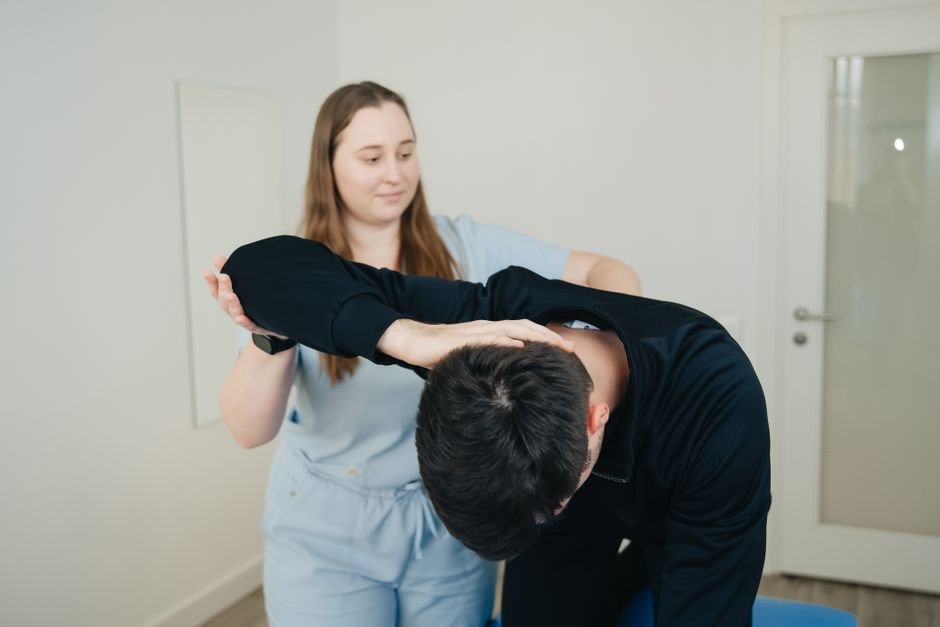
Once the shoulder has been safely reduced, recovery generally follows a genuinely staged process rather than jumping straight into strengthening. The first few weeks typically focus on protecting the joint, usually in a sling, managing pain and swelling, and gentle, guided movement to prevent excessive stiffness without stressing the healing tissue. From there, the focus shifts to gradually restoring a fuller, pain-free range of motion, before progressing into a structured strengthening programme targeting the muscles that actively support and stabilise the shoulder joint, since strong, well-coordinated surrounding muscles genuinely help protect against a repeat dislocation. Full recovery, particularly a genuine return to contact sport or heavy overhead activity, realistically takes several months, and the single greatest risk during this whole process is returning to demanding activity before the shoulder is actually stable, even if it’s currently feeling reasonably comfortable.
How Sports Rehab Supports Recovery
Guided rehab plays a genuinely important role in recovering well from a shoulder dislocation, both for restoring normal function and for reducing the risk of it happening again. At Impact Sports Rehabilitation, a rehabilitation consultation for a dislocated shoulder starts with understanding exactly what happened, how it was managed at the time, and where you currently are in the recovery process, before building a staged, individualised programme around your specific situation and activity goals. This kind of structured, professionally guided approach matters particularly for anyone hoping to return to sport or manual work, since the difference between a properly rehabilitated shoulder and one rushed back into demanding activity is often exactly what determines whether a repeat dislocation happens. If your dislocation involved damage to the labrum specifically, our guide to labrum tear shoulder recovery covers that particular injury pattern in more detail, and our rotator cuff rehab guide is also worth reading if rotator cuff involvement has been part of your diagnosis.
Free tool: Return-To-Sport Readiness Quiz
Thinking about going back? Our free return-to-sport readiness quiz checks pain, strength, sport movements and confidence, and names any gaps worth closing first.
If you’ve had a shoulder dislocation, whether it’s recent or you’re further along in recovery and want a proper, structured plan, Impact Sports Rehabilitation in Eccles, Greater Manchester can help you rebuild strength and stability safely. We work with athletes and active adults throughout Eccles, Trafford, Salford, and the wider Manchester area, and online consultations are available if you’re further afield.
Frequently Asked Questions
Can I just pop my shoulder back in myself if this has happened before?
No, even with a shoulder that’s dislocated before, self-reduction or having an untrained person attempt it carries a genuine risk of nerve, blood vessel, or additional soft-tissue injury, and it should always be done by a trained clinician at A&E instead. Recurring dislocations are also exactly the kind of pattern worth discussing with a specialist about longer-term management.
How long will I need to wear a sling?
This varies depending on your specific injury and clinical guidance, but it’s typically somewhere in the range of one to a few weeks for straightforward cases, used to protect the healing tissue during the earliest, most vulnerable phase. Your clinician will guide exactly when it’s appropriate to start reducing sling use and beginning gentle movement.
Will I definitely dislocate it again?
Not definitely, though the genuine risk is meaningfully higher if your first dislocation happened at a younger age, and following a proper, structured rehab programme is one of the most effective ways to reduce that risk regardless of age. This is exactly the kind of individual risk profile a proper assessment can help clarify.
When can I go back to sport?
This depends entirely on how your specific recovery is progressing rather than a fixed calendar date, and returning too early, even if the shoulder currently feels fine, is the single biggest risk factor for a repeat dislocation. A structured, professionally guided rehab programme is what most reliably determines when it’s genuinely safe to return.
Do I need surgery?
Not necessarily, many shoulder dislocations are managed successfully with a structured conservative rehab programme, though factors like your age, the extent of any associated damage, and how many times it’s dislocated genuinely factor into that decision. This is exactly the kind of thing a specialist assessment helps determine on an individual basis.
Why does my shoulder still feel unstable even though the pain has mostly gone?
A feeling of instability without significant ongoing pain is a genuinely common experience during recovery, and it often reflects that the surrounding stabilising muscles and proprioception, your body’s sense of joint position, haven’t yet been fully rebuilt even though the initial injury has settled. This is exactly what a structured strengthening and stability programme is designed to address.
This article is educational and general in nature, and is not a substitute for professional medical diagnosis or treatment. A fresh shoulder dislocation is a medical emergency requiring assessment and reduction at A&E, never a self-reduction attempt. Impact Sports Rehabilitation offers rehabilitation consultations to support recovery once a dislocation has been properly medically managed.