
Working out when to see a physio vs A&E for a sports injury is hard when you have just been hurt and the adrenaline is still going. This quick decision tool checks the genuine emergency red flags first, then asks a few questions about severity and timing, and gives you one clear recommendation for where to go next.
Your answers are never stored or sent anywhere and there is no sign-up. You get one clear recommendation straight away. It helps you decide where to go, it does not diagnose.
Please note: this tool gives general educational guidance only. It does not diagnose and does not replace a professional assessment. It always leans towards the more cautious option, and it should never stop you from seeking urgent care if you feel you need it.
Red flags: get urgent help, not an online tool
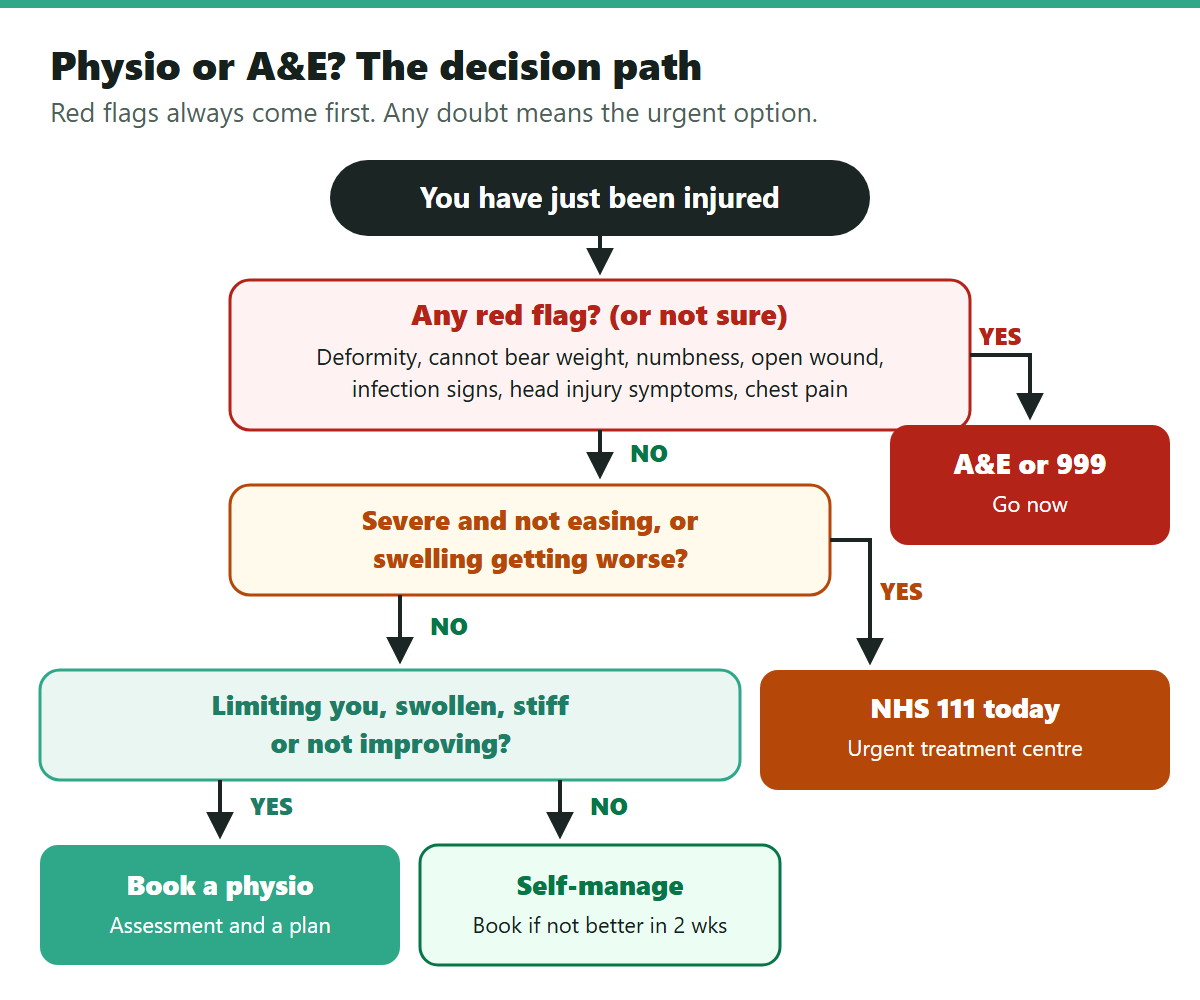
Go to A&E or call 999 straight away if you have any of these:
- Sudden, severe pain, or a visible deformity of a bone or joint
- You cannot put any weight through the injured leg at all
- Numbness, tingling or loss of feeling, or a limb that looks pale or cold
- Signs of infection: heat, spreading redness, fever or feeling generally unwell
- Chest pain, or shortness of breath
- Any head injury followed by confusion, repeated vomiting or loss of consciousness
For anything that worries you but feels less urgent, NHS 111 is available any time.
Physio, A&E or self-manage?
Two short stages: red flags first, then how it is
You will answer up to seven yes or no safety questions, one at a time. Any “yes” or “not sure” takes you straight to urgent care advice. If there are no red flags, five quick questions follow.
Worked Example: A Swollen Ankle Two Days After A Game
- Red flags
- None. Can bear weight, no deformity, no numbness, no wound, no signs of infection, no head injury, no chest pain.
- How it is
- Happened 1 to 3 days ago. Moderate pain. Some swelling, going down. Partly able to move it. Improving.
- Recommendation
- Book a physio or sports therapy assessment
This looks appropriate for a physio assessment rather than A&E, because the pain is limiting your sport or daily activities, there is some swelling and movement is restricted. Book in to get it properly evaluated and get a recovery plan started. Had the same person answered “yes” to being unable to take four steps, or “not sure” about a deformity, the result would have been to go to A&E instead.
The Red Flags That Always Mean A&E, Not A Physio
Some signs mean an injury needs urgent medical care, full stop. The tool asks about each of them first, and any “yes” overrides everything else. A visible deformity, or a bone or joint that looks out of place, suggests a fracture or dislocation that needs X-rays and often needs putting back in place by a doctor.
Being unable to put any weight through a leg, or to take four steps even with a limp, is one of the main signs clinicians use to decide whether an ankle or foot needs an X-ray. Numbness, tingling, or a limb that looks pale or feels cold can mean a nerve or blood vessel is affected, which is time-sensitive.
An open wound, especially one where bone might be involved, needs proper cleaning and assessment because of the infection risk. Heat, spreading redness, fever or feeling generally unwell around an injury can point to infection. Any head injury followed by confusion, vomiting, loss of consciousness, drowsiness or a worsening headache needs urgent assessment, and chest pain or shortness of breath should never be put down to a sports knock without being checked.
If you are not sure whether one of these applies, the tool treats it as a yes. That is deliberate. With these particular signs, it is far better to be checked and reassured than to wait.
What A Physio Or Sports Therapist Can Actually Help With Instead
Most sports injuries are not emergencies. Sprains, strains, tendon problems, joint pain that builds up with training, back and neck pain, and the lingering aches that never quite clear are exactly what physios and sports therapists deal with every day. For these, A&E is rarely the best place to be. You may wait hours to be told it is not broken and to rest it, which is reassuring but does not get you any closer to training again.
A sports therapy or physio assessment focuses on how the injury affects the way you move. We look at what happened, examine the area, test strength, range and stability, and work out what is actually limiting you. Then we build a plan with clear stages, from settling it down to getting you back to full training, and adjust it as you progress.
It is worth having realistic expectations. A physio cannot X-ray you, and if something during the assessment suggests a fracture or another problem that needs medical input, we will refer you on. Equally, a physio appointment will not make a moderate sprain heal overnight. What it does is make sure the time you spend recovering is used well.
Why Getting This Decision Right Matters For Recovery Time
Choosing the right first point of care is not just about safety, it genuinely affects how fast you get back. Under-reacting to a red flag is the obvious risk. A missed fracture that you keep walking on, or a dislocation that is not reduced quickly, can turn a six-week recovery into a much longer and more complicated one. A scaphoid fracture in the wrist, for example, is easy to dismiss as a sprain and can heal poorly if it is not picked up early.
The opposite mistake is less talked about but just as common. Plenty of people take a straightforward sprain to A&E, get an X-ray that rules out a break, are told to rest it, and then do exactly that for two or three weeks. In our experience, that long period of rest is often what slows recovery down. Muscles weaken, the joint stiffens and confidence drops, so by the time they start rehab they are further behind than if they had begun guided movement within the first few days.
The sweet spot is simple: urgent care when there is a red flag or real doubt, and early rehab for everything else. A rehabilitation consultation with Impact Sports Rehabilitation in the first week or so after a non-emergency injury means you know what you are dealing with, what to do and what to avoid, and how your recovery should progress, rather than guessing for weeks. We are based in Eccles, near Salford, Trafford and Manchester, and offer online consultations too.
No red flags, but it is limiting you? Book a rehabilitation consultation with Impact Sports Rehabilitation in Eccles, or online, and get your recovery started properly.
Frequently Asked Questions
When should I go to A&E for a sprain?
Go to A&E if you cannot put any weight on it or take four steps, if there is a visible deformity, if the area is numb, cold or pale, or if the pain is severe and not easing. Most sprains without those signs are better assessed by a physio or sports therapist, who can start your rehab straight away.
Can a physio tell if something is broken?
A physio can recognise the signs that suggest a fracture and will refer you for an X-ray if they suspect one. What a physio cannot do is confirm or rule out a fracture without imaging. If a fracture is likely, you should be seen somewhere that can X-ray you, such as A&E or an urgent treatment centre.
I’m probably overreacting. Should I just wait and see?
If you have any red flag, please do not wait. Getting checked and reassured is always better than missing something serious. If there are no red flags, waiting a day or two while protecting the injury is reasonable, but if it is limiting you or not improving, book an assessment rather than waiting weeks.
What about NHS 111 and urgent treatment centres?
NHS 111, by phone or online, is a good option when you are unsure how urgent something is. They can direct you to an urgent treatment centre or minor injuries unit, which can often X-ray simple injuries without the wait you might face at A&E. For anything life-threatening, call 999.
How soon should I see a physio after a sports injury?
For most non-emergency injuries, within the first few days to a week is ideal. Early assessment means you know what you are dealing with and can start the right kind of movement sooner, which many people find speeds up their recovery compared with weeks of rest.
Can I book with Impact Sports Rehabilitation without a GP referral?
Yes. You can book directly with Impact Sports Rehabilitation for a rehabilitation consultation, either at our clinic in Eccles or online. If anything in your assessment suggests you need imaging or a medical opinion, we will tell you and explain why.
This decision tool from Impact Sports Rehabilitation is for general educational purposes only. It does not diagnose any condition and is not a substitute for professional medical diagnosis, advice or treatment. It helps you decide where to seek care and always errs on the side of caution. If you are worried about an injury or have any red flag symptoms, go to A&E or call 999, or contact NHS 111 for advice.