

Quick answer: Groin pain from running is most often linked to overuse of the hip flexors or adductor muscles from repetitive stride, but it can also come from the hip joint, the pubic bone, or occasionally a bone stress injury in the hip. Sudden increases in mileage, more hill or speed work, and running on cambered surfaces are common triggers. Groin pain that worsens with each run, hurts when walking or at night, or makes you limp should be assessed promptly rather than run through.
If you’re dealing with groin pain running, you may have noticed that most of the advice online seems to be written for footballers. It talks about kicking, sharp turns, and tackles, which isn’t much help when your problem started during a steady 10k or a marathon training block. Running loads the groin differently, and the causes of groin pain in runners overlap with, but aren’t the same as, those in kicking sports.
This guide is written specifically for runners. We’ll cover why running produces a different pattern of groin pain, the causes we see most often in runners, the training factors that contribute, how this differs from football-related groin pain, and when it’s important to stop running and get it checked. As always, we won’t diagnose your pain here, and if your symptoms are persistent, significant, or getting worse, a proper assessment is the right next step.
Why Running Causes A Different Pattern Of Groin Pain
Football and other kicking sports load the groin with sudden, explosive efforts: striking a ball, cutting, sprinting from a standstill, and twisting under pressure. These tend to cause acute strains and stress around the pubic area. Running is different. The forces are lower, but they’re repeated thousands of times in every session, so problems usually develop gradually through overuse rather than from a single moment.
With every stride, your hip flexors pull your leg forward, your adductors help control and stabilise the thigh, and your pelvis absorbs the impact of landing. Each repetition is small, but when your training load rises faster than these tissues can adapt, the cumulative stress can lead to irritation of tendons, muscles, joints, or bone. That’s why groin pain in runners often starts as a mild ache at the end of a run and gradually appears earlier, rather than as a sudden sharp injury.
The Most Common Running-Specific Causes Of Groin Pain Running
Hip flexor overuse is one of the most common causes. The iliopsoas works on every stride to lift the thigh, and it’s loaded even more by hills, speed work, and longer runs. Irritation of the muscle or tendon usually causes pain at the front of the hip and groin, often worse when lifting the knee or on uphill sections. Our guide to hip flexor rehab exercises covers how that’s managed.
Adductor overuse is another frequent cause. The inner thigh muscles work constantly to control the leg during stance, especially if your stride crosses the midline or your hip control is weaker. This usually causes pain along the inner groin, sometimes tender near the pubic bone, and can be aggravated by running on cambered roads or tracks.

The hip joint itself can be a source of groin pain in runners, particularly in those with hip impingement or labral irritation. This often feels deep in the groin, may come with clicking or catching, and is often worse with prolonged sitting, deep squats, or putting on shoes.
Pubic bone stress is less common but important, causing pain centrally around the pubic bone that may spread into both groins.
One cause deserves special mention for runners. Stress fractures of the hip, especially the femoral neck, can cause deep groin pain that worsens with each run, appears when walking, and may ache at night. They’re more likely after a big jump in training, in runners who aren’t eating enough to fuel their training, and in those with previous bone stress injuries. This needs prompt medical assessment rather than continued running.
Training Factors That Contribute, Mileage, Hills, And Surface
Training load is the biggest factor we see. Sudden increases in mileage, adding extra sessions, or ramping up long runs too quickly can overwhelm the muscles, tendons, and bone around the groin. Groin problems often appear a few weeks into a new training block, when the cumulative load has caught up.
Hills add extra load to the hip flexors on the way up and challenge the adductors and pelvic control on the way down. Introducing a lot of hill work at once, or switching to a hilly route, is a common trigger. Speed work, strides, and track sessions also increase hip flexor demand because the knee drive is bigger and faster.
Running surface matters too. Cambered roads tilt the pelvis slightly every stride, loading one side more than the other, and running in the same direction around a track does something similar. Mixing up your routes, alternating track direction, and using flatter paths can help. Other factors include overstriding, reduced hip strength, previous groin or hip injuries, inadequate recovery between sessions, and not eating enough to support your training.
If you’ve just noticed a mild groin ache and it settles quickly, a sensible first step is to look back at the last three or four weeks of training. Many runners find a clear culprit, such as a new hilly route, an extra interval session, or a long run that grew faster than usual. Pulling that one change back for a week or two, while keeping your easy running going if it’s comfortable, is often enough to let the area settle. Keep the remaining runs genuinely easy, avoid hills and fast strides for now, and notice how the groin feels the following morning, since that’s usually a better guide than how it feels during the run itself.
How Groin Pain Running Differs From Football Or Kicking-Related Groin Pain
If you’ve already read advice written for footballers, you may have come across terms like adductor strain, inguinal-related groin pain, or pubic-related groin pain. These are common in sports with kicking, cutting, and sudden acceleration, and they often follow a specific moment, such as a long pass or a sharp change of direction.
In runners, the pattern is usually more gradual and linked to training changes rather than one incident. The muscles most often involved, the hip flexors and adductors, are being overloaded through endurance and repetition rather than explosive force. Hip joint problems and bone stress injuries are also more important to consider in runners. That means the treatment focus shifts towards load management, running progression, and endurance-based strength rather than kicking-specific rehab. For a broader overview of groin pain across different sports, see our guides to groin pain, groin injury, and adductor pain.
When It Needs Proper Assessment
It’s worth getting groin pain assessed if it lasts more than a couple of weeks, keeps coming back, is getting worse, or is changing how you run. Running through a mild ache that is steadily getting worse often turns a manageable problem into a longer one.
Stop running and seek prompt assessment if your groin pain is deep, worsens with each run, hurts when walking, causes a limp, aches at night or at rest, or you can’t hop on the affected leg without pain, as these can be signs of a bone stress injury. Seek urgent medical advice if groin pain comes with a lump that is painful or can’t be pushed back, fever, swelling in the testicle, or pain after a fall.
How Sports Rehab Gets Runners Back Training Safely
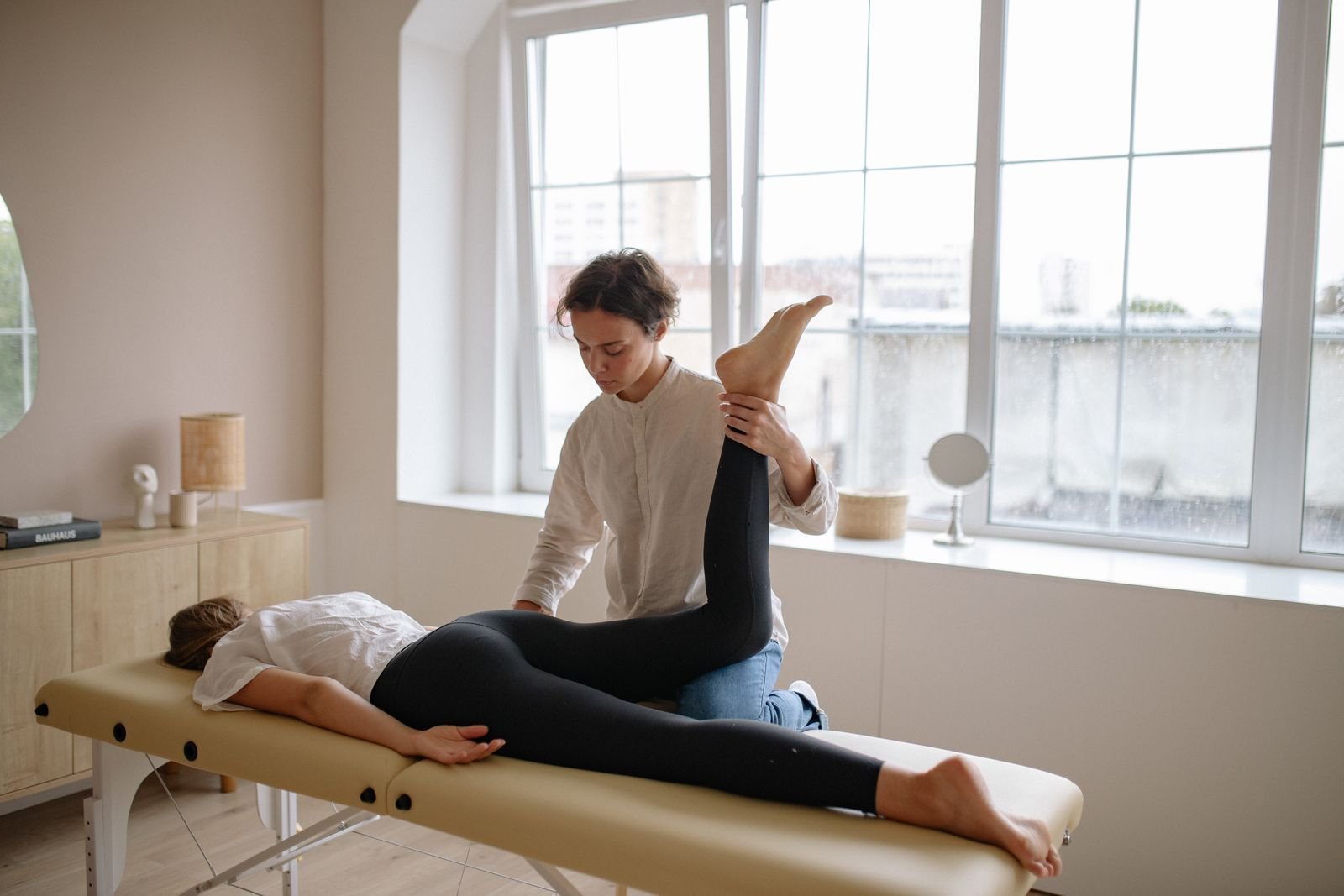
In a rehabilitation consultation at Impact Sports Rehabilitation, we start by finding out what’s actually causing your groin pain. That means looking at your training history, recent changes, symptoms, and any red flags, and examining the hip joint, hip flexors, adductors, pubic area, and lower back. If a bone stress injury is suspected, we’ll make sure you get the right medical assessment and imaging.
Once the cause is clear, we build a plan that usually includes temporarily adjusting your running, cross-training to maintain fitness, progressive strength work for the hip and core, and a structured return-to-running plan. Supportive treatments such as sports massage and taping may help in the right cases, but the key is rebuilding your ability to handle your training load.
A typical return to running starts once walking, single-leg strength work, and hopping are comfortable. It often begins with short run-walk intervals on flat ground every other day, then gradually extends the running portions, adds continuous easy runs, and only later reintroduces hills, speed work, and longer runs. Each step is guided by how the groin responds during and the day after running, not a fixed calendar, so if symptoms flare, you simply drop back a step rather than starting again from scratch.
If groin pain is getting in the way of your running, Impact Sports Rehabilitation in Eccles, Greater Manchester can help you work out what’s causing it and get you back on track safely. We work with runners from Eccles, Salford, Trafford, and across Manchester, and online consultations are available if you’re further away. Book in and let’s get you back to running comfortably.
Frequently Asked Questions
Can I keep running with groin pain?
If the pain is mild, settles quickly, and doesn’t get worse during or after runs, you may be able to keep running at a reduced level. If it’s worsening, makes you limp, or hurts when walking or at night, stop and get it assessed.
Why does my groin hurt after running but not during?
Pain after running is common with overuse problems, as tissues become irritated by the cumulative load of the session. It’s an early warning sign that your training load may be too high for your current tolerance.
Is groin pain from running a hernia?
It can be, but hernias are just one possible cause, and groin pain in runners is more commonly linked to muscles, tendons, joints, or bone. A visible or painful lump in the groin should be checked by a doctor.
What exercises help groin pain from running?
That depends on the cause, but programmes often include hip flexor and adductor strengthening, glute and core work, and a gradual return to running. Impact Sports Rehabilitation can tailor a plan once the cause has been identified.
Could my groin pain be a stress fracture?
It’s less common, but deep groin pain that worsens with each run, hurts when walking, or aches at night can be a sign of a hip stress fracture. Stop running and seek prompt assessment if this sounds like you.
How do I stop groin pain from coming back?
Build mileage gradually, vary your surfaces and routes, keep up regular hip and core strength work, and allow enough recovery between hard sessions. Addressing the original cause properly also reduces the risk of recurrence.
This article is for educational purposes only and is not a substitute for professional medical diagnosis or treatment. Running-related groin pain has several possible causes, so please seek assessment for persistent, significant, or worsening pain, and urgent medical help for red flag symptoms. Impact Sports Rehabilitation offers in-person and online consultations to help runners recover safely.


