Quick answer: The most useful shin splints stretches are a straight-knee calf stretch, a bent-knee soleus stretch, and a kneeling stretch for the tibialis anterior at the front of the shin, each held for around thirty seconds and repeated two or three times. Pictures help, but the details matter more, like keeping your heel down, your foot pointing forward, and stopping at a firm stretch rather than pain. If your shin pain is sharp, focused on one spot, or not improving, get it assessed, as it may not be shin splints.
If you’ve been searching for shin splints stretches pictures, you probably already know roughly what the stretches are. What you want is to be sure you’re actually doing them right. That’s a sensible instinct, because with these particular stretches a small change in foot position or knee angle can move the stretch somewhere completely different. In this guide we’ll walk through each stretch step by step, describing exactly what you should feel and where, so the written cues work alongside any pictures you’re following. We’ll also cover the one stretch that most guides leave out, and the form mistakes we see most often in clinic.
A quick safety note. Shin splints usually cause a dull ache spread along the inner edge of the shinbone. If your pain is sharp, sits on one small spot of bone, hurts at night or at rest, or is getting worse despite rest, please get it assessed before stretching, because it could be a stress fracture, which needs a different approach. Our guide to shin splints treatment covers the wider picture if you’re currently injured.
Why Shin Splints Stretches Pictures Only Help If Your Form Is Right
The lower leg is a crowded space. Your calf is made of two main muscles stacked on top of each other, the gastrocnemius, which crosses the knee, and the soleus beneath it, which doesn’t. At the front sits the tibialis anterior, and deeper at the back, the tibialis posterior and the long toe flexors run down along the inside of the shinbone. Shin splints pain tends to live right where several of these muscles attach to the bone, so it pays to stretch each of them properly rather than doing one rough stretch and hoping it covers everything.
That’s why shin splints stretches pictures are genuinely useful here, but only if you know what to look for in them. Whether your knee is straight or bent decides which calf muscle you’re stretching. Whether your back foot points forward or turns out decides whether the stretch stays in the calf or leaks out through a collapsing arch. Whether your heel stays planted decides whether you’re stretching anything at all. These are small details that are easy to miss in a photo, so in each section below we’ll spell out the positions to copy and what you should feel.
Calf Stretch, Step By Step
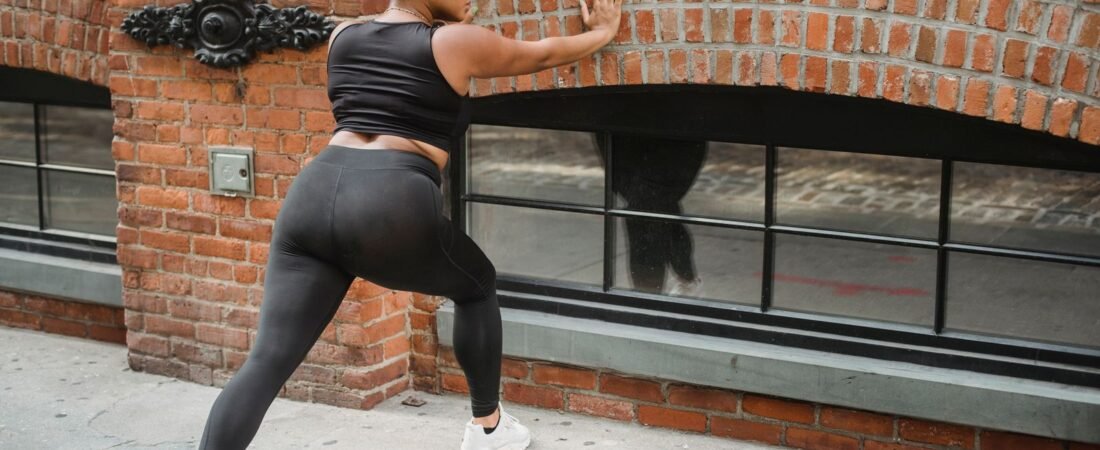
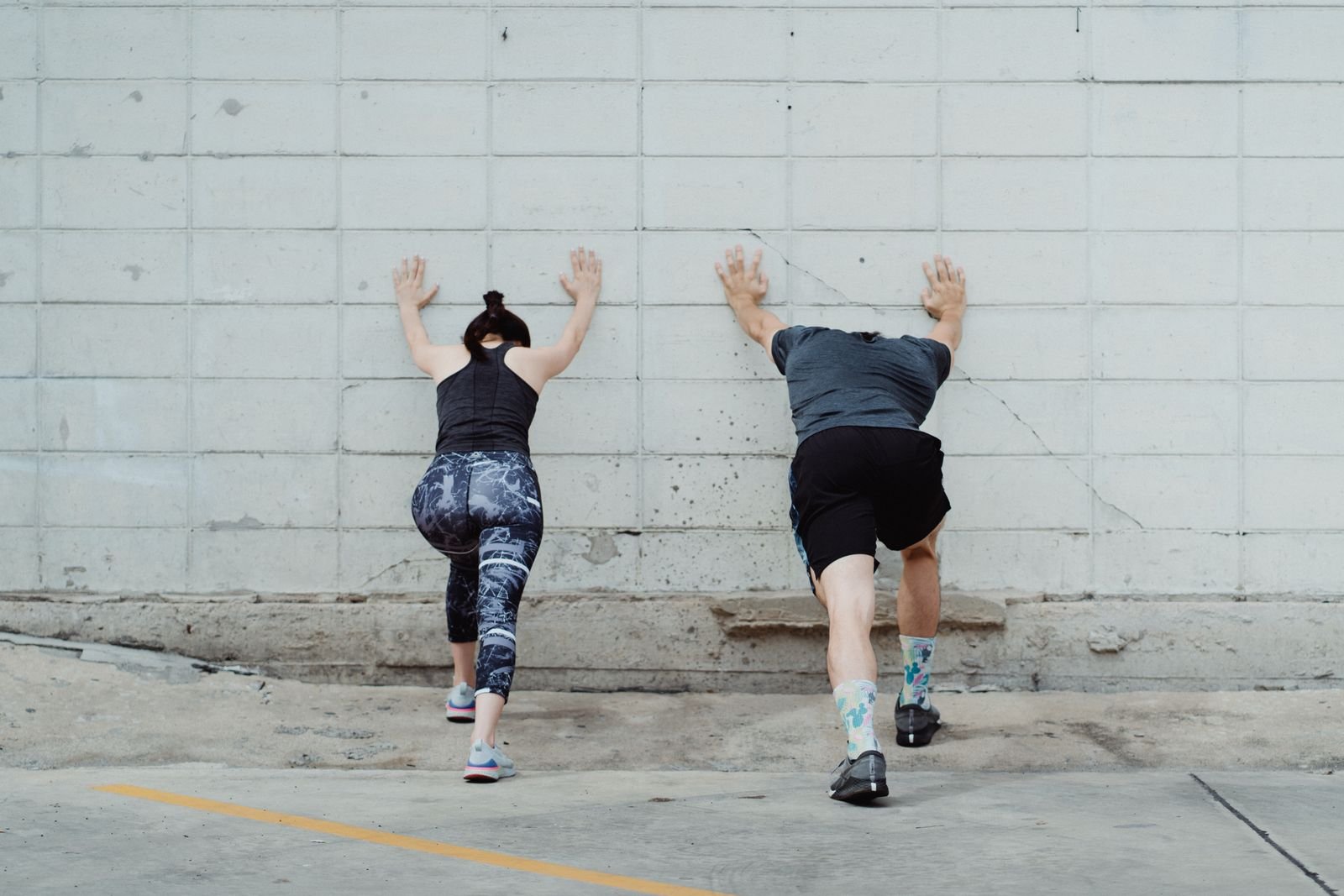
Start with the classic straight-knee calf stretch, which targets the gastrocnemius. Stand facing a wall, about an arm’s length away, with both hands resting on it at shoulder height. Step your sore leg back about a stride’s length, keeping that knee completely straight. Your back foot should point straight at the wall, not out to the side, and your heel should stay pressed firmly into the floor. Bend your front knee and slowly shift your hips towards the wall until you feel a strong, even stretch in the upper, fleshy part of your back calf.
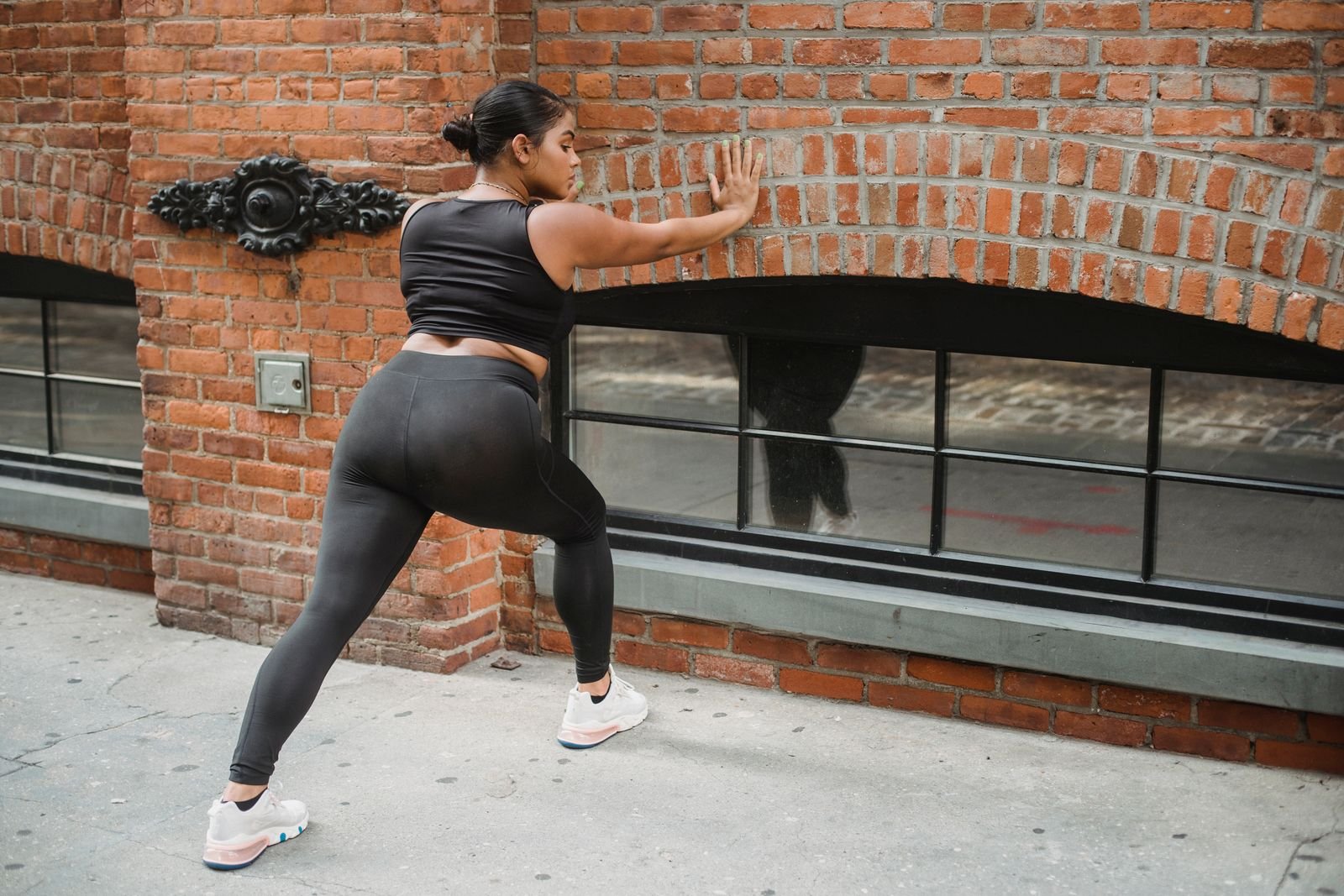
Hold for about thirty seconds, breathing normally, then ease off and repeat two or three times on each leg. A good stretch feels firm and steady, around six or seven out of ten in intensity. If you feel it more behind the knee than in the calf, take a slightly shorter step. If you feel nothing, move your back foot further away and keep that heel down. Many people find this stretch works best after a run or at the end of the day when the muscles are warm, rather than first thing as a cold, static stretch before training.
Tibialis Anterior Stretch, Step By Step
The tibialis anterior runs down the front of your shin and lifts your foot up towards you. It works hard during running, especially downhill, and it can feel tight and sore at the front of the shin. There are two easy ways to stretch it.
The kneeling version is the stronger stretch. Kneel on a soft surface such as a mat or carpet with the tops of your feet flat on the floor and your toes pointing straight back. Place your hands on the floor beside you or in front of your knees for support, then slowly sit back towards your heels. You should feel a stretch along the front of the shin and across the top of the ankle. To increase it, lean back slightly and lift your knees a little off the floor using your hands. Hold for twenty to thirty seconds and repeat two or three times.
If kneeling is uncomfortable, try the standing version. Stand next to a wall for balance, bend your sore leg behind you, and rest the top of your toes on the floor so the sole faces up and back. Gently press the top of the foot towards the floor until you feel the stretch at the front of the shin.
Soleus-Specific Stretch, Step By Step
This is the stretch most shin splints guides lump in with the regular calf stretch, and in our experience it’s the one that matters most. The soleus sits underneath the bigger calf muscle and attaches partly along the inner border of the shinbone, which is right where shin splints pain usually sits. During running, the soleus produces enormous forces with every stride, more than any other muscle in the lower leg, so when it’s tight or fatigued, the tissues where it attaches to the shin take more strain. Because the soleus doesn’t cross the knee, a straight-knee calf stretch barely touches it.
To stretch it, start in the same wall position as the calf stretch, but take a shorter step back so your feet are closer together. Keeping your back heel firmly on the floor and the foot pointing straight forward, bend your back knee slowly, pushing it down and towards the wall. The stretch should move lower, into the bottom half of the calf, just above the Achilles tendon. Hold for thirty seconds and repeat two or three times.
A great alternative is the step version. Stand with the ball of your foot on the edge of a step, bend the knee slightly, and slowly let your heel sink below the step. If you notice that your soleus is very tight compared to your other side, or this stretch reproduces the familiar ache in your shin, that’s useful information to share with a therapist. You can read more about this muscle in our guide to soleus muscle pain.
Common Form Mistakes Shin Splints Stretches Pictures Help You Avoid
The most common mistake is letting the back heel lift. As soon as the heel comes off the floor, the stretch on the calf and soleus disappears, so if you’re struggling to keep it down, shorten your stance. The second is turning the back foot out. It feels easier because the arch flattens, but you lose the calf stretch and add strain through the inside of the foot instead.
Other mistakes are more about how you stretch than what you do. Bouncing in and out of a stretch, rather than holding it smoothly, can irritate sensitive tissue. Pushing to the point of sharp pain usually backfires and leaves the shins more irritable the next day. Rushing through each stretch in ten seconds doesn’t give the muscle enough time to relax. Finally, many people only stretch the sore leg. Stretch both sides so you can compare, as a noticeable difference between legs is often a clue to what’s driving your symptoms.
How Sports Rehab Checks Your Form In Person
Pictures and written cues get most people close, but there’s no substitute for someone watching you do the stretch and adjusting it in real time. In a rehabilitation consultation, we check each stretch in person, measure your ankle range so we can see whether the calf or soleus is the bigger issue, and look at whether stretching is actually what your shins need. For many runners with shin splints, strengthening the calf, soleus, and hips matters just as much as stretching, and training load often matters most of all, which our guide to exercises to prevent shin splints explains in more detail.
We also use hands-on treatment where it helps. Sports massage along the calf and soleus can help a tight lower leg feel easier to move, and taping can offload irritated tissue for a few days at a time, but these sit alongside a proper plan of stretching, strengthening, and sensible running progression. For a full strengthening routine, see our article on shin splint exercises.
If you’d like someone to check your stretches and work out what’s really driving your shin pain, Impact Sports Rehabilitation in Eccles, Greater Manchester can help. We see runners and active people from Eccles, Salford, Trafford, and across Manchester, and online consultations are available if you’d like your technique checked over video. Book in and let’s get you running comfortably again.
Frequently Asked Questions
How long should I hold shin splint stretches?
Around thirty seconds per stretch, repeated two or three times on each leg, is a good starting point for most people. Hold steadily without bouncing, and aim for a firm stretch rather than pain.
Should I stretch before or after running with shin splints?
Most people find longer static stretches work best after a run or later in the day when the muscles are warm. Before running, a few minutes of gentle movement such as ankle circles, walking, and light calf raises is usually a better warm-up than long static holds.
Is it normal for the stretch to hurt my shin?
You should feel a strong stretch in the muscle, but not sharp pain in the bone. If a stretch reproduces sharp or pinpoint pain on the shinbone, stop and get it assessed, since that can be a sign of a bone stress injury rather than shin splints.
Can stretching alone cure shin splints?
Stretching can help ease tightness and discomfort, but on its own it rarely solves shin splints. Most people need a combination of reduced or adjusted training, progressive strengthening, and sensible footwear choices, and Impact Sports Rehabilitation can help put that plan together around your running.
Why can’t I feel the soleus stretch?
Usually it’s because the back heel is lifting or the step back is too long. Shorten your stance, keep your heel firmly down, and bend the back knee further, and the stretch should move lower into the calf just above the Achilles.
How many times a day should I do these stretches?
Once or twice a day is plenty for most people, and consistency over several weeks matters more than doing lots of stretching on one day. If your shins feel worse rather than better after a week or two, it’s worth having a therapist review what you’re doing.
This article is for educational purposes only and is not a substitute for professional medical diagnosis or treatment. Shin pain can sometimes indicate a stress fracture, so if your pain is severe, focused on one spot, or not improving, please seek a proper assessment. Impact Sports Rehabilitation offers in-person and online consultations to help you recover safely.