
Quick answer: How to speed up muscle strain recovery genuinely comes down to progressive loading rather than prolonged rest, appropriately sequenced first 48 hours management, and avoiding the common mistakes of resting too long or returning too early. Sports massage and supportive treatments can help alongside this, but they support the loading process rather than replace it. Significant pain, an inability to use the muscle, or bruising suggesting a more severe tear should be assessed by a clinician.
Wanting to know how to speed up muscle strain recovery is a genuinely reasonable thing to search, and thankfully, some of what actually helps is more specific and more actionable than the generic “rest, ice, and wait” advice most people default to. Here’s an honest, slightly myth-busting look at what genuinely moves the needle on recovery speed versus what mostly just manages comfort along the way.
What Actually Speeds Up Healing (And What Doesn’t)
This is genuinely the part most recovery-speed articles get wrong, repeating the same generic advice without ever being honest about which parts actually influence healing speed and which mainly just help you feel more comfortable in the meantime. Ice, for instance, genuinely helps manage pain in the first day or two, but the evidence that it meaningfully speeds up the underlying healing process is genuinely weak, and some research suggests heavy, prolonged icing may even suppress part of the body’s own inflammatory repair response rather than helping it.
Complete rest is another one worth being honest about, brief rest immediately after the injury has a place, but prolonged, complete rest well beyond the first couple of days doesn’t actually speed healing, and in most cases it measurably slows it, since muscle, like most tissue, adapts and repairs better in response to appropriate movement than to prolonged inactivity. What genuinely does move the needle is progressive loading, appropriately introducing controlled movement and increasing demand on the muscle as it tolerates it, covered in more detail below, this is consistently the single biggest factor within your control.
Compression and elevation sit somewhere in between, genuinely useful for managing comfortable swelling control in the early days, but neither one meaningfully accelerates the underlying tissue repair process on its own. Nutrition and hydration play a real, if modest, supporting role too, adequate protein intake supports the tissue-building process broadly, though no specific food or supplement has been shown to dramatically speed up muscle strain healing beyond what a generally adequate, balanced diet already provides. Being honest about which of these genuinely moves the needle and which mostly just supports comfort helps you focus your energy on what actually matters, progressive loading, rather than spreading effort thin across a long list of minor comfort measures.
The First 48 Hours Done Right
The first day or two after a muscle strain calls for a genuinely different approach than the following weeks, and getting this window right sets up everything that follows. Brief protection from further strain, avoiding movements that clearly aggravate the injured muscle, makes sense during this acute window, though this means avoiding aggravating movement specifically, not full immobility. Gentle, pain-free range of motion, rather than complete stillness, is generally appropriate from fairly early on, keeping some genuine movement going without forcing anything through real pain.
Elevation and light compression can help manage swelling comfortably during this early window, and brief, appropriately timed ice application can genuinely help with pain in the first 24 to 48 hours specifically, even if its effect on the underlying healing speed itself is more limited than commonly assumed. The goal across this window is genuinely about managing the acute response sensibly, not aggressively minimising all movement, which sets up a smoother transition into the loading phase that follows.

Progressive Loading, The Real Key To Faster Recovery
Progressive loading is genuinely the single biggest factor in speeding up muscle strain recovery, and it’s the piece most generic advice underplays in favour of rest. Movement acts almost like a natural pump for the injured area, muscle contraction pushes fluid through the surrounding tissue, clearing waste products and bringing in fresh blood flow that carries what the tissue actually needs to repair itself, something prolonged stillness simply doesn’t provide nearly as effectively.
The progression genuinely matters here, starting with gentle, pain-free movement, then light resistance, then progressively heavier and more functional loading as the muscle demonstrably tolerates each stage, rather than either staying too gentle for too long or jumping straight to heavy loading before the tissue is ready. Research over recent years has consistently supported this loading-based approach over prolonged rest and passive treatment for muscle, tendon, and ligament injuries alike, since controlled loading appears to genuinely drive better tissue remodelling than rest alone ever achieves.
What “appropriately loaded” actually feels like is worth being specific about too. A useful general guide many clinicians use is watching how the muscle responds the following day rather than judging purely by how it feels during the exercise itself, mild, settling discomfort during loading that’s back to baseline by the next day generally suggests the load was appropriate, while pain that’s noticeably worse the next morning suggests scaling back slightly before progressing again. This kind of day-after check tends to be a considerably more reliable guide than trying to judge everything purely by sensation in the moment.
Recovery Aids That Genuinely Help
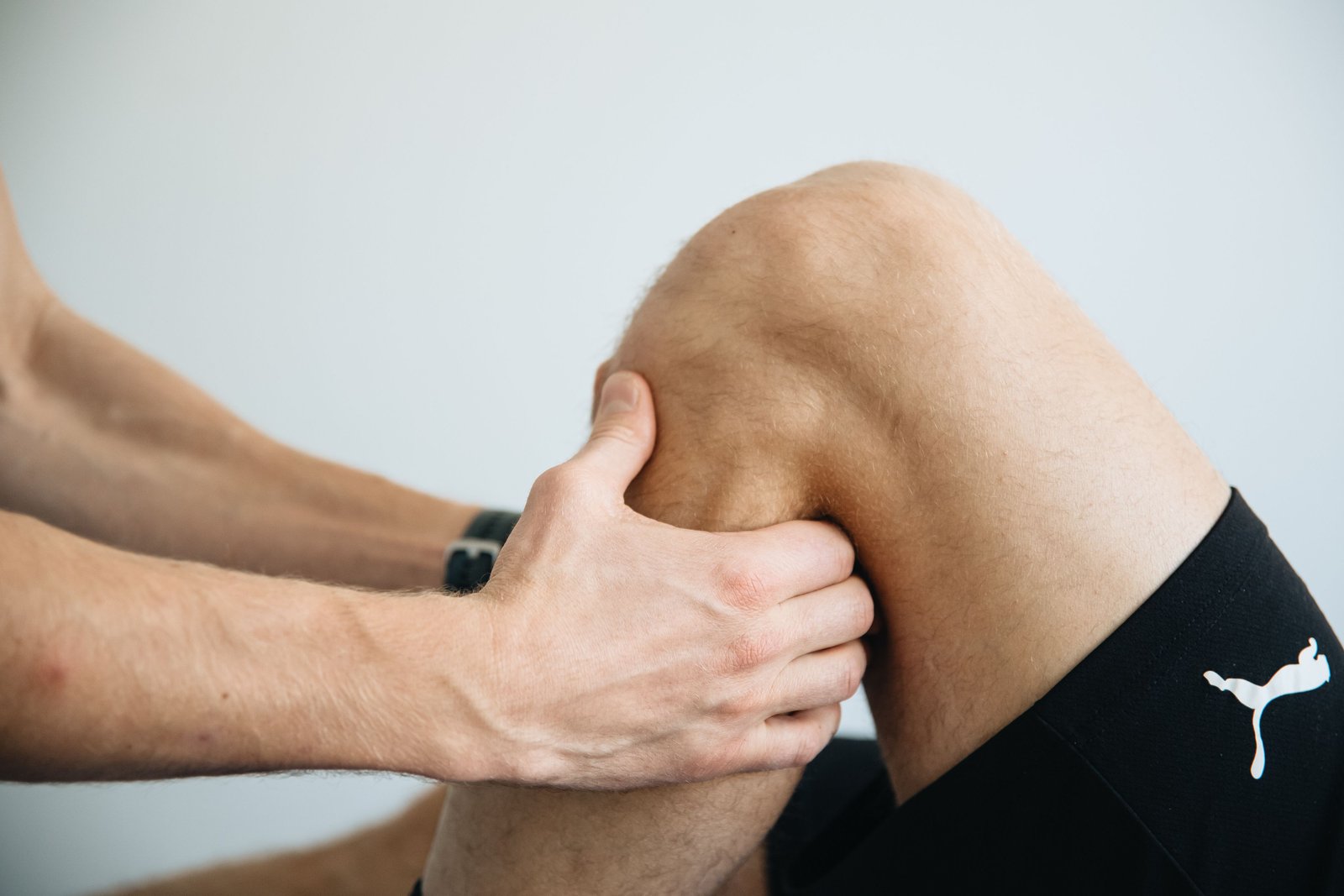
Some supportive measures do have a genuine, if secondary, role alongside progressive loading. Sports massage can help manage the muscle tightness and compensatory tension that often builds up around a strained muscle, particularly as you’re favouring it during the earlier stages, and many clients find it genuinely useful for comfort and for helping the loading progression feel more manageable. Appropriately timed heat, generally more useful once the acute swelling phase has passed, can help loosen tight muscle tissue and make movement feel more comfortable heading into a loading session.
Cupping therapy is another supportive option some clients find helpful for the same kind of muscle tension management. None of these aids replace the loading progression itself, they genuinely work best as support alongside it, helping you tolerate and stick with the progressive loading that’s actually doing most of the real recovery work.
How Sports Rehab Accelerates Safe Recovery
Getting the loading progression right, neither too cautious nor too aggressive, is genuinely easier with proper guidance than trying to judge it entirely on your own. At Impact Sports Rehabilitation, a Rehabilitation Consultation builds a staged loading plan around your specific strain, tracking how the muscle is actually responding at each stage and progressing accordingly, rather than following a fixed generic timeline regardless of how you’re doing.
Common Mistakes That Slow Healing Down
Excessive rest, well beyond the brief acute window, remains one of the most common genuine mistakes, and it’s an understandable one given how much traditional advice still emphasises rest above all else. Returning too early, jumping back into full training or sport before the muscle has rebuilt genuine capacity, works against recovery in the opposite direction, and often leads to a re-strain that effectively restarts the whole process, sometimes at a worse baseline than the original injury.
Skipping the loading phase entirely, going from rest straight back to full activity without a genuine progressive build-up in between, is another common pattern that tends to backfire, since the muscle hasn’t actually rebuilt the graded capacity that the intermediate loading stages were meant to provide. Inconsistency is a quieter but genuinely common mistake too, doing the loading work diligently for a few days, then skipping it for a week once things feel better, then having to essentially restart part of the progression, tends to add up to a considerably longer overall recovery than staying consistently engaged with a lighter, steadier progression throughout.
If you’re not entirely sure whether what you’re dealing with is actually a strain in the first place, muscle strain vs sprain, is there really a difference? is worth reading alongside this, and if your strain is specifically in your back, how long does a back strain really take to heal covers the particular considerations that apply there.
Free tool: Injury Recovery Time Estimator
Want a realistic timeline for your own injury? Our free injury recovery time estimator gives you a typical recovery range by severity, plus RICE guidance for that specific injury, instantly and with nothing stored.
If you’re recovering from a muscle strain and want a genuine, staged loading plan rather than generic rest-and-wait advice, Impact Sports Rehabilitation works with clients across Eccles, Salford, Trafford, and the wider Greater Manchester area on exactly this. Ask about an online consultation if you’re further afield.
Frequently Asked Questions
Is icing actually pointless for speeding up muscle strain recovery?
Not pointless exactly, ice genuinely helps manage pain in the first day or two, but the evidence that it meaningfully speeds up the underlying healing process is fairly weak. Many people find it useful for comfort while relying on progressive loading, not ice, to actually drive faster recovery.
Won’t moving the muscle too soon make my strain worse?
Gentle, pain-free movement introduced appropriately generally supports recovery rather than harming it, it’s specifically pushing through significant pain or loading too heavily too soon that risks setting things back. A properly staged progression is genuinely different from ignoring the injury and pushing through regardless.
How much rest is actually the right amount before I should start moving again?
A brief period, generally the first day or two, of avoiding aggravating movement makes sense, followed by a gradual return to gentle, pain-free movement and then progressive loading. Extending complete rest well beyond that window tends to slow recovery rather than protect it.
Can sports massage actually speed up how fast my strain heals?
Sports massage genuinely supports recovery by helping manage tightness and tension, and many clients find it makes the loading progression more comfortable and easier to stick with. It works best alongside progressive loading rather than as a standalone way to speed healing on its own.
What’s the biggest mistake people make when trying to recover from a muscle strain fast?
In our experience, the two most common mistakes sit at opposite extremes, resting for far too long, or returning to full activity too early before genuine capacity has been rebuilt. A properly staged, progressive approach genuinely tends to outperform either extreme.
This article is provided for general educational purposes by Impact Sports Rehabilitation and does not constitute medical advice, diagnosis, or treatment. Muscle strain recovery speed varies by severity and individual factors, and this article does not promise a specific guaranteed recovery acceleration. Significant pain, an inability to use the muscle, or bruising suggesting a more severe tear should be assessed by a qualified clinician. Always seek the guidance of a doctor or other qualified health provider with any questions about your specific injury.