
Quick answer: ACL recovery time genuinely varies enormously, but a realistic range runs from around nine months at the earliest to well over a year for many people, depending on graft type, surgical approach, age, and sport demands. Time since surgery alone isn’t the same as being ready, criteria-based testing, strength symmetry, hop tests, and confidence, matters far more than counting months. Always follow the individualised plan set by your surgeon and physiotherapy team rather than a generic online timeline.
Torn your ACL, or just had surgery, and already drowning in conflicting timelines? You’re genuinely not alone, and it’s not you missing something, the honest truth is that ACL recovery time varies enormously between individuals, which is exactly why one website says twelve weeks and another says a year. Here’s a genuinely honest picture of why that variation exists, what a realistic timeline actually looks like phase by phase, and why the calendar matters less than most people assume.
Why ACL Recovery Timelines Vary So Much
Graft type is one of the biggest drivers of this variation. A patellar tendon graft, a hamstring tendon graft, and a quadriceps tendon graft all heal and integrate at genuinely different rates, and each carries its own rehab considerations in the early weeks. Surgical technique and any additional procedures done at the same time, meniscus repair alongside the ACL reconstruction, for example, can meaningfully extend certain phases of rehab beyond what a straightforward isolated ACL reconstruction would need.
Age and baseline fitness genuinely matter too, a younger, previously well-conditioned athlete and someone returning to activity after a longer period of lower fitness are often progressing from different starting points, even with an identical surgical procedure. The demands of your specific sport also shape the endpoint, a sport involving cutting, pivoting, and contact typically has a longer, more demanding return-to-sport phase than an activity with more predictable, lower-impact movement patterns. None of this means your timeline is wrong if it doesn’t match someone else’s, it means your timeline is genuinely your own, shaped by these specific factors.
The graft itself also brings its own donor-site considerations that genuinely shape early rehab. A patellar tendon graft is taken from part of your own patellar tendon, and many people find some anterior knee discomfort around that site during the early weeks, distinct from the joint itself. A hamstring tendon graft, by contrast, often means the hamstring muscles on the operated leg need specific attention during strengthening, since that donor site can leave a genuine, measurable strength deficit that needs deliberate rebuilding rather than assuming it’ll resolve alongside general knee rehab. A quadriceps tendon graft carries its own similar considerations around the quadriceps itself. None of these are reasons for concern on their own, they’re simply part of why your specific rehab plan may look slightly different from someone else’s, even with the same overall ACL injury.
Why Time Since Surgery Isn’t The Same As Being Ready
This is genuinely the part most ACL timeline articles skip entirely, giving a single calendar-based number as if nine months or twelve months automatically means someone is ready, when the honest picture is considerably more nuanced. Criteria-based testing, rather than counting months, is what modern return-to-sport decision making is actually built around, and for good reason.
Strength symmetry between your operated and non-operated leg, commonly measured against a threshold of around ninety percent or higher, is one central marker, since a meaningfully weaker operated leg is a genuine risk factor for further injury. Hop testing, a series of single-leg hop and jump assessments comparing distance, control, and landing quality between legs, adds a functional dimension that strength testing alone doesn’t fully capture, since distance symmetry alone can sometimes mask real differences in landing control between the two legs. Confidence and psychological readiness rounds out a genuinely multifactorial picture, and some clinics use a structured questionnaire specifically designed to capture how ready an athlete genuinely feels, rather than relying on a purely subjective gut feeling from either the athlete or the clinician. Research has consistently found that a meaningful proportion of athletes return to sport on a calendar date without actually meeting these criteria, and that returning without meeting them is associated with a real increase in re-injury risk. Time since surgery is a useful rough guide for when testing might reasonably begin, but it was never meant to be the actual finish line.
The Realistic Timeline, Phase By Phase
The early post-operative phase, roughly the first two weeks, focuses on managing swelling, protecting the healing graft, and beginning gentle range of motion work, walking with crutches is typical during this stage for many people. Restoring full range of motion and normalising your walking pattern without crutches generally follows over the next several weeks, often somewhere in the first one to two months, though this varies with how the knee is responding.
Strengthening becomes the central focus from around six weeks through several months, with an initial emphasis on regaining basic quadriceps and hamstring strength before progressing to more demanding, functional loading. Running typically isn’t introduced until strength and control have reached a meaningful threshold, often somewhere in the three to four month range for many people, though this is genuinely individual, followed by agility and change-of-direction work as strength and confidence continue building. Sport-specific training, the phase that bridges general rehab and an actual return to your sport, typically comes later still, often not until somewhere around eight months to a year post-surgery for many people, depending on the criteria covered next.
What Actually Affects How Fast You Progress
Adherence to the rehab programme itself is one of the biggest genuine differentiators between people who progress smoothly and those who stall, consistently showing up and doing the unglamorous strength and control work between appointments matters more than almost anything else. Pre-surgery strength, sometimes called prehab, going into the operation with a stronger, better-conditioned knee tends to give people a real head start on the post-surgical strengthening phase, since there’s simply less ground to make up.
Psychological readiness is a genuinely underappreciated factor too, confidence in the knee, and a lack of ongoing fear of re-injury, has been shown to meaningfully influence how successfully and how well people actually return to their sport, not just how quickly. Someone who is physically ready but still mentally hesitant about cutting or landing on the knee often needs that confidence specifically addressed as part of the later rehab phase, not just more physical loading.
How Sports Rehab Supports Every Phase
Every phase of ACL recovery benefits from guidance that’s actually tracking your specific progress rather than following a fixed printed sheet regardless of how your knee is responding. At Impact Sports Rehabilitation, a Rehabilitation Consultation supports this process from early strengthening through to genuine criteria-based return-to-sport testing, adjusting the plan around how your knee is actually progressing at each stage.
Rocktape taping is a tool some clients find useful for extra proprioceptive feedback and confidence during the later stability and agility phases, and sports massage can help manage the compensatory tightness that often builds up through the hip and calf while you’re favouring the operated leg during earlier phases. Both work as genuine support alongside the structured strengthening progression, once cleared by your surgical team, not as a substitute for it.
Getting Back To Sport Safely
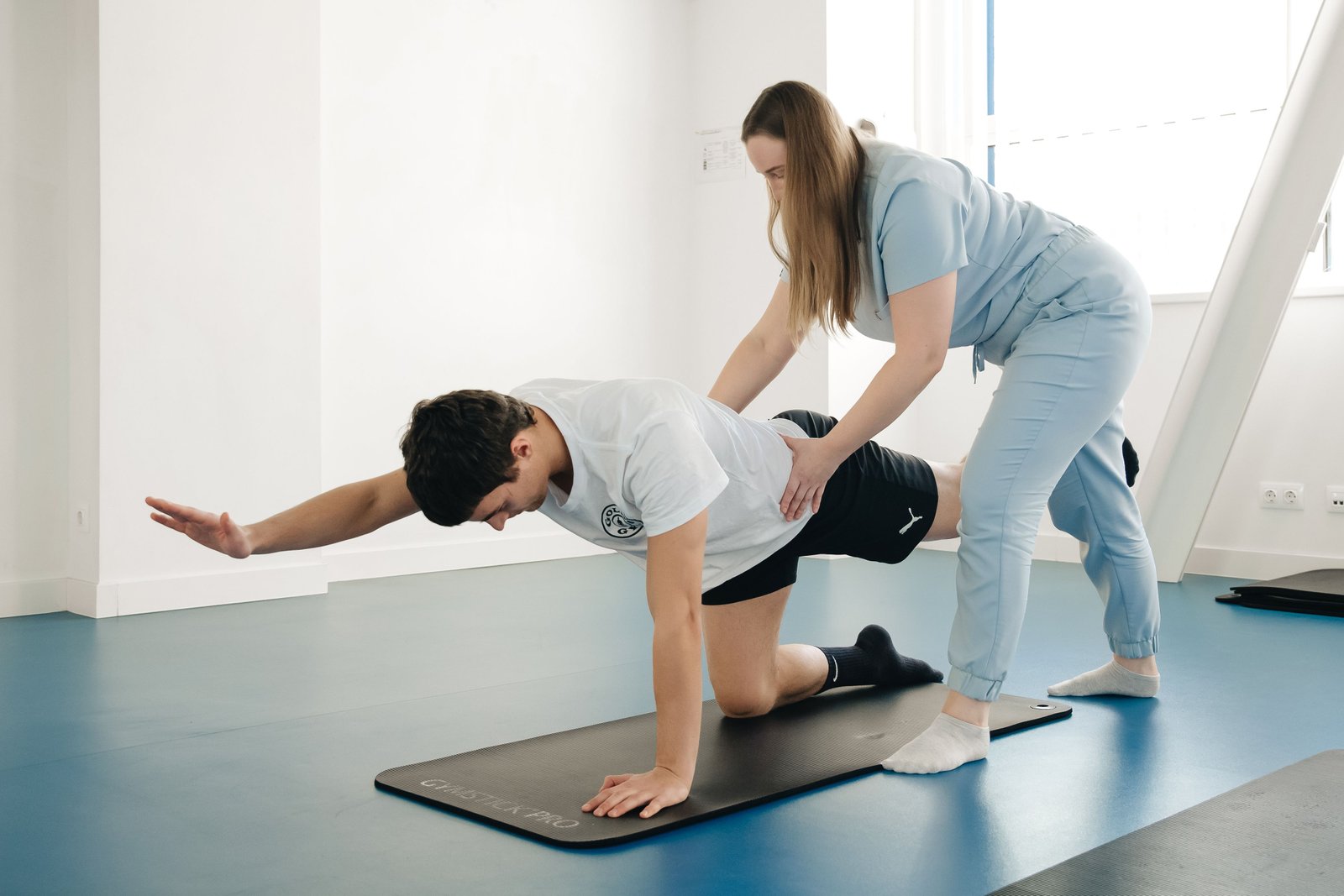
A genuinely safe return to sport is built around passing the criteria covered above, not reaching a specific date on a calendar. That means strength symmetry, functional hop and control testing, and honest confidence in the knee under sport-relevant conditions, all being met together, rather than one or two out of three while assuming the rest will simply catch up once you’re back playing.
A staged reintroduction to full training, gradually increasing intensity and unpredictability of movement rather than jumping straight back into a full match or session, also genuinely matters, even once the formal criteria have been met. Many people find that this staged final step, easing back in with genuine attention to how the knee responds, gives considerably more confidence than an abrupt jump from clearance straight into full competitive demand.
Free tool: Injury Recovery Time Estimator
Want a realistic timeline for your own injury? Our free injury recovery time estimator gives you a typical recovery range by severity, plus RICE guidance for that specific injury, instantly and with nothing stored.
If you’re navigating ACL recovery and want a genuine, criteria-based plan rather than a guess at a calendar date, Impact Sports Rehabilitation works with athletes across Eccles, Salford, Trafford, and the wider Greater Manchester area on exactly this kind of staged recovery. Ask about an online consultation if you’re further afield.
Frequently Asked Questions
Is it normal that everyone online seems to give me a different ACL recovery time?
Genuinely, yes, and it’s not a sign anyone is wrong, ACL recovery time depends on your graft type, surgical approach, age, and sport, so different sources are often describing different situations. Following the specific plan set by your own surgeon and physiotherapy team is a far more reliable guide than any general online timeline.
Why does my friend seem to be recovering faster than me with the same injury?
Even with what looks like the same injury, differences in graft type, pre-surgery strength, age, and how consistently the rehab programme is followed can genuinely lead to different paces of recovery. Comparing your progress to someone else’s isn’t a reliable way to judge how you’re actually doing.
Can I go back to sport once I hit the nine month mark, since I’ve read that’s when most people return?
Nine months is a commonly cited rough guide for when return-to-sport testing might reasonably begin, but it isn’t a guarantee of readiness on its own. Meeting genuine strength, hop test, and confidence criteria matters more than the specific date, which is exactly what a proper assessment helps determine.
I feel physically strong again, so why would I need testing before returning?
Feeling strong is a genuinely good sign, but it doesn’t always mean your operated leg has reached full strength symmetry or that your movement control under sport-specific conditions is where it needs to be. In our experience, formal testing catches gaps that don’t always show up in how the knee simply feels day to day.
Is it true that returning to sport too early increases my risk of re-injuring my ACL?
Research does suggest that returning to sport without meeting genuine strength and functional criteria is associated with a higher risk of further injury, yes. Many people find that a properly staged, criteria-based return, even if it takes longer than a calendar guess would suggest, feels considerably more worth it than rushing back.
This article is provided for general educational purposes by Impact Sports Rehabilitation and does not constitute medical advice, diagnosis, or treatment. ACL recovery timelines vary enormously between individuals, and this article does not predict any specific person’s recovery speed. Always follow the individualised plan set by your surgeon and physiotherapy team, and seek the guidance of a doctor or other qualified health provider with any questions about your specific recovery.


