
Quick answer: Pain on the inside of the knee specifically when bending and straightening, rather than constantly, is a genuinely useful clinical clue that often points toward a mechanical cause like the meniscus or how the kneecap tracks during movement. Catching or clicking during bending and pain right at the end of straightening usually mean different things and deserve different attention. This pattern alone isn’t enough for a diagnosis, and locking, catching, or a sense of the knee giving way should be properly assessed rather than self-managed.
Pain that’s constant is one thing, but pain that specifically shows up, or gets worse, during the actual movement of bending and straightening your knee is a different and genuinely more specific pattern worth paying attention to. This isn’t just a minor detail, it’s exactly the kind of clue a proper assessment pays close attention to, and understanding it yourself can help you make sense of what’s likely going on before you get it looked at properly. If your pain is more constant than movement-specific, our broader Inner Knee Pain and Medial Knee Pain guides cover that fuller picture.
Why This Specific Movement Pattern Matters
Pain that shows up specifically during motion, rather than sitting there constantly regardless of what you’re doing, tells you something genuinely useful, it suggests a mechanical trigger, something physically happening at a particular point in the knee’s range of movement, rather than general inflammation or irritation that would be expected to feel roughly similar no matter what position the knee is in.
This distinction matters because it changes what’s worth paying attention to. Rather than just noting “my inner knee hurts,” being able to say exactly when in the movement it hurts, during bending, at full straightening, or somewhere specific in between, gives a genuinely more useful picture than pain location alone, and it’s exactly the kind of detail worth noticing before any assessment.
It’s also worth paying attention to whether the pain happens on the way into the movement, the way out of it, or both, since even that level of detail can be genuinely informative. Pain that’s worse actively bending the knee yourself, compared to someone else gently moving it for you, can hint at whether muscle activation around the joint is contributing, versus pain that’s identical either way, which points more purely toward the joint structures themselves rather than anything muscular layered on top.
What Catching Or Clicking During Bending Usually Means
Most inner knee pain content doesn’t break down what different movement-triggered patterns actually suggest, treating “clicking” as one vague symptom rather than something worth being specific about, so here’s a more useful breakdown. Catching or a genuine snagging sensation during bending, particularly if it’s paired with pain rather than being painless, often points toward the meniscus, the cartilage cushion between the thighbone and shinbone, since a torn or frayed edge can physically catch as the knee moves through certain angles.
Clicking without pain or catching is a different and generally less concerning pattern, often just reflecting normal joint movement or minor tendon movement over a bony prominence, and on its own it’s not usually a sign of anything significant. The distinction that matters is whether the click or catch is accompanied by pain or a genuine sense of the knee briefly getting stuck, versus being a painless, purely audible or sensory event that doesn’t affect how the knee actually moves.
Where in the bending motion the catching happens can be a further useful clue too. Catching that occurs early in the bend, close to full straightening, tends to suggest a different part of the meniscus or joint surface than catching that only happens in a deep bend, close to squatting range. This level of detail isn’t something you need to diagnose yourself, but noticing and being able to describe it accurately genuinely helps a clinician localise the issue faster during a proper assessment.
What Pain Only At The End Range Of Straightening Usually Means
Pain specifically at the very end of straightening your knee, rather than throughout the whole movement, is a genuinely distinct pattern from pain during bending, and it tends to suggest something slightly different is going on. This can point toward how the kneecap is tracking against the thighbone during that final part of the movement, sometimes called patellofemoral tracking, or occasionally toward a structure being pinched or compressed specifically at full extension.
This pattern is worth distinguishing clearly from pain during the bending motion itself, since the two can point toward different underlying issues even though they’re both technically “movement-triggered” pain on the inner knee. If your pain is specifically at that last bit of straightening, particularly if it feels like something is being pinched rather than generally sore, that’s a useful, specific detail to mention at any assessment. It’s also worth noting whether the pain at end-range straightening is consistent every single time, or whether it varies depending on how you’re straightening the knee, actively pushing it straight yourself versus it straightening naturally as you stand up, since that variability can itself be a genuinely useful clue about what’s contributing to it.
Simple Ways To Assess Your Own Pattern Safely
You can get a genuinely useful sense of your own pattern without doing anything that risks aggravating things further. Slowly and gently bending and straightening your knee through a comfortable range, well short of forcing anything, while paying attention to exactly where in that movement the pain, catching, or clicking actually occurs, gives you real information to work with.
Comparing both knees, if the unaffected side is available for comparison, can also be genuinely informative, since it gives you a baseline for what normal movement and sound feels like for your own body rather than comparing against a generic standard. None of this should involve forcing the knee into a painful position to “test” it further, the goal is gentle, curious observation within a comfortable range, not provoking symptoms deliberately.
Keeping a brief note of what you notice, roughly where in the bend or straighten the symptom occurs, whether it’s the same every time or variable, and whether standing versus sitting versions of the movement feel different, genuinely helps too. This isn’t about becoming your own diagnostician, it’s about arriving at an assessment with specific, useful information rather than a vague “it hurts sometimes,” which meaningfully speeds up how quickly a clinician can narrow down what’s actually going on.
How Sports Rehab Investigates Movement-Specific Pain
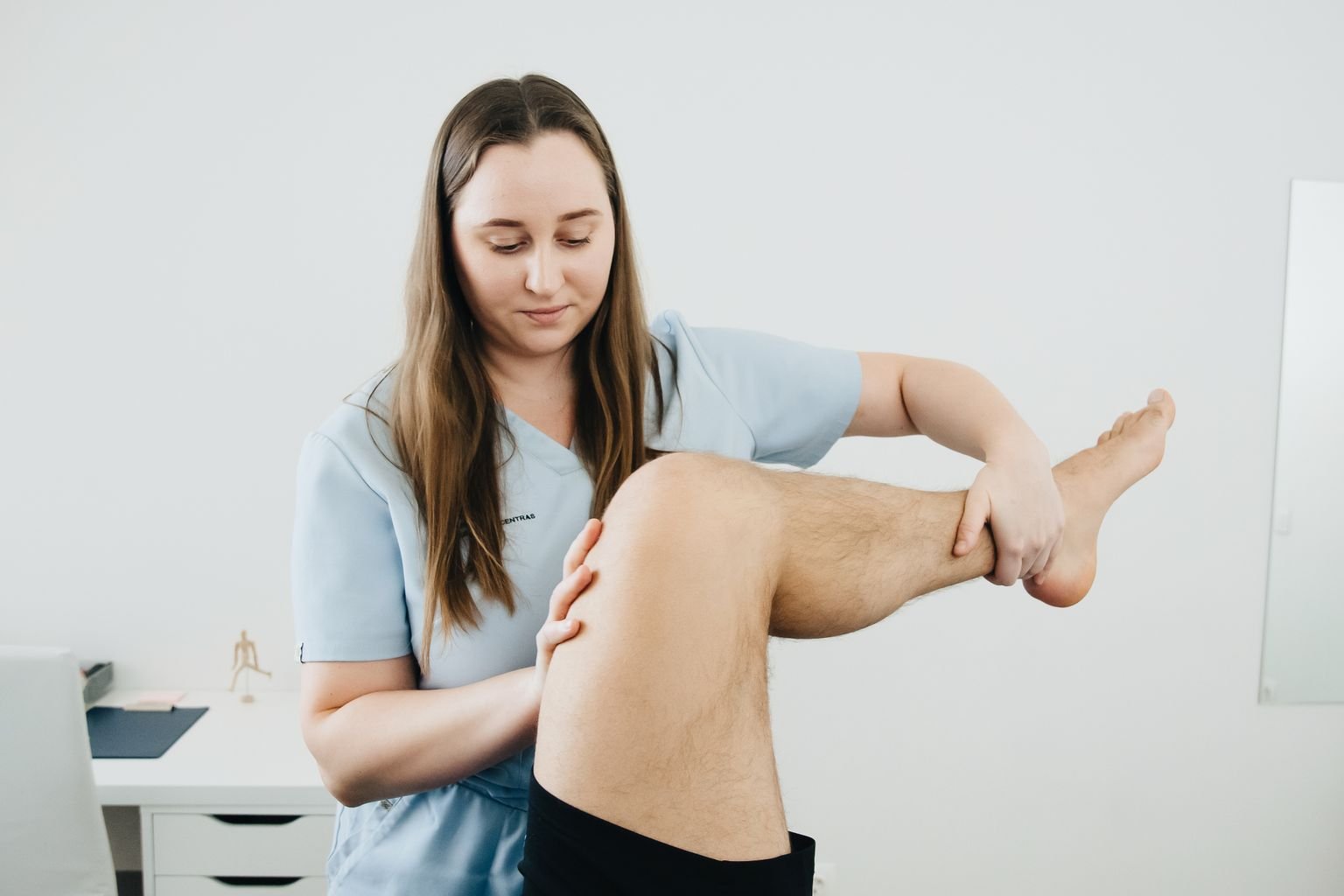
Movement-specific symptoms like these are exactly the kind of detail a proper assessment is built to investigate thoroughly. At Impact Sports Rehabilitation, a Rehabilitation Consultation includes taking the knee through its full range while specifically checking where in that movement symptoms occur, alongside targeted tests for the meniscus, kneecap tracking, and other structures that commonly cause this exact pattern.
This kind of detailed, movement-specific assessment genuinely goes beyond what a general pain-location conversation can achieve, since it’s built specifically around identifying where in the knee’s range the problem actually lives, which meaningfully shapes what treatment approach makes sense afterward.
Fixes That Target The Actual Movement Problem
Treatment for movement-specific pain like this genuinely differs from treatment for constant, unchanging pain, because the goal is addressing the actual mechanical issue at the specific point in the range where it occurs, rather than a generic knee-strengthening programme applied uniformly. If kneecap tracking is contributing to end-range straightening pain, targeted work on hip and quadriceps control, specifically the muscles that influence how the kneecap sits and moves, tends to matter more than general leg strength alone.
If a meniscus issue is contributing to catching during bending, treatment depends heavily on what a proper assessment finds, since some meniscus-related symptoms respond well to guided strengthening and movement work, while others need a different approach entirely. This is exactly why getting the actual mechanism identified first matters so much here, generic advice genuinely struggles to address a problem that’s this specifically tied to a particular point in the knee’s movement.
Rocktape taping can sometimes offer useful proprioceptive feedback while working through movement-specific strengthening, particularly for kneecap tracking issues where a little extra sensory input during the strengthening phase can genuinely help someone feel more in control of the movement. As with any supportive tool, it works best once a clinician has actually confirmed what’s driving the pattern, rather than being tried blind as a first step.
If pain during bending and straightening is stopping you moving normally, Impact Sports Rehabilitation works with everyday athletes and active people across Eccles, Salford, Trafford, and the wider Greater Manchester area on exactly this kind of detailed, movement-specific assessment. Ask about an online consultation if you’re further afield.
Frequently Asked Questions
Is it bad that my knee clicks every time I bend it, even without pain?
Painless clicking without any catching sensation is genuinely common and usually not a sign of anything significant, often just reflecting normal joint or tendon movement. If it’s ever paired with pain or a sense of the knee catching, that combination is what’s actually worth getting checked.
Why does my knee only hurt right when I fully straighten it, not the rest of the time?
Pain specifically at full extension often relates to how the kneecap is tracking during that last part of the movement, or occasionally a structure being pinched at that specific point. It’s a genuinely useful, specific detail worth mentioning at an assessment rather than just describing general inner knee pain.
Should I keep bending my knee to “test” whether it hurts?
Gentle, pain-free range-of-motion movement to observe your own pattern is fine, but deliberately forcing the knee into a painful position to test it isn’t necessary and can aggravate things unnecessarily. A proper assessment can investigate this safely and more thoroughly than repeated self-testing at home.
Does catching during bending always mean I’ve torn my meniscus?
Not always, but catching paired with pain is genuinely more suggestive of a meniscus issue than painless clicking alone, so it’s worth getting properly assessed rather than assumed either way. Only a proper examination, and sometimes imaging, can actually confirm what’s going on.
Will this kind of movement-specific pain go away on its own?
It depends heavily on the underlying cause, so we wouldn’t want to promise it will settle without knowing what’s actually driving it. In our experience, movement-specific patterns like this tend to respond well once the actual mechanism is identified and addressed directly, rather than left to resolve on their own indefinitely.
This article is provided for general educational purposes by Impact Sports Rehabilitation and does not constitute medical advice, diagnosis, or treatment. Pain during knee flexion and extension can point toward mechanical causes but this pattern alone isn’t enough for a diagnosis; locking, catching, or a sensation of the knee giving way should be assessed by a qualified clinician rather than self-treated. Always seek the guidance of a doctor or other qualified health provider with any questions about your specific symptoms.