

Quick answer: Gentle sprained ankle exercises can usually begin within the first three to seven days after injury, starting with simple range-of-motion movements, then progressing to strengthening and balance work as pain allows over the following weeks. Many people find pushing straight to strength or balance work too early, before basic movement is comfortable, is exactly what causes setbacks. If you can’t bear any weight at all, have significant swelling or bruising, or you’re genuinely unsure how severe the sprain is, get it assessed before starting any exercise programme rather than guessing.
Rolling your ankle is unpleasant enough without also worrying that moving it too soon will make things worse. That caution is reasonable, exercising an injury the wrong way can genuinely set you back, but so can being too cautious for too long. Here’s a clear, step-by-step picture of when it’s actually safe to start, and how to build back up without risking the setback you’re worried about.
Common Causes Of Ankle Sprains (And Why Yours Might Keep Happening)
Most ankle sprains happen from the foot rolling inward, often on uneven ground, landing awkwardly from a jump, or having the foot caught underneath you during a change of direction. It’s a fast, forceful movement that stretches or tears the ligaments on the outside of the ankle before you have any real chance to react.
If this isn’t your first sprain, that’s genuinely common, and not just bad luck. A previous sprain that wasn’t fully rehabilitated often leaves the ankle with reduced strength, less reliable balance, and looser ligaments than before, all of which make a repeat injury considerably more likely. This is exactly why sprained ankle exercises matter beyond just the current injury, they’re also your best defence against this becoming a recurring pattern.
Footwear and playing surface play a role too, often overlooked in the rush to blame the ankle itself. Worn-out trainers that no longer support the foot properly, or regularly training on uneven or heavily cambered ground, both increase the odds of a repeat sprain regardless of how well the previous injury was rehabilitated. Worth an honest look alongside the exercises themselves.
It’s also worth understanding why the ankle is so prone to rolling in the first place. The joint relies heavily on ligaments, rather than bone shape alone, for its stability, which is exactly why it’s more vulnerable to this kind of injury than more inherently stable joints. That same reliance on ligament and muscle support is also why targeted exercise makes such a meaningful difference to your long-term risk, since it’s one of the few factors here genuinely within your control.
When It’s Actually Safe To Start Exercising
Gentle range-of-motion movement can usually begin within the first three to seven days for most sprains, guided by pain rather than a fixed calendar date. A useful general signal is being able to put at least some weight through the ankle without sharp pain, even if it’s uncomfortable, since this suggests the joint is stable enough for early, controlled movement.
It’s too soon to push further if you still can’t bear any weight at all, if swelling or bruising is significant and not improving, or if you’re simply unsure how severe the sprain actually is. These signs suggest a more severe sprain, or possibly an associated fracture, that needs a proper assessment before any structured exercise programme starts, rather than following generic advice that assumes a mild injury.
It also helps to know that “safe to start” doesn’t mean “back to your old routine.” Even once gentle movement is cleared, everything in these early days should stay well within a comfortable range, stopping well before any sharp pain rather than working up to it. Mild discomfort during movement is often normal at this stage, but pain that lingers or worsens afterward is a sign to scale back rather than push through.
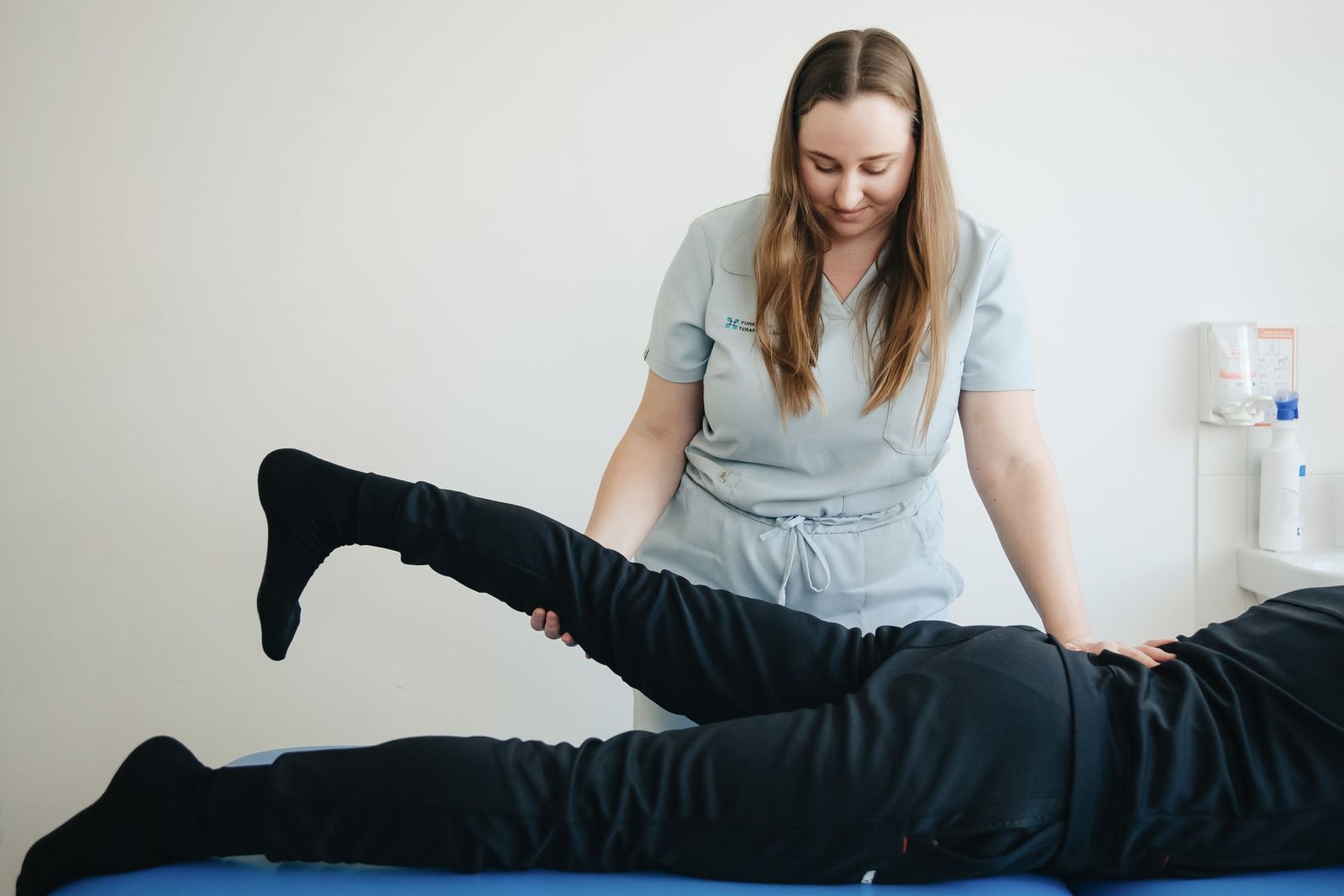
Early Sprained Ankle Exercises To Restore Movement Safely
Once you’re cleared to begin, simple ankle circles and gentle alphabet tracing with your toes, moving the foot through its full comfortable range, help restore normal movement without loading the joint heavily. These can typically be done several times a day, stopping well short of any sharp pain.
Gentle towel stretches for the calf, and light, controlled weight shifting from foot to foot as tolerated, round out this early stage. The goal here isn’t strength yet, it’s simply getting the ankle moving comfortably again, which sets up everything that follows. Most people spend somewhere around the first one to two weeks in this stage before progressing, though this varies with severity.
Strengthening Sprained Ankle Exercises To Prevent Re-Injury
Once movement feels reasonably comfortable, resistance band exercises working the ankle in all directions, inward, outward, up, and down, rebuild the strength that was lost during the injury and the days of reduced activity that followed. Calf raises, progressing from both feet to single-leg as tolerated, target another muscle group that plays a real role in ankle stability.
Balance and proprioception work belongs here too, and it’s often the most skipped part of sprained ankle exercises despite being one of the most important for preventing a repeat injury. Simple single-leg standing, progressing to eyes closed or on an uneven surface like a cushion, retrains your ankle’s sense of where it is in space, something that doesn’t automatically return just because strength has improved.
A simple way to structure this stage is thinking in terms of sets and gradual difficulty rather than a fixed daily checklist. Start with two to three sets of each exercise, roughly every other day, and only add difficulty, more resistance, a harder balance surface, a longer single-leg hold, once the current level feels genuinely easy rather than merely tolerable. Rushing this progression is one of the more common ways people end up back at square one a few weeks later.
How Sports Rehab Builds A Safe Return-To-Sport Plan
This is where a guided approach genuinely outperforms a generic exercise list. A phased, return-to-sport plan built around your specific sprain grade and sport reduces re-injury risk far more reliably than following the same printed sheet everyone else gets, because it accounts for what your ankle specifically needs to handle once you’re back competing. A Rehabilitation Consultation builds exactly this kind of plan, rather than assuming every ankle sprain needs an identical programme.
As strength and confidence rebuild, Rocktape kinesiology taping is often introduced to provide extra support and proprioceptive feedback while training load increases again. Most clients notice that having someone check their actual readiness, rather than guessing based on how many weeks have passed, is what genuinely lowers their risk of rolling the same ankle again.
This is particularly true for anyone whose sport involves unpredictable, reactive movement rather than straight-line running. Grapplers, footballers, and court-sport athletes all place genuinely different demands on a healing ankle, and a return-to-sport plan built with your specific sport in mind, rather than a one-size-fits-all sprain protocol, is exactly what closes the gap between “technically healed” and “actually ready.”

Getting Back To Sport With Confidence
Genuine readiness to return to sport is about more than the swelling going down. Pain-free range of motion matching your other ankle, strength that’s reasonably symmetrical, and the ability to hop, cut, and change direction without the ankle feeling hesitant or giving way are all better markers than simply how many weeks have passed since the injury.
Many people find the confidence piece lags behind the physical numbers, especially the first time back in a genuinely unpredictable situation like a tackle, a scramble, or an uneven playing surface. Testing the ankle in those specific conditions, ideally under guidance, matters just as much as any strength test on paper before stepping back into full competition.
It’s also worth accepting that some awareness of the ankle during the first few sessions back is a normal part of the transition, not necessarily a sign something’s wrong. As long as that feeling continues to fade session by session rather than staying the same or getting worse, it’s generally a normal adjustment period rather than a setback.
If you want a real plan instead of generic sprained ankle exercises off the internet, Impact Sports Rehabilitation works with athletes across Eccles, Salford, Trafford, and the wider Greater Manchester area on exactly this. Ask about an online consultation if you’re further afield.
Frequently Asked Questions
Is it safe to exercise my ankle if it’s still a bit swollen?
Mild, gradually improving swelling is usually fine for gentle range-of-motion exercises, as long as you’re staying well within pain-free limits. Significant swelling that isn’t improving, or swelling alongside an inability to bear weight, is a signal to get assessed before starting exercises rather than pushing through.
How do I know if I’ve sprained my ankle badly enough to need a doctor?
If you can’t bear any weight at all, the swelling or bruising is significant, or you’re genuinely unsure how bad it is, that’s worth a proper assessment rather than guessing at home. In our experience, this is one of those situations where a quick check early on saves far more time than assuming the best and being wrong.
Will doing exercises too early make my sprain worse?
Yes, this is a real risk, which is exactly why starting with gentle, pain-guided range-of-motion work rather than jumping straight to strength or balance training matters. Many people find easing into movement gradually, backing off at the first sign of sharp pain, is what keeps early exercise helpful rather than harmful.
My ankle feels fine now, do I still need to do balance exercises?
Yes, and this is genuinely one of the most commonly skipped steps. Balance and proprioception work addresses something pain-free movement alone doesn’t, your ankle’s sense of where it is in space, and skipping it is a well-documented reason ankle sprains become a repeat problem rather than a one-off injury.
How long until I can play sport again after a sprained ankle?
This depends heavily on the grade of the sprain and how consistently you’ve followed a genuine rehab progression, with milder sprains often allowing a return within a few weeks and more severe ones taking considerably longer. Many clients at Impact Sports Rehabilitation find a guided, phased plan gets them back with far more confidence than simply waiting for a set number of weeks to pass.
This article is provided for general educational purposes by Impact Sports Rehabilitation and does not constitute medical advice, diagnosis, or treatment. Anyone who cannot bear any weight on the ankle, has significant swelling or bruising, or is unsure of the severity of their sprain should be assessed by a qualified medical professional before starting an exercise programme; nothing in this article should be used to self-diagnose. Always seek the guidance of a doctor or other qualified health provider with any questions about your specific injury or condition.