

Quick answer: For an uncomplicated dislocated ankle without a fracture, most people move from immobilisation into early rehab within two to six weeks, with fuller functional recovery landing somewhere in the eight to twelve week range and a genuine return to sport typically taking three to six months once strength, balance, and confidence in the joint are all back. More severe dislocations, ones involving a fracture, torn ligaments, or surgery, usually take longer at every stage. The real dislocated ankle recovery time for your situation depends on how the joint was damaged, how quickly it was treated, and how consistently you stick with rehab once the boot comes off.
If you're reading this with your foot propped up on a pillow and an ice pack slowly turning to water, you're probably not after a textbook definition right now. You want to know how bad this actually is, whether you're looking at weeks or months, and when you'll be back on the pitch, the mats, or just walking the dog without wincing. A dislocated ankle is a genuinely serious injury, not a bad sprain, and the honest answer on dislocated ankle recovery time is that it depends a lot on what exactly happened inside the joint. Even so, there is a real, fairly predictable shape to how this heals, and we can walk through it together.
What Actually Happens When You Dislocate Your Ankle
A sprain is a ligament stretching or tearing while the bones themselves stay roughly in place. A dislocation is different and more serious: the talus, the bone that sits between your shinbone and heel bone, gets forced out of its normal position inside the ankle mortise, the snug bony socket formed by the tibia and fibula. That usually happens from a hard twist, a fall from height, a tackle, or a bad landing where the foot gets caught underneath you.
Because the joint itself is out of place, a dislocated ankle almost always needs to be reduced, meaning gently guided back into position, by a medical professional, often under sedation or a local nerve block, and it's frequently accompanied by ligament damage or a fracture around the joint. That combination is exactly why recovery from a dislocation takes longer and follows a stricter timeline than a straightforward sprain, and why self-treatment of the dislocation itself is never the right call.
Dislocated Ankle Recovery Time: The Real Timeline, Stage by Stage
Once the joint has been reduced and any fracture addressed, recovery tends to move through four broad stages, though the exact pace varies person to person.
In the acute and immobilisation stage, roughly the first one to three weeks, the priority is protecting the joint while swelling and pain settle, usually in a boot, cast, or brace with weight-bearing kept to a minimum. Early rehab typically follows from around week two through week six, introducing gentle range-of-motion work and light weight-bearing as your clinician clears it, aiming to get stiffness out of the joint before it becomes a bigger problem than the original injury.
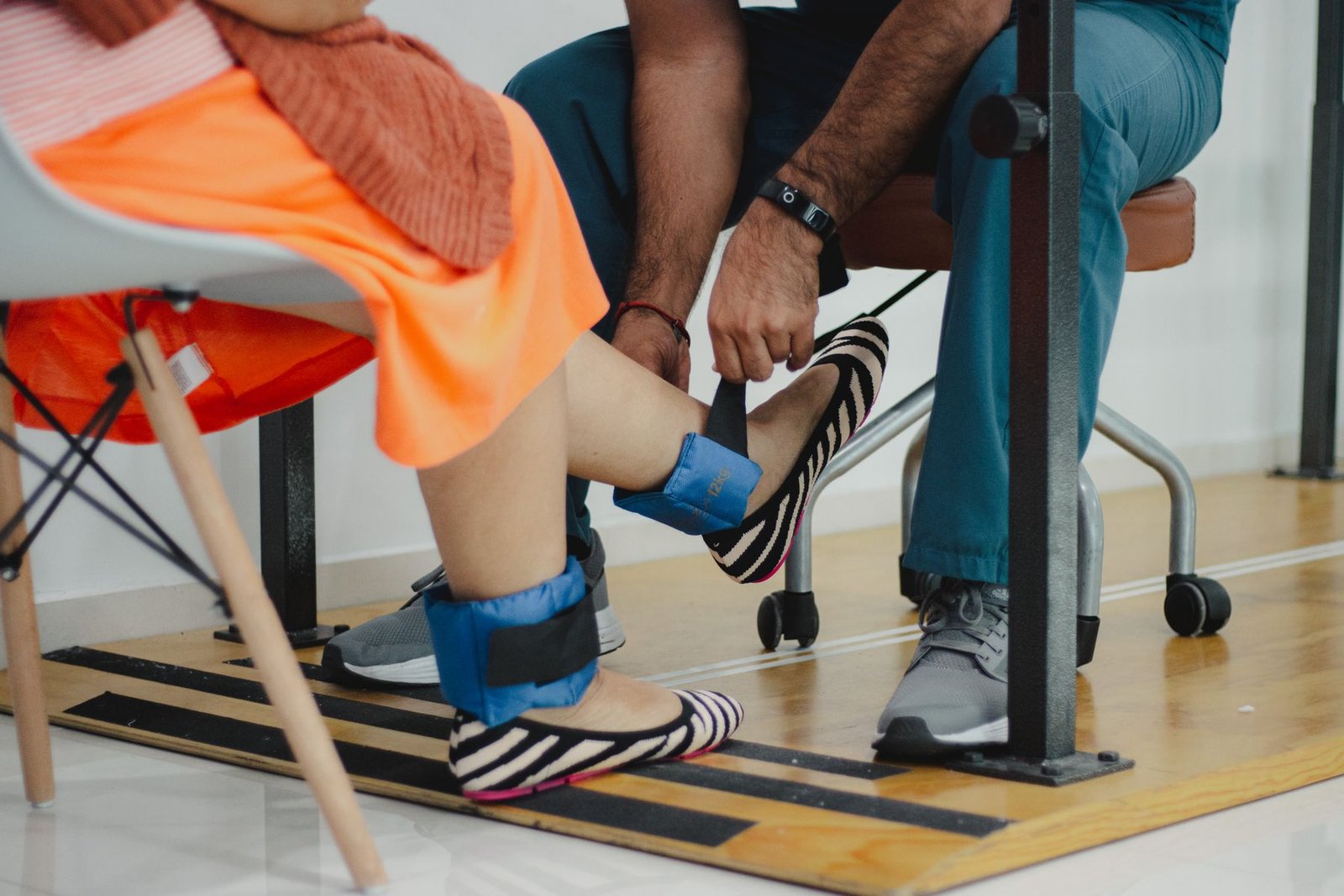
From roughly week six to twelve, the focus shifts to strengthening: rebuilding calf, ankle, and foot muscle that's weakened fast during immobilisation, along with balance and proprioception drills, the exercises that retrain your ankle to sense where it is in space. Many people find this stage is where the real work happens, since a joint can look healed on a scan while still being noticeably weaker and less stable than the other side.
Return to running, cutting, or grappling sits at the far end, typically somewhere in the three to six month range for a moderate dislocation without complications, and it can run longer, sometimes six to twelve months, for a severe dislocation involving fracture, ligament reconstruction, or surgery. These are typical recovery ranges rather than guarantees, and your own timeline will be shaped by the factors below.
Factors That Speed Up or Slow Down Your Recovery
No two ankles heal on exactly the same schedule, and in our experience a handful of things consistently move the needle. Age and general health matter, since younger, fitter tissue tends to repair faster than older or previously injured tissue. Severity is the biggest factor of all: a "clean" dislocation without a fracture heals faster than one that also broke bone or required surgical fixation.
Whether the surrounding ligaments were also torn changes things too, because a joint with damaged ligaments needs more stability work before it's trustworthy under load. Consistency with rehab is one of the few things actually within your control, and skipping sessions or rushing back early tends to slow things down far more than it speeds them up. Finally, prior ankle injuries, even old sprains you shrugged off years ago, can leave residual looseness that makes this recovery slower and more important to get right.
When to Get Emergency Care Immediately
This part matters more than anything else on this page. If you suspect a fresh ankle dislocation, meaning the joint looks visibly out of position, deformed, or angled wrong, this is an emergency, and you need A&E or urgent medical care right away, not a clinic booking and not a wait-and-see approach at home.
Go straight to emergency care if you notice any of the following: visible deformity or the foot sitting at an unnatural angle, numbness, tingling, or loss of sensation in the foot or toes, a foot that looks pale, blue, or feels cold, which can signal the blood supply is compromised, no pulse that you or someone with you can find on the top or inside of the foot, or a complete inability to bear any weight at all. Never try to push, pull, or "pop" the joint back into place yourself. That has to be done by a medical professional who can check the surrounding bone and blood supply first.
How Sports Rehab Supports a Faster, Safer Return
Once a doctor has confirmed the dislocation is stable, any fracture is managing well, and you're cleared to start rehab, this is exactly where a sports rehab clinic earns its keep. A structured Rehabilitation Consultation builds a plan around your specific joint, your sport, and how the injury actually happened, rather than a generic sheet of exercises.
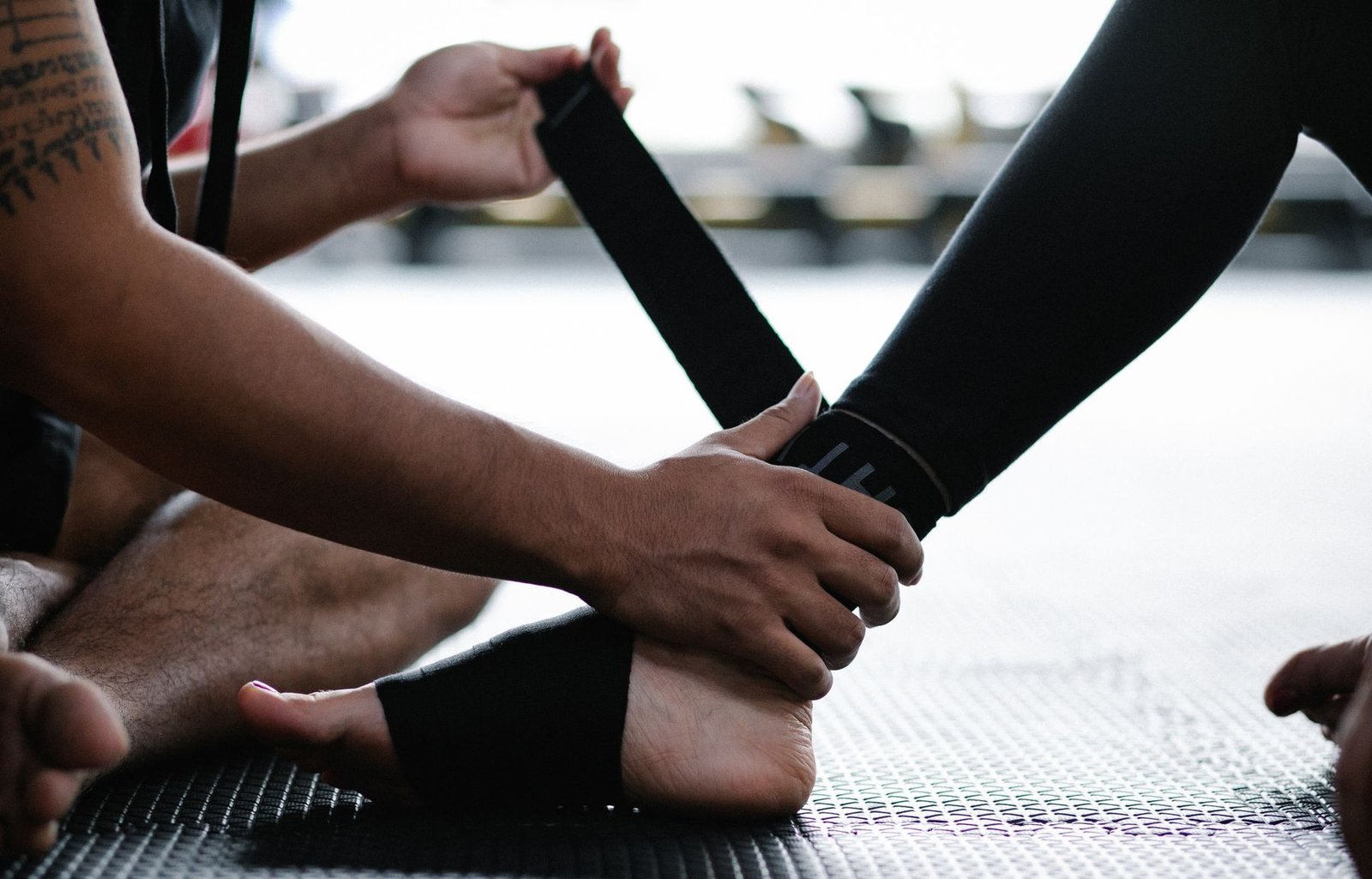
From there, Sports Massage can help manage the muscle tightness and compensation patterns that build up in the calf, hip, and opposite leg while you've been favouring the injured side, and Rocktape kinesiology taping is often introduced in the strengthening phase to give the joint extra proprioceptive feedback and light support as you load it again. None of these replace medical clearance for the acute injury, but most clients notice they make the strengthening and return-to-sport stages feel a lot less like guesswork.
Dislocated Ankle Recovery Time Depends On More Than What the X-ray Shows
Here's the part almost nobody covers, and it's the gap we hear about constantly from athletes and grapplers coming through the clinic. A scan can confirm the bones are back in place and healing, but it can't tell you whether you actually trust the joint again, and that gap between "medically healed" and "genuinely confident" is a real, measurable part of dislocated ankle recovery time.
Two things drive this. First, proprioception, your ankle's built-in sense of where it is in space, takes a real hit after a dislocation and doesn't automatically come back just because pain and swelling have gone. Second, fear of reinjury is common and completely normal, especially the first time you cut, plant, or get caught in an awkward position again. For grapplers and BJJ athletes specifically, this shows up hard in live rolling: a scramble puts your ankle through fast, unpredictable rotational stress that a straight-line running drill simply doesn't replicate, so testing the joint in genuinely sport-specific positions before competing again matters just as much as any strength number on paper.
Getting Back to Training or Competition Safely
"The swelling's gone down" is not a return-to-sport clearance, and treating it like one is how ankles get re-injured. A genuinely ready joint has pain-free range of motion that matches your other ankle, strength that's close to symmetrical side to side, and it holds up through sport-specific movement, single-leg hops, direction changes, landing from a jump, or shooting for a takedown, without giving way or feeling hesitant.
Later in this phase, some clients find acupuncture or cupping useful alongside strength work for easing residual stiffness and muscle tension around the joint and lower leg as training volume ramps back up, though neither replaces the strength and control work doing the heavy lifting. The honest marker of readiness isn't a date on a calendar, it's your ankle performing under the same demands your sport will actually throw at it.
If you're further along in your recovery and have been medically cleared, or if you're still in the early stages and want a clear plan instead of guesswork, Impact Sports Rehabilitation works with athletes and grapplers across Eccles, Salford, Trafford, and the wider Greater Manchester area on exactly this kind of rehab. Ask about an online consultation if you're further afield.
Frequently Asked Questions
How do I know if my ankle is dislocated or just badly sprained?
A dislocation usually looks and feels obviously different from a sprain: the joint may appear visibly out of position or deformed, the pain tends to be severe and immediate, and putting any weight on it is often impossible. If your ankle looks misshapen, or you're genuinely unsure, treat it as a possible dislocation and get emergency care rather than waiting to see if it's "just" a sprain.
Can a dislocated ankle heal without surgery?
Many dislocations, especially ones without a significant fracture or major ligament rupture, are treated non-surgically with reduction, immobilisation, and a structured rehab programme afterward. Others, particularly when bone or multiple ligaments are involved, do need surgical fixation to heal properly and stay stable long term, so this really comes down to what the imaging shows and what your treating doctor recommends for your specific injury.
How long will I be in a boot or cast after a dislocated ankle?
This varies by severity, but immobilisation commonly runs somewhere around two to six weeks before a gradual shift toward weight-bearing and movement begins, longer if a fracture was involved or surgery was needed. Your surgeon or consultant will base the exact timing on follow-up scans and how the joint is healing, not a fixed number that applies to everyone.
Will my ankle ever be the same after a dislocation?
Most people who follow through with proper rehab get back to their normal activities, including sport, with a joint that feels stable and reliable again, though some report mild stiffness or awareness of the joint in certain weather or after long days on their feet. Consistent strengthening and balance work, the kind we build into a plan at Impact Sports Rehabilitation, is what makes the biggest difference in how "normal" the ankle ultimately feels.
When can I start running again after a dislocated ankle?
There's no single safe date, since it depends on how well the joint has healed, how much strength and range of motion you've rebuilt, and how it holds up under load-bearing tests without pain or giving way. In our experience, running typically re-enters the picture somewhere in the strengthening-to-return-to-sport window, often eight weeks or later, but only once a clinician has actually assessed the joint under those specific demands rather than by the calendar alone.
Is it normal for my ankle to still feel unstable months later?
Some lingering awareness or mild instability isn't unusual in the months after a significant dislocation, particularly if strengthening and balance work were rushed or skipped. That said, ongoing giving-way, swelling, or a joint that doesn't feel trustworthy under sport-specific movement is worth getting properly assessed rather than accepted as permanent, since targeted rehab can often close that gap even months out from the original injury.
This article is provided for general educational purposes by Impact Sports Rehabilitation and does not constitute medical advice, diagnosis, or treatment. A suspected ankle dislocation is a medical emergency and requires assessment by a qualified medical professional or A&E; nothing in this article should be used to self-diagnose or self-treat a dislocated ankle. Always seek the guidance of a doctor or other qualified health provider with any questions about your specific injury or condition.