Quick answer: An MCL knee injury is damage to the medial collateral ligament on the inner side of the knee, usually caused by a blow to the outside of the knee or a twisting movement that forces the knee inwards. Injuries are graded from one, a mild stretch, to three, a complete tear, and most heal well with non-surgical treatment. Because a significant MCL injury can occur alongside ACL or meniscus damage, a knee that swells quickly, gives way, locks, or can’t take your weight should be assessed properly.
If you’ve just hurt the inside of your knee, perhaps in a tackle, a fall, or an awkward twist, and someone has mentioned the MCL, you’re probably trying to work out how serious it is and what happens next. An MCL knee injury is one of the most common knee injuries in sport, and the good news is that most heal well. But the range is wide, from a mild sprain that settles in a couple of weeks to a complete tear, and sometimes other parts of the knee are injured at the same time.
In this guide we’ll explain how MCL injuries happen, how they’re graded, the typical symptoms of each grade, why clinicians always check other structures in the knee, when you should get it assessed, and what the path forward looks like. We can’t diagnose your knee here, so if you have significant pain, instability, or can’t put weight through the leg, please get it checked properly.
How An MCL Knee Injury Typically Happens
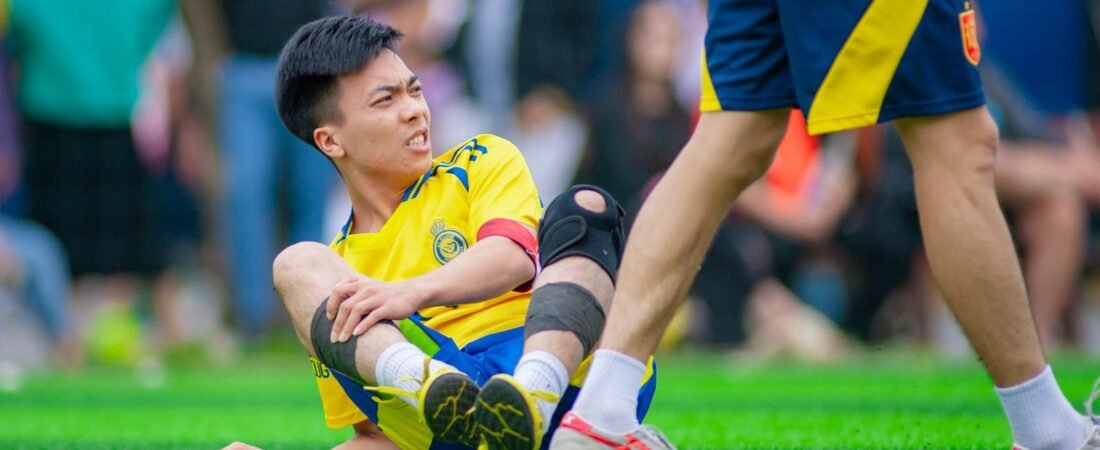
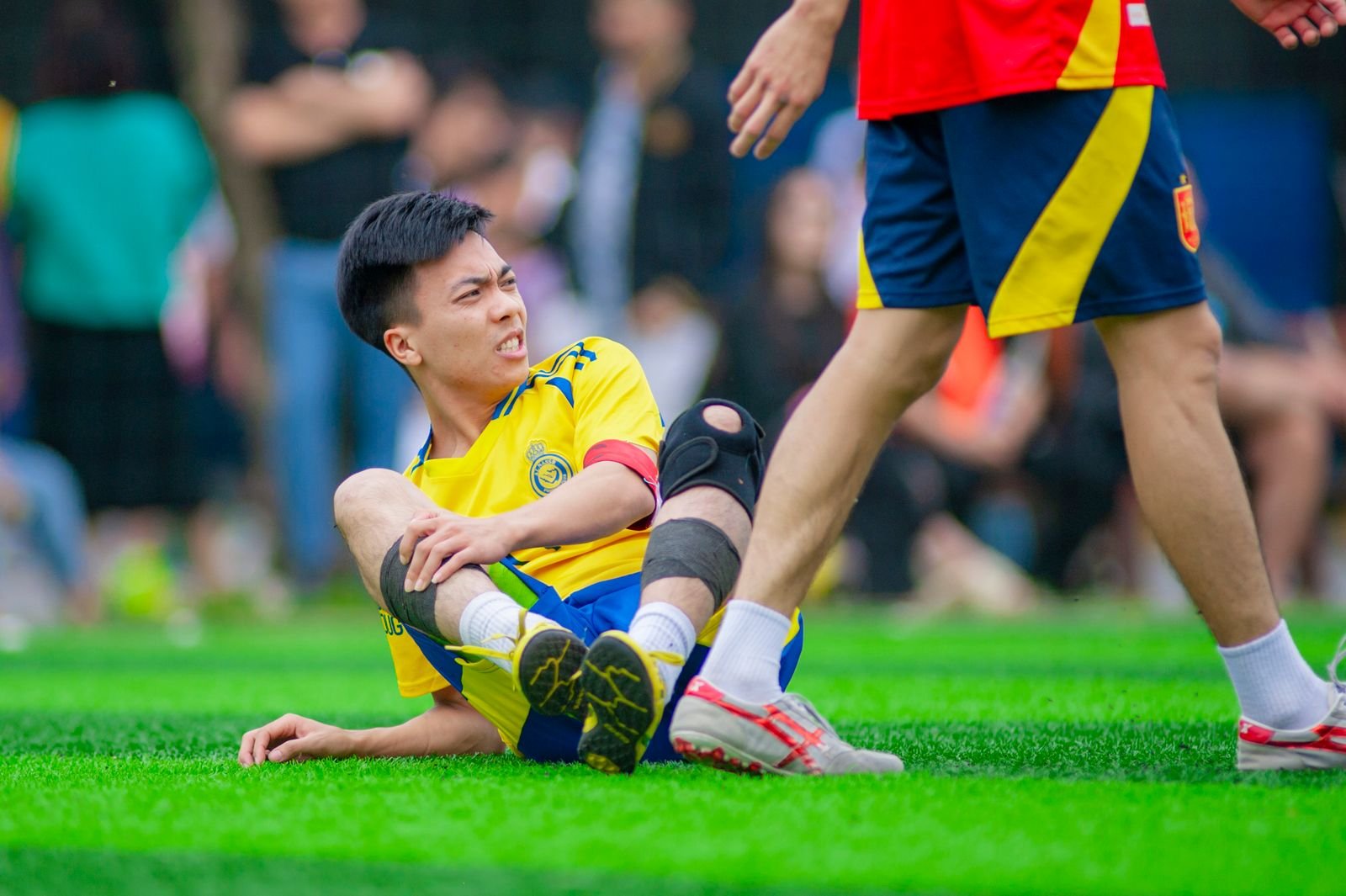
The medial collateral ligament runs down the inner side of the knee, connecting the thigh bone to the shinbone. Its main job is to stop the knee from buckling inwards. The classic way it’s injured is a force that pushes the knee in that direction, most often a blow to the outside of the knee. Think of a footballer being tackled from the side while their foot is planted, a rugby player caught in a ruck, or a skier whose ski tips drift apart and pull the knee inwards.
It can also happen without contact. Twisting on a planted foot, landing awkwardly from a jump, or a sudden change of direction can overload the ligament. In grappling sports such as BJJ and wrestling, positions that twist the knee or force it inwards are another common cause. People often describe feeling pain on the inside of the knee straight away, sometimes with a pulling or tearing sensation.
Some people are more exposed to this injury than others. Contact sports with tackles and scrums, skiing, and grappling sports top the list, and players in positions that involve lots of side-on contact are particularly at risk. Previous knee injuries, fatigue late in a game, and reduced strength and control around the hip and knee may also play a part, which is why rehab often addresses these areas as well as the ligament itself.
Grading The MCL Knee Injury, Mild To Severe
MCL injuries are usually graded from one to three. A grade one injury is a mild sprain. The ligament fibres are stretched, with perhaps a small number of microscopic tears, but the ligament is still intact and the knee remains stable when tested.
A grade two injury involves partial tearing of the ligament. The knee is noticeably more painful and shows some looseness when a clinician gently pushes it inwards, but there’s still a clear end point where the ligament stops the movement.
A grade three injury is a complete tear of the ligament. The knee opens up much more on testing, without a firm end point. Clinicians assess this using a valgus stress test, gently pushing the knee inwards with it slightly bent and with it straight, and comparing the movement with the other knee. Imaging, usually an MRI, may be used to confirm the grade and check for other injuries, particularly with more significant sprains.
Symptoms By Grade
With a grade one injury, you’ll usually have pain and tenderness along the inner side of the knee, mild swelling in that area, and you’ll typically be able to walk, perhaps with some discomfort. Twisting, pivoting, or pushing the knee inwards is often sore, but the knee feels stable.
Grade two injuries are generally more painful, with more noticeable swelling and tenderness, and you may limp. Bending and straightening the knee fully can be uncomfortable, and some people describe the knee feeling a little loose or wobbly when they change direction.
Grade three injuries can be surprising. Because the ligament is completely torn, there may sometimes be less pain than with a grade two injury, as there’s no tension left on the damaged fibres. However, the knee often feels unstable, as if it might give way, particularly with side-to-side movements. Swelling and bruising may spread more widely. Because these patterns overlap, symptoms alone aren’t a reliable way to grade an injury, which is why a hands-on assessment matters.
In the first day or two, while you’re waiting to be assessed, a few simple steps help. Protect the knee from twisting and sideways forces, use crutches if walking is painful, and keep the knee moving gently within a comfortable range rather than holding it completely still. Ice and elevation may help with comfort and swelling. Avoid trying to test the knee by running, hopping, or twisting on it to see how bad it is, as that risks adding to the damage.
When Other Knee Structures Might Also Be Involved
This is something many MCL overview articles leave out, but it’s a key part of how clinicians assess this injury. The forces that injure the MCL, especially in contact sport, can also damage the anterior cruciate ligament, the meniscus cartilage, and the structures at the back and inner corner of the knee. The more severe the MCL injury, the more likely it is that something else has been hurt too.
There are some useful clues. The MCL sits outside the joint, so an isolated MCL injury tends to cause swelling localised to the inner knee. Significant swelling throughout the whole knee within a few hours often suggests bleeding inside the joint, which raises suspicion of an ACL tear or another internal injury. Hearing or feeling a pop, the knee giving way, or locking and catching also point towards other structures being involved. On examination, looseness when the knee is stressed while fully straight, rather than only when slightly bent, suggests more than just the MCL is injured.
That’s why a clinician will usually test the ACL, meniscus, and other ligaments as part of any significant MCL assessment, and why imaging is often recommended when the picture isn’t clear. Identifying a combined injury early can change the treatment plan considerably. If an ACL injury is confirmed, our article on ACL recovery time explains what that involves.
When To Get An MCL Knee Injury Checked Properly
Get a knee injury assessed if you can’t put weight on the leg, if the knee swelled up significantly within a few hours, if it feels unstable or gives way, if it locks or catches, or if you can’t fully straighten or bend it. Pain on the inside of the knee that isn’t improving after a week or two is also worth having checked.

Go to A&E if the knee looks deformed, you can’t move it, there’s severe pain after a high-force injury, or your foot becomes numb, cold, or changes colour, as these can indicate a dislocation or damage to blood vessels or nerves.
What Happens Next
Once your injury has been assessed and graded, the next step is a treatment plan. For most isolated MCL injuries that means non-surgical treatment, often with a hinged brace for more significant sprains, followed by a staged rehab programme. Our guide to MCL injury treatment explains how bracing and treatment differ by grade, and when surgery is discussed. Our MCL sprain rehab protocol and MCL physical therapy exercises cover the rehab itself.
At Impact Sports Rehabilitation, a rehabilitation consultation can assess your knee, estimate the grade, check for other injuries, and arrange onward referral if needed. A typical first assessment includes a conversation about exactly how the injury happened, a look at swelling and bruising, gentle testing of the MCL and the other knee ligaments, checks on the meniscus, and an assessment of how you’re walking and moving. From there, we’ll explain what we think is going on and agree the next steps with you. Supportive treatments such as sports massage and taping can help with comfort during rehab, but the core of recovery is a structured, progressive plan.
If you’ve injured your knee and suspect an MCL injury, Impact Sports Rehabilitation in Eccles, Greater Manchester can assess it properly and guide your recovery from the first week through to full return to sport. We work with athletes and active people from Eccles, Salford, Trafford, and across Manchester, and online consultations are available if you’re further away. Book in and let’s find out exactly what you’re dealing with.
Frequently Asked Questions
How do I know if I’ve injured my MCL?
Pain and tenderness on the inner side of the knee after a blow to the outside, a twist, or an awkward landing are common signs. Only a proper assessment can confirm it and check for other injuries.
Can I walk with an MCL knee injury?
Many people can walk with a grade one or two injury, sometimes with a limp. If you can’t put weight through the leg, or the knee feels unstable, get it assessed.
How long does an MCL injury take to heal?
It depends on the grade and whether other structures are involved. Mild sprains may settle within a few weeks, while more severe injuries take longer, and recovery is best guided by how your knee responds to rehab.
Do I need an MRI for an MCL injury?
Not always, as many MCL injuries can be graded through clinical examination. An MRI is more likely to be recommended for more severe injuries or when another injury, such as an ACL or meniscus tear, is suspected.
Is a grade three MCL tear serious?
It’s a significant injury, but many isolated grade three tears still heal well without surgery. Impact Sports Rehabilitation can help assess whether other structures are involved and guide the right treatment path.
Why does my knee feel unstable after an MCL injury?
Instability can come from the ligament itself being loose, weakness in the surrounding muscles, or damage to other structures such as the ACL. It’s always worth getting a knee that gives way properly assessed.
This article is for educational purposes only and is not a substitute for professional medical diagnosis or treatment. MCL injuries range from mild to severe and may involve other knee structures, so please seek proper assessment for significant pain, instability, or an inability to bear weight. Impact Sports Rehabilitation offers in-person and online consultations to guide your recovery.