
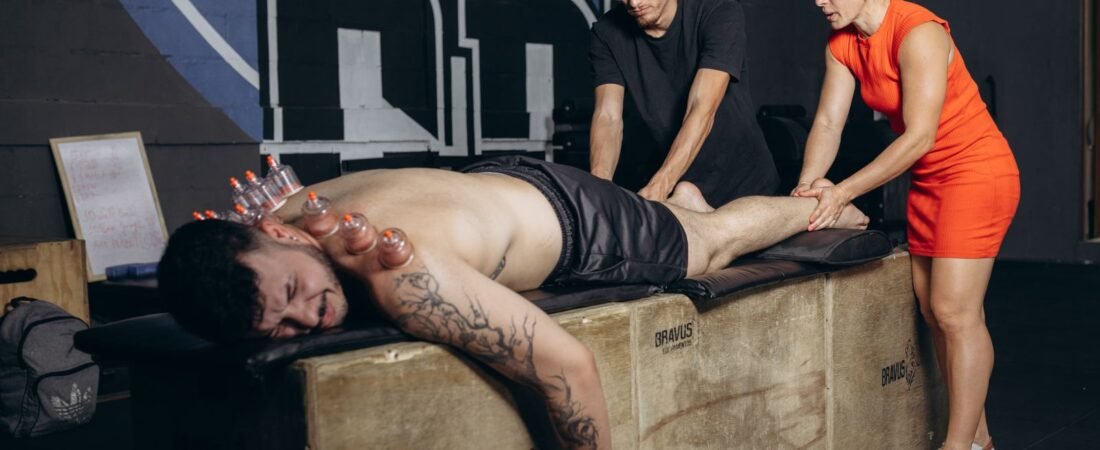
Quick answer: Sports cupping is a form of cupping therapy adapted for athletes, where cups create suction on the skin over specific muscle groups, often combined with movement or sliding the cups along the muscle, to help tight, overworked areas feel looser. Many athletes use it for perceived relief from muscle tightness and to support recovery between sessions. Current research suggests it may help some people feel less pain and tension in the short term, but it works best as one part of a wider training and recovery plan rather than a standalone fix.
You’ve probably seen the circular marks on elite swimmers, footballers, and fighters, and wondered what sports cupping actually involves and whether it’s worth trying. It has become one of the most talked-about recovery treatments in sport, and also one of the most overhyped. Some sources promise it will transform your recovery, while others dismiss it completely. The honest answer is more balanced than either camp suggests.
In this guide, written from the perspective of a clinic that uses cupping with athletes regularly, we’ll explain what makes sports cupping different from general relaxation cupping, why athletes use it, what a session really involves, how it fits into a sensible training and recovery plan, and what the evidence actually says. One important note first. If you have an injury that hasn’t been properly assessed, cupping shouldn’t be your first step. Getting a clear diagnosis comes first, and cupping can then be considered as one supportive tool.
What Makes Sports Cupping Different From General Cupping
Traditional cupping and spa-style cupping are usually about relaxation. Cups are placed on the back, left in one position for several minutes, and the session is designed to feel calming. Sports cupping uses the same basic tool, suction cups that lift the skin and underlying tissue, but applies it with a different purpose: helping a specific area that’s been working hard in training feel looser and move better.
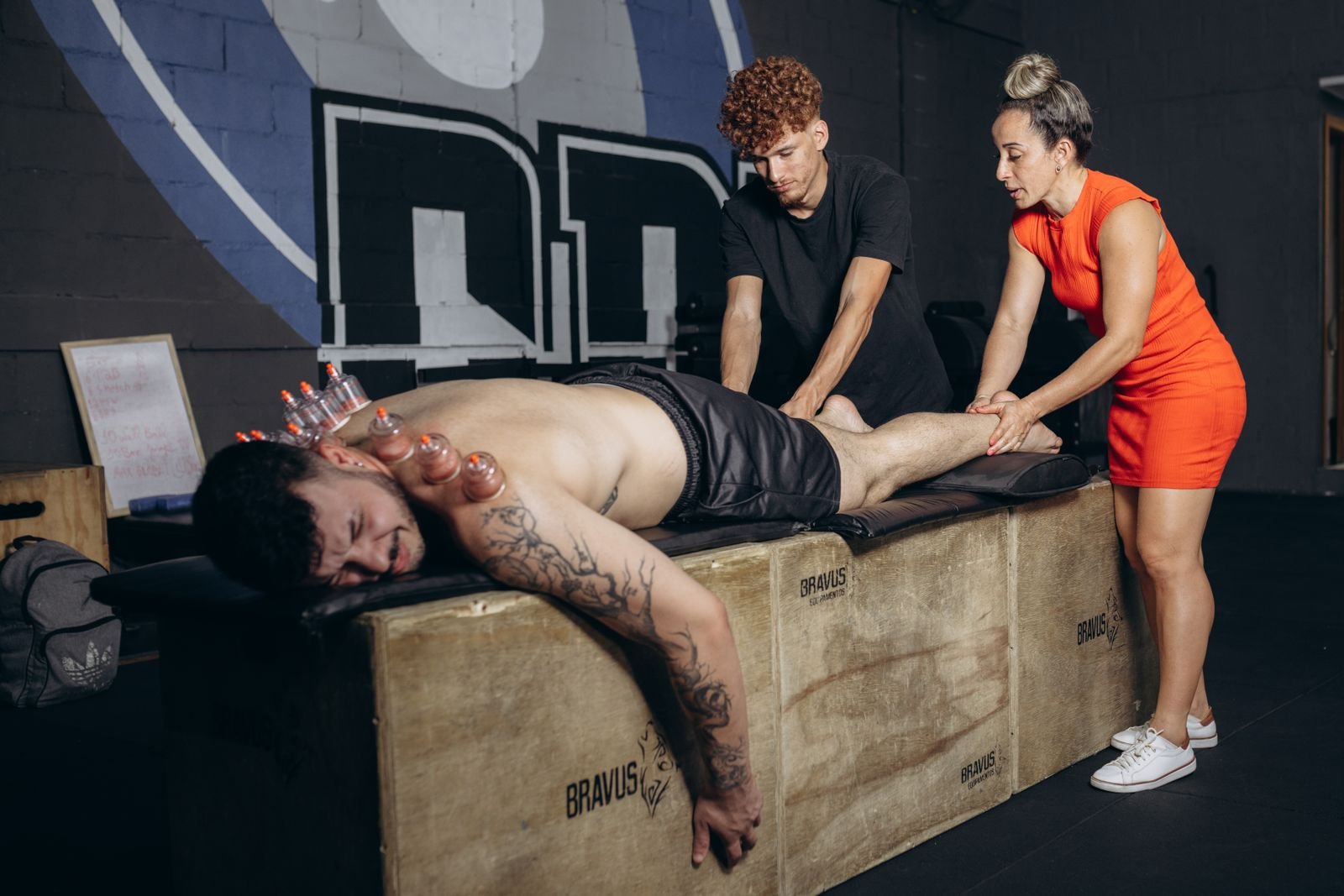
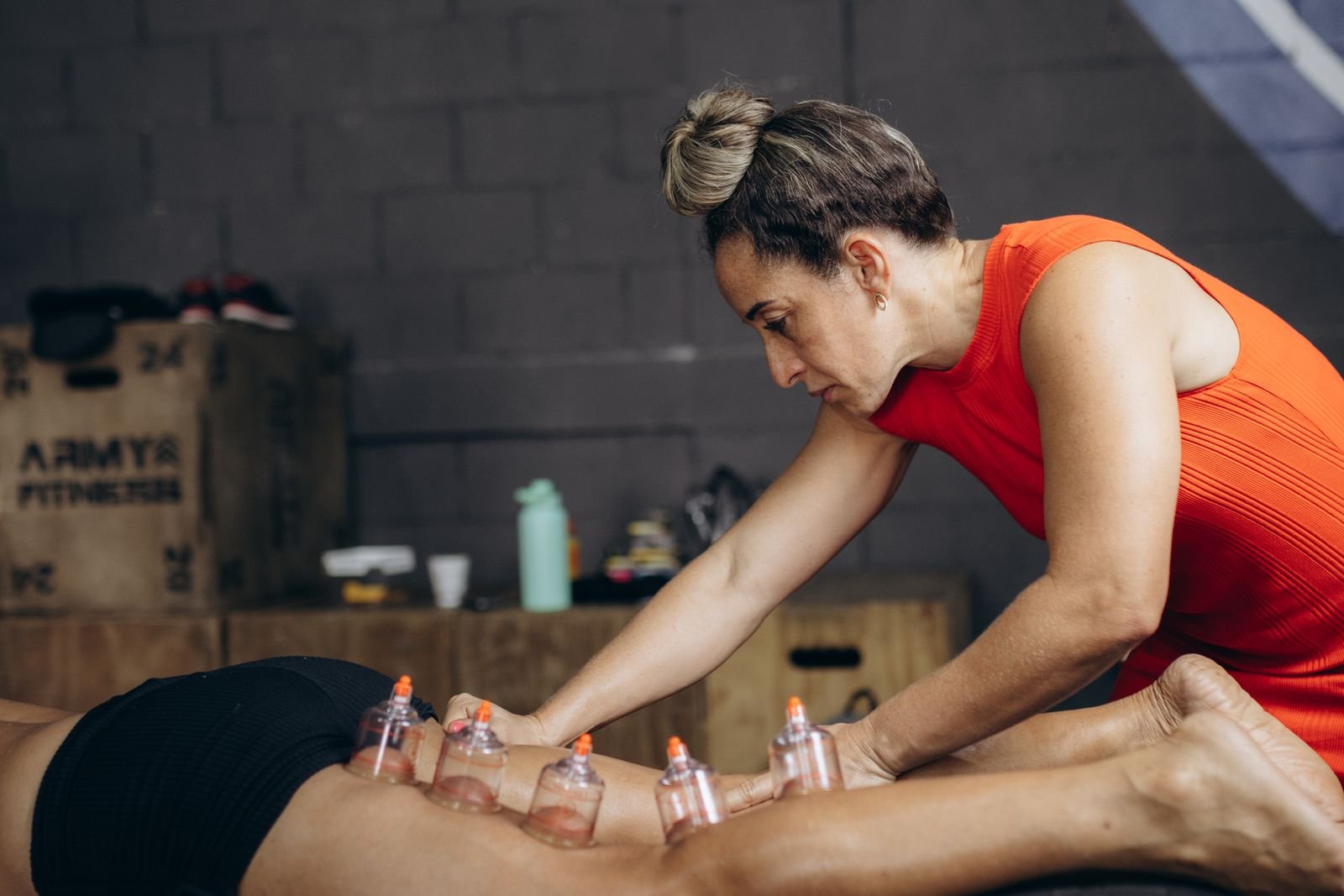
In practice, that means a few key differences. Cups are placed over the muscles that matter for your sport, such as the calves and hamstrings for a runner, the lats and shoulders for a swimmer, or the forearms and upper back for a grappler. Practitioners often use dynamic techniques, sliding the cups along a muscle with oil, or leaving cups in place while you move the joint through its range, sometimes called movement cupping. Sessions also tend to be shorter and more targeted, and they’re usually combined with other hands-on work, mobility, and exercise rather than used on their own.
The way it’s applied also depends on the sport. A runner in the middle of marathon training might have cups slid along the calves and the outside of the thigh, then move straight into some ankle and hip mobility. A footballer might focus on the hamstrings and groin after a congested run of fixtures. A BJJ or MMA athlete often wants the forearms, upper back, and neck addressed after heavy grip and grappling sessions. The tool is the same, but the targeting, timing, and what it’s combined with are all shaped around what the athlete actually does.
Why Athletes Specifically Use Sports Cupping
The most common reason athletes give is that their muscles feel less tight afterwards. After heavy blocks of training, many athletes describe feeling stiff, heavy, or restricted, and the lifting sensation of the cups, quite different from the pressing sensation of massage, is something many find helps those areas feel freer. Some describe it as easing the kind of tightness that a foam roller or stretching doesn’t quite reach.
Recovery is the second reason. Athletes often use cupping between sessions or during periods of heavy competition, when they want to feel fresher without the deeper pressure of a full sports massage the day before an event. Many like it because it’s relatively quick and can be targeted at a single problem area.
There’s also a perception and routine element that shouldn’t be dismissed. Many athletes simply feel better with a recovery ritual that helps them relax and switch off after hard training, and feeling better can affect how you approach your next session. That said, perceived benefits are different from proven physiological effects, and it’s important to keep that distinction in mind, which we’ll come back to in the evidence section.
What A Sports Cupping Session Actually Involves
A session usually starts with a short conversation about your training, your sport, and where you feel tight or sore, followed by a quick check of movement in those areas. If anything suggests an injury rather than general tightness, a good practitioner will assess that properly first, or recommend you have it looked at before going ahead.
The cups are then applied to clean skin, often with a little oil if they’re going to be moved. You’ll feel a pulling or lifting sensation, which most people find strong but comfortable rather than painful. The practitioner may leave the cups in place for a few minutes, slide them along the muscle, or ask you to move the area while the cups are on. Sessions often combine cupping with other techniques, such as massage or stretching, and finish with a recheck of movement.
Afterwards, you’ll often see circular marks where the cups were. These are caused by the suction drawing blood towards the surface and typically fade over several days to a week or so. They’re usually painless, though the area may feel slightly tender. You should tell your practitioner if you take blood-thinning medication, bruise easily, have a skin condition, or are pregnant, as cupping may need to be adapted or avoided. For more on the marks and aftercare, see our guide to before and after cupping therapy.
Where Sports Cupping Fits Into A Broader Training And Recovery Plan
This is where much of the online content about sports cupping falls short. It’s often presented as a standalone secret weapon, as if a few sessions will solve tight hamstrings, recurring calf strains, or sore shoulders. In our experience, that’s not how it works. Cupping can help a tight area feel better for a while, but it doesn’t address why that area keeps getting tight.
Recovery is built on the basics: sensible training load, enough sleep, adequate nutrition, and appropriate rest between hard sessions. Resilience against injury is built through strength training and gradual progression. If a muscle keeps feeling tight, it may be overloaded, under-strengthened, or compensating for something else, and those problems need a plan, not just a treatment.
So we think of sports cupping as a supportive tool. It can be useful when you want short-term relief during a heavy training block, when you want to feel looser before a mobility or strength session, or when it helps you stay consistent with the exercise work that drives long-term change. It works best alongside other hands-on options such as sports massage and a structured rehabilitation plan if you’re dealing with a recurring issue.
What The Evidence Actually Says About Sports Cupping
The research on cupping in athletes is still limited, and it’s worth being honest about it. Systematic reviews looking specifically at athletes have found no clear evidence that cupping improves performance or speeds up physiological recovery, and many of the studies are small, short, and difficult to blind, since it’s hard to give someone a convincing fake cupping session.
There is some evidence, mostly of low to moderate quality, that cupping may reduce pain and perceived muscle tension in the short term for certain musculoskeletal complaints, such as neck and lower back pain. Some athletes also report feeling less sore and more mobile after treatment. Whether these effects come from changes in the tissue, the nervous system’s response to the sensation, relaxation, or expectation is still being studied, and it’s likely to be a mix.
What doesn’t hold up is the popular idea that cupping removes toxins, and there’s little support for claims that it dramatically speeds up healing. A fair summary is that sports cupping may help some athletes feel better in the short term, it’s generally low risk when done properly, and it’s best used as an add-on to proven recovery and training methods.
What To Expect At Impact Sports Rehabilitation
At Impact Sports Rehabilitation, sports cupping is delivered as part of a practitioner-led approach rather than as a spa treatment. We start by understanding your sport, your training, and what you’re hoping to get from the session, and we check whether you’re dealing with general tightness or something that needs a proper assessment. If cupping is appropriate, we target the areas that matter for your sport and often combine it with massage, mobility work, or advice on exercises to continue at home. You can find out more on our cupping page, or read about the purpose of cupping in more detail.
If you’re curious whether sports cupping could help your recovery, Impact Sports Rehabilitation in Eccles, Greater Manchester offers cupping as part of a practitioner-led treatment plan, tailored to your sport and training. We work with athletes from Eccles, Salford, Trafford, and across Manchester, and online consultations are available if you’d like advice on your recovery plan first. Book in and we’ll help you decide whether it’s the right fit for you.
Frequently Asked Questions
Does sports cupping actually work or is it just a placebo?
The honest answer is that it may help some people feel less pain and tightness in the short term, but research hasn’t shown clear benefits for performance or recovery. Part of the effect may come from relaxation and expectation, which is why we use it as one tool within a broader plan.
Does sports cupping hurt?
Most people describe it as a strong pulling sensation rather than pain. Your practitioner can adjust the suction, and the treated area may feel a little tender afterwards.
How long do cupping marks last?
The marks usually fade within several days to about a week or so, depending on the person and the strength of the suction. They’re generally painless, but it’s worth timing treatment if you have an event or photos coming up.
Can I have sports cupping before a competition?
Many athletes prefer to have it a day or more before competing, especially if they’re new to it, so they know how their body responds. It’s best not to try it for the first time right before an important event.
Is sports cupping safe for everyone?
It’s generally low risk when done by a trained practitioner, but it may need to be avoided or adapted if you take blood thinners, have a bleeding disorder, certain skin conditions, or are pregnant. At Impact Sports Rehabilitation, we always check your health history before treatment.
Should I get cupping for an injury?
If you have a new or unexplained injury, get it properly assessed first rather than assuming cupping is the answer. Once you have a diagnosis, cupping may be one supportive option within a wider rehab plan.
This article is for educational purposes only and reflects general information about sports cupping. Individual experiences vary, and cupping is not a substitute for proper assessment or treatment of an injury. Impact Sports Rehabilitation offers cupping as part of practitioner-led care, along with in-person and online consultations.


