
A guillotine is a front-facing choke applied around the neck, typically caught when an opponent shoots in for a takedown or is otherwise caught with their head trapped low and forward. It’s one of the more commonly seen submissions in BJJ and MMA, and it’s also one that carries genuinely more risk than a typical joint lock, since it involves the airway and blood vessels in the neck rather than a single joint.
Guillotine BJJ: What You Need To Know About The Neck Risk
Whether you’ve caught or been caught by a guillotine recently and want to understand the actual risk involved, or you’re newer to grappling and trying to train more safely, here’s a genuinely informative, non-technical look at why this particular submission carries more risk than most, what the difference between a blood choke and air choke actually means for you, and when symptoms afterward need real medical attention.
What A Guillotine Choke Actually Is, In Simple Terms
A guillotine is applied by wrapping an arm around the front of an opponent’s neck, typically while their head is trapped low, then applying pressure using the arm, sometimes reinforced by the legs wrapped around the torso, to compress structures in the neck. Unlike a joint lock, which targets a single joint’s range of motion, a choke targets the neck’s soft tissue, blood vessels, and airway directly, which is exactly why it works so quickly and why it carries a genuinely different risk profile.
This isn’t a technique breakdown for training purposes, teaching submission application is outside a sports rehabilitation clinic’s scope, but understanding the basic mechanism helps make sense of the genuine safety considerations that follow. It’s a genuinely common submission across grappling disciplines precisely because it can be caught in a scramble, off a failed takedown attempt, or in a transition, rather than needing a deliberately set-up position, which is part of why it catches people, including experienced grapplers, off guard fairly often.
Why This Submission Carries Real Neck Risk
Most guillotine content online is written purely from a technique or training angle, which is a genuine gap, since the safety and physiology side gets comparatively little accessible explanation. A guillotine can compress either the airway, restricting breathing directly, or the blood vessels supplying the brain, restricting oxygen delivery a different way, and which structure is affected depends heavily on the exact grip and angle used.
Both mechanisms can render someone unconscious if taken far enough, but they genuinely differ in how they do it and, interestingly, in how much physical trauma tends to result. A well-placed choke targeting blood flow tends to work relatively quickly with comparatively less direct tissue trauma, while a poorly placed choke that ends up crushing the airway itself is often more painful and carries a higher risk of soft tissue injury to the throat, even though neither should ever be treated as automatically “safe.”
There’s also a rare but genuinely serious risk worth being aware of, arterial injury, specifically a tear in the lining of the blood vessels supplying the brain, associated with sudden, forceful cervical movement. This is genuinely uncommon, but it’s exactly the kind of risk that most casual “chokes are basically fine” content skips over entirely, and it’s part of why symptoms that persist beyond normal post-roll tiredness deserve real attention rather than being dismissed.

The Difference Between A Blood Choke And An Air Choke
A blood choke works by compressing the arteries running along the sides of the neck that supply blood to the brain, causing lightheadedness and, if continued, loss of consciousness as oxygen delivery drops. An air choke works differently, compressing the trachea directly and restricting the ability to breathe, which tends to produce a more immediate, uncomfortable sensation and often prompts a faster tap.
Genuinely useful context that often gets missed: a well-executed guillotine is more likely to act as a blood choke, since that’s typically the more mechanically efficient application, while a poorly positioned one is more likely to end up compressing the airway instead, which tends to be more painful and, again, carries its own distinct injury risks to the throat’s soft tissue.
This distinction is genuinely useful for understanding why two people’s experience of “getting guillotined” can feel and look completely different afterward. Someone caught in a clean blood choke often describes a fairly quick, almost painless fade toward lightheadedness, while someone caught in a poorly positioned, more air-choke-style version often describes a distinctly uncomfortable, gasping sensation and lingering throat soreness, even though the underlying submission looked broadly similar from the outside.
Signs Something Wasn’t Right After One
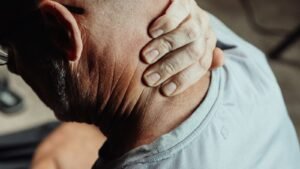
Lingering dizziness, a persistent headache, neck pain that doesn’t settle with normal post-roll soreness, or any visual disturbance after tapping to or being caught in a guillotine are genuinely worth paying attention to, rather than dismissing as normal training fatigue. Difficulty swallowing, a hoarse voice, or visible bruising around the neck following a choke that compressed the airway specifically are also worth noting.
Timing matters too, symptoms that show up immediately are one thing, but genuinely pay attention if something develops or worsens hours or even a day or two after training, rather than assuming that because you felt broadly fine straight after rolling, nothing further needs watching. This delayed pattern is a genuinely useful thing to know about, since it doesn’t match how most people expect an injury to present.
When To Seek Medical Assessment, Not Just Rest
Any loss of consciousness, no matter how brief it felt, genuinely warrants medical assessment rather than simply resting it off, since it’s not always possible to tell from how you feel afterward whether anything more significant happened. Persistent or worsening headache, ongoing dizziness, visual changes, or neck pain that isn’t settling are also reasons to seek proper assessment rather than assuming it will pass with time, given that the structures involved carry real, if uncommon, risks including arterial injury from a sudden or forceful application.
It’s worth being genuinely clear here rather than vague, this isn’t about being alarmist over normal training soreness. Most guillotine exposures, even fairly intense ones, resolve without any lasting issue. But given the specific structures involved, the sensible default is to take new, persistent, or worsening symptoms seriously and get them checked, rather than assuming everything is automatically fine simply because it felt manageable in the moment.
How Sports Rehab Supports Recovery From Neck Strain
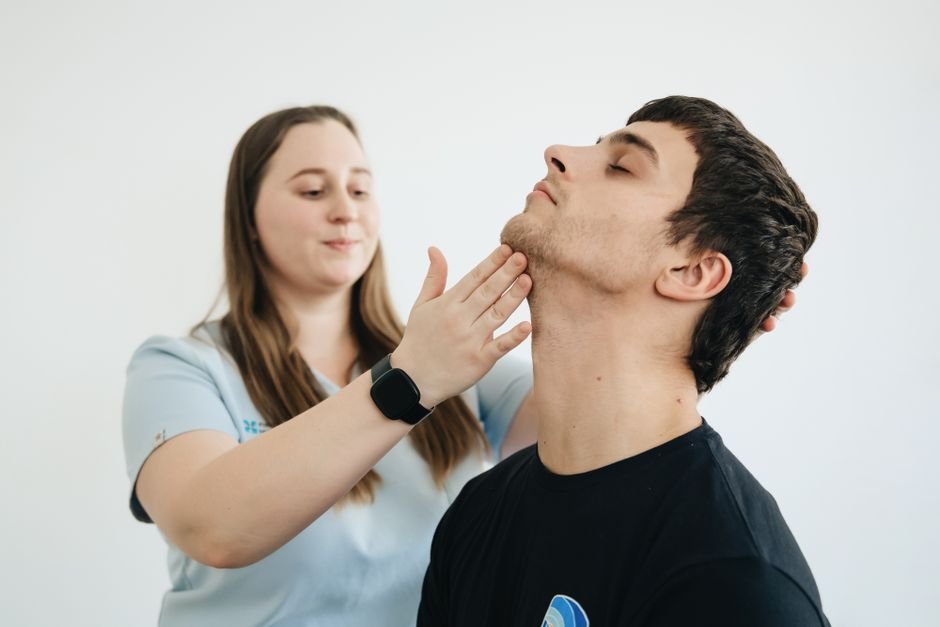
At Impact Sports Rehabilitation, once anything more serious has genuinely been ruled out, musculoskeletal neck strain from grappling can be supported through our sports massage and acupuncture services, alongside guidance on returning to training safely. Given the clinic’s genuine familiarity with BJJ and combat sports, recovery plans account for the real demands of getting back on the mats, not just general daily comfort. This includes practical guidance on when it’s sensible to return to live rolling versus lighter positional work, rather than a blanket “wait two weeks” rule that doesn’t account for your specific symptoms or how training-ready your neck genuinely feels.
If you’re dealing with ongoing neck strain from grappling, once anything urgent has been ruled out, Impact Sports Rehabilitation works with clients across Eccles, Trafford, and Salford. Ask about an online consultation if you’re further afield.
Frequently Asked Questions
I felt lightheaded but didn’t actually pass out, is that normal?
Feeling lightheaded during a choke is a recognised part of how blood chokes work, but ongoing dizziness, headache, or feeling “off” well after the roll has ended is genuinely worth getting checked rather than assuming it’s simply normal training fatigue. We wouldn’t want to guess at your specific situation without seeing you.
My throat feels sore and it hurts to swallow, should I be worried?
This can happen after a choke that compressed the airway rather than blood flow, and while it often settles on its own, persistent pain, real difficulty swallowing, or a hoarse voice that doesn’t improve within a day or two is worth getting assessed. It’s not something to simply push through and hope it resolves.
Is it ever actually safe to go all the way to sleep from a choke in training?
This is genuinely a training and safety culture question beyond this clinic’s scope to weigh in on directly, but from a medical standpoint, any loss of consciousness carries some inherent risk and is worth taking seriously rather than treating as a routine training outcome. If it happens, medical assessment afterward is a sensible step.
How long should I rest before training again after a rough guillotine?
This genuinely depends on what symptoms you’re experiencing and how significant the choke was, so we wouldn’t want to give a fixed number of days without knowing your specific situation. Any ongoing neck pain, headache, or dizziness is a reason to hold off and get assessed before returning, rather than pushing through on a fixed timeline.
Can neck strain from grappling actually be treated with sports massage or acupuncture?
Many people find these genuinely useful as part of recovery from musculoskeletal neck strain once anything more serious has been ruled out, though they’re supportive tools rather than a substitute for proper assessment first. It’s worth confirming with a clinician that a more serious cause has genuinely been excluded before starting.
This article is provided for general educational purposes by Impact Sports Rehabilitation and does not constitute medical advice, diagnosis, or treatment, and does not predict or diagnose injury for the reader specifically. Any loss of consciousness, ongoing neck pain, dizziness, or visual disturbance following a choke needs proper medical assessment given the genuine airway and vascular risks involved.