
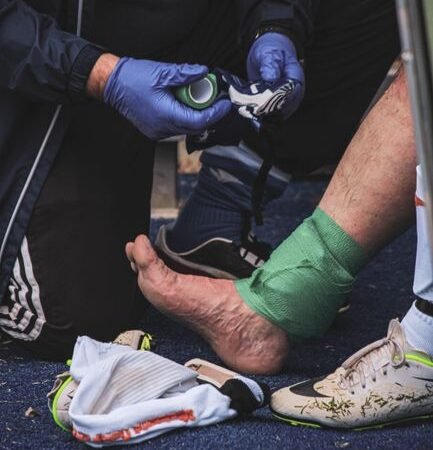
Quick answer: A high ankle sprain typically shows swelling and tenderness above the ankle joint itself, between the two lower leg bones, often with noticeably less visible swelling than a standard ankle sprain, since it involves a different set of ligaments higher up the leg. Appearance and location of swelling can offer useful clues, but images and descriptions alone can’t reliably confirm a diagnosis, since other injuries, including fractures, can look similar. This is general education, not a diagnosis of your specific injury.
Trying to work out whether your ankle injury matches what a high ankle sprain typically looks like is a completely reasonable thing to want to check, especially if something about your swelling or bruising feels different from a standard rolled ankle, or if the pain sits higher up than you’d expect. Here’s a genuinely detailed, honest look at what a high ankle sprain typically looks like, why the swelling pattern can be genuinely misleading, and why pictures alone only get you so far.
What A High Ankle Sprain Typically Looks Like
A high ankle sprain, also called a syndesmosis injury, affects the ligaments connecting the two lower leg bones, the tibia and fibula, just above the ankle joint itself, rather than the ligaments on the outside of the ankle that most people associate with a rolled ankle. Visually, this typically means tenderness and some swelling sitting higher up, closer to the shin, rather than concentrated around the ankle bone on the outside of the foot.
Many people also notice difficulty putting weight on the foot, and a specific kind of pain when the foot is turned outward or the leg is rotated, which is a genuinely distinctive feature of this particular injury pattern compared with a standard sprain.
This mechanism, the foot turning outward while the leg rotates inward, or the ankle being forced upward toward the shin, is why high ankle sprains are so commonly seen in sports involving cutting, pivoting, or contact, like football, rugby, and skiing, particularly when a cleat or boot stays planted in the ground while the body twists over it.
Where The Swelling And Bruising Usually Show Up
This is genuinely underexplained in most visual-comparison content around ankle injuries, most articles show pictures without explaining what to actually look for or why the pattern differs by injury type. With a high ankle sprain, swelling and any bruising tend to sit above the ankle joint, often toward the front of the leg and radiating upward toward the shin, rather than pooling around the outer ankle bone the way a standard sprain typically does.
One genuinely counterintuitive fact worth knowing: a high ankle sprain often produces noticeably less visible swelling than a standard lateral ankle sprain, even though the injury itself can be more significant and slower to heal. This catches a lot of people out, since less visible swelling can wrongly suggest a milder injury when the opposite is often closer to the truth.
Bruising also tends to develop on a slightly different timeline with this injury than a lot of people expect. It’s genuinely common for visible bruising to take a day or two to fully appear, and gravity can pull it downward over time, meaning bruising that eventually shows up around the foot or toes may have actually originated from higher up the leg days earlier. Comparing a single photo taken on day one against pictures of a “typical” high ankle sprain can be misleading for exactly this reason, the picture genuinely changes as the days go on.
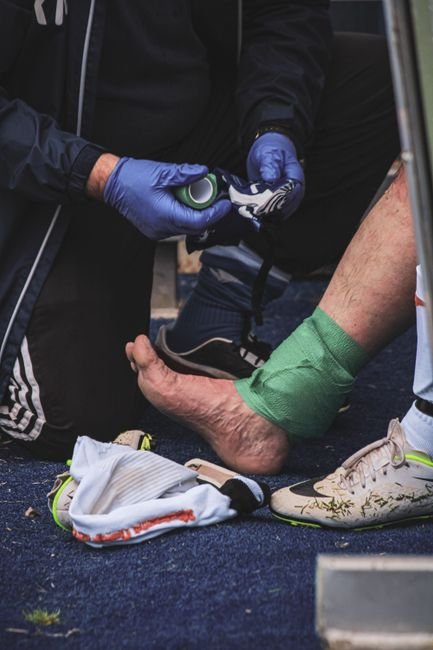
How This Differs Visually From A Standard Ankle Sprain
A standard, lateral ankle sprain, the kind most people picture when they think “rolled ankle,” typically produces more pronounced swelling and bruising concentrated around the outside of the ankle itself, often extending down toward the outer edge of the foot. A high ankle sprain looks meaningfully different, with tenderness and swelling sitting higher and more centrally, between the two shin bones, and often less visually dramatic despite potentially being the more serious injury of the two.
Another visual difference many people notice is how the foot and ankle move, or rather, don’t move. A high ankle sprain often causes a distinctive loss of full ankle flexibility and a real reluctance or inability to bear weight, which can be more pronounced than what’s typically seen with a standard lateral sprain of similar apparent severity.
Severity also genuinely varies within high ankle sprains themselves, not just between a high sprain and a standard one, and this affects what you’ll see. A milder, grade one injury often shows little to no visible instability and only modest bruising, sometimes appearing toward the front of the ankle and partway up the shin. A more significant, grade two or higher injury typically involves noticeably more difficulty bearing weight, real pain on specific clinical tests a therapist might use, and often more visible swelling than the milder end of the spectrum, though still frequently less dramatic-looking than a standard sprain.
Why Appearance Alone Can’t Confirm The Diagnosis
It’s genuinely important to be upfront about this: photos and visual descriptions, including this article’s, can offer useful clues but can’t reliably confirm what’s actually happened inside the ankle. Fractures, particularly around the growth plate in younger people or at the base of the fibula, can look remarkably similar to a sprain in the first day or two, before swelling and bruising fully develop, and some injuries genuinely need imaging to properly distinguish from a sprain.
Comparing your own injury against pictures online is a reasonable first step for general understanding, but it isn’t a substitute for someone physically examining and, where appropriate, imaging the ankle. Two injuries that look outwardly similar in early photos can turn out to be genuinely different once properly assessed.
A proper physical assessment typically involves specific clinical tests, like squeezing the two lower leg bones together or gently rotating the foot outward, designed to stress the exact ligaments involved in this particular injury without irritating the ones affected by a standard sprain. These tests, sometimes alongside imaging, are considerably more reliable at confirming a high ankle sprain than any amount of comparing your own photos to pictures online, however carefully you look.
When To Get It Properly Assessed
Significant pain, an inability to bear any weight at all, visible deformity, or numbness and tingling in the foot are all reasons to seek prompt assessment rather than waiting to see how the picture develops. Persistent pain or swelling that isn’t genuinely improving after several days, even without those more obvious red flags, is also worth getting checked, particularly given how easily a high ankle sprain can be under-appreciated compared with a standard sprain of similar visual appearance.
It’s also worth getting checked promptly if the mechanism of your fall or twist matches what typically causes this injury, a foot planted while the body pivots, or the ankle forced upward, even if the visible swelling looks fairly mild at first. Because appearance can genuinely understate this particular injury, waiting to see if the picture “looks bad enough” to warrant assessment isn’t a reliable approach, the mechanism and how the ankle actually functions matter more than how dramatic it looks in a photo.

How Sports Rehab Supports Recovery Once Diagnosed
At Impact Sports Rehabilitation, once a high ankle sprain has been properly diagnosed, a rehab plan is built around your specific injury and its severity, rather than a generic timeline. This runs alongside our rehabilitation consultations and Rocktape kinesiology taping service, which many people find genuinely useful as part of a supportive recovery plan once the diagnosis is clear. Recovery timelines genuinely vary more with a high ankle sprain than with a standard sprain, since the healing environment for these particular ligaments is different, which is exactly why a personalised plan matters more here than following a generic online recovery schedule.
If you’re trying to work out what’s going on with your ankle injury, Impact Sports Rehabilitation works with clients across Eccles, Trafford, and Salford for a proper assessment. Ask about an online consultation if you’re further afield.
Frequently Asked Questions
How do I know if my ankle injury is a high sprain or a normal sprain?
Pain and swelling sitting higher up, closer to the shin, rather than around the outer ankle bone, along with pain when the foot is turned outward, are common signs pointing toward a high ankle sprain. A proper assessment is the only reliable way to confirm this rather than comparing photos alone.
Why does my ankle look less swollen than I expected for how much it hurts?
This is a genuinely common and confusing feature of high ankle sprains specifically, they often produce less visible swelling than a standard sprain despite potentially being a more significant injury. It’s a reason not to judge severity purely by how dramatic the swelling looks.
Could this actually be a fracture instead of a sprain?
It’s possible, and appearance alone genuinely can’t reliably tell the two apart, particularly in the first day or two before swelling fully develops. If you’re unsure, getting it properly assessed, potentially with imaging, is the sensible next step rather than guessing from photos.
How long will it take before I can compare my swelling to see if it’s improving?
This varies by individual and injury severity, so we wouldn’t want to give a fixed timeline without an assessment. Many people find swelling patterns shift over the first week or two, but tracking recovery by feel and function alongside professional follow-up is more reliable than visual comparison alone.
Is it normal to still be unable to put weight on my foot after a few days?
Ongoing inability to bear weight after several days is a genuine reason to seek assessment if you haven’t already, since it can suggest a more significant injury than initially thought. We wouldn’t want to guess at your specific situation without seeing you.
This article is provided for general educational purposes by Impact Sports Rehabilitation and does not constitute medical advice, diagnosis, or treatment, and does not diagnose the reader’s specific injury. Visual appearance alone cannot confirm a high ankle sprain, and proper clinical assessment, potentially including imaging, is recommended for an accurate diagnosis.


