
Quick answer: Biceps tendonitis exercises typically progress through isometric holds to manage pain, then eccentric and eventually concentric strengthening, with the specific approach differing depending on whether the tendon involved is near the shoulder or near the elbow. Progression is judged by how the tendon responds rather than a fixed weekly schedule. These are general exercise categories, not a personalised programme, and a proper assessment is the right starting point.
Biceps tendon pain that flares with lifting, reaching overhead, or gripping is a genuinely common complaint, and if you’re trying to understand what biceps tendonitis exercises actually involve before diving in, one detail most generic articles skip over matters a lot: where exactly the tendon pain is coming from changes what a sensible exercise progression looks like.
What Biceps Tendonitis Is And Why Loading Matters
Biceps tendonitis refers to irritation of one of the biceps tendons, most commonly the long head tendon that runs through the front of the shoulder, though the tendon near the elbow can also be involved. Rather than complete rest, which tends to leave a tendon deconditioned and often no less painful once you return to activity, tendon problems generally respond better to a structured, gradually increasing loading programme, since tendons adapt and strengthen in response to appropriate load over time.
This is a genuinely different approach to how a lot of people instinctively manage tendon pain, avoiding it entirely feels intuitive but tends to leave the tendon under-prepared for the demands you’ll eventually put it through again. Tendons are also generally slower to adapt than muscle, so many people find progress feels gradual rather than dramatic week to week, which is normal for this kind of tissue rather than a sign that something is going wrong.
It’s also worth understanding that biceps tendon irritation rarely exists entirely on its own, particularly at the shoulder, where it’s often connected to how the rest of the shoulder is moving and stabilising, rather than being a purely local problem with the tendon alone.
Proximal Or Distal? Why This Distinction Changes The Exercises
Most content on biceps tendonitis treats it as one uniform condition, but proximal biceps tendonitis, at the shoulder, and distal biceps tendon problems, near the elbow, are genuinely different injuries with different rehab considerations. Proximal tendon issues are far more common and typically respond well to a programme that also strengthens the surrounding scapular stabilisers and rotator cuff, not just the biceps tendon in isolation, since shoulder mechanics genuinely influence how much stress the tendon takes on.
Distal biceps tendon problems are less common but carry more functional weight, since this tendon is heavily involved in elbow flexion strength and the rotating motion of turning your palm upward, movements that matter for a lot of daily tasks and sports. Research on conservative management of distal tendon issues is genuinely more limited than for the shoulder-area tendon, which is part of why an individualised assessment matters more here rather than following a generic online programme.
A useful, if imperfect, way to think about the difference: proximal tendon pain tends to sit at the front of the shoulder and often flares with overhead reaching or lifting, while distal tendon pain sits closer to the crease of the elbow and tends to flare more with gripping, lifting, or twisting the forearm. Neither pattern is a reliable way to self-diagnose which tendon is affected, but it’s a genuinely useful detail to describe clearly when you do get assessed, since it changes the starting point of the exercise programme considerably.
Early-Stage Exercise Categories
Isometric holds, contracting the biceps without moving the elbow, are typically introduced early when pain is the main limiting factor, since many people tolerate this kind of loading reasonably well even when more dynamic movement is uncomfortable. Isometric work has the added benefit of a mild pain-relieving effect for a lot of people, which is part of why it’s such a common early-stage starting point for tendon problems generally, not just biceps tendonitis.
Gentle, pain-free range-of-motion work is also generally part of this stage, keeping the joint moving within a comfortable range rather than avoiding movement altogether. Light, controlled scapular-setting exercises, gently drawing the shoulder blade into a stable position, are sometimes introduced here too for proximal tendon issues specifically, laying groundwork for the shoulder-stability work that becomes more prominent later.
Later-Stage Exercise Categories
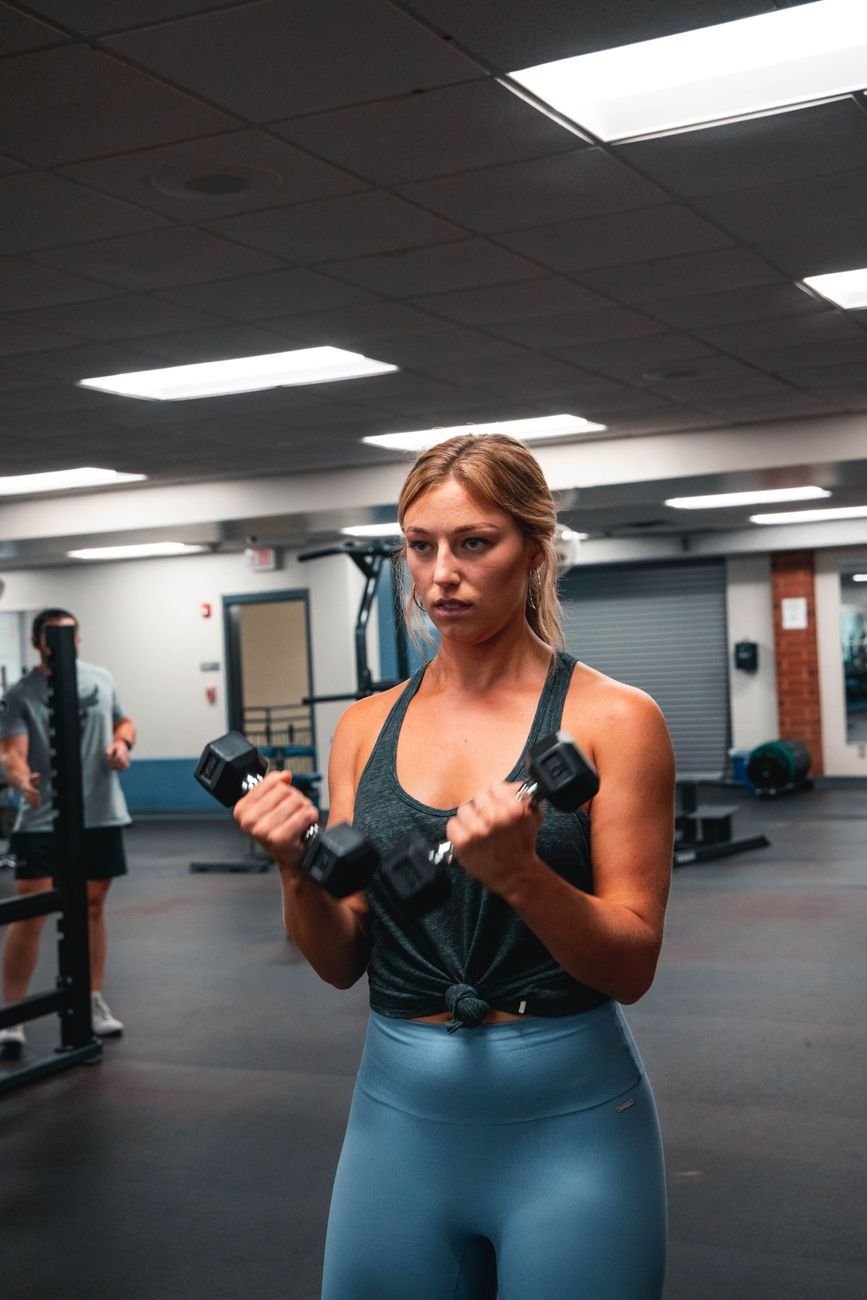
Once early-stage work is well tolerated, rehab typically progresses to eccentric loading, controlling the lowering phase of a biceps curl with a light weight, since eccentric work is generally well tolerated by irritated tendons and helps rebuild capacity. Concentric strengthening, the lifting phase, is usually reintroduced once eccentric loading is comfortable, gradually increasing resistance as the tendon tolerates it.
For proximal tendon issues, this stage typically also includes scapular and rotator cuff strengthening running alongside the biceps-specific work, since a stable shoulder blade genuinely reduces ongoing strain on the tendon during overhead or lifting movements. For distal tendon issues, forearm rotation exercises, gradually reintroducing controlled supination against light resistance, tend to feature more prominently, reflecting the tendon’s specific role at the elbow rather than the shoulder.
Return to sport-specific or gym-specific movements, a full range curl, an overhead press, or a grappling grip, is generally the final stage, reintroduced only once the tendon has demonstrated it can tolerate the earlier, more controlled loading stages without a flare.
Activity Modifications That Often Support Recovery
Temporarily reducing the volume or intensity of activities that clearly aggravate the tendon, heavy curls, repetitive overhead work, or activities involving a lot of forceful gripping, tends to give the tendon a better chance to settle alongside the exercise programme itself. Many people find that modifying rather than completely eliminating an aggravating activity, reducing weight or reps rather than stopping outright, keeps things moving forward without a full setback.
For combat-sports athletes, gripping and pulling during grappling exchanges places genuine demand on the biceps tendon, so temporarily adjusting training intensity or specific drilling that heavily loads the grip, rather than stopping training altogether, is often a more realistic modification than complete rest from the sport. Simple changes like adjusting grip width on pulling exercises, or reducing how far the elbow extends under load in the early stages, can also meaningfully reduce tendon strain without abandoning training entirely.
Common Mistakes People Make With Biceps Tendonitis Exercises
Jumping straight to heavy curls before isometric and eccentric stages have settled the tendon down is a common mistake that tends to flare things up rather than help. Treating proximal and distal tendon issues as interchangeable, following the same generic programme regardless of which tendon is actually involved, is another frequent misstep given how differently these two injuries typically need to be managed.
Stopping exercises the moment pain briefly increases, rather than distinguishing normal loading discomfort from a genuine flare, is another common trap, tendons often need some degree of controlled loading to adapt, and a physiotherapist can help you tell the difference. Ignoring the shoulder entirely and only doing biceps-specific curls is another mistake specific to proximal tendon issues, since neglecting scapular and rotator cuff strength tends to leave the underlying mechanical contributor unaddressed even if the biceps itself briefly feels better.
What To Expect When You Book An Assessment With Impact Sports Rehab
At Impact Sports Rehabilitation, an assessment for biceps tendonitis confirms whether the proximal or distal tendon is involved and builds a loading programme around your specific injury and activity demands, including whether scapular and rotator cuff work needs to run alongside the biceps-specific exercises. This often runs alongside the same shoulder-stability principles covered in rotator cuff rehab, since the two frequently overlap, particularly for proximal tendon issues.
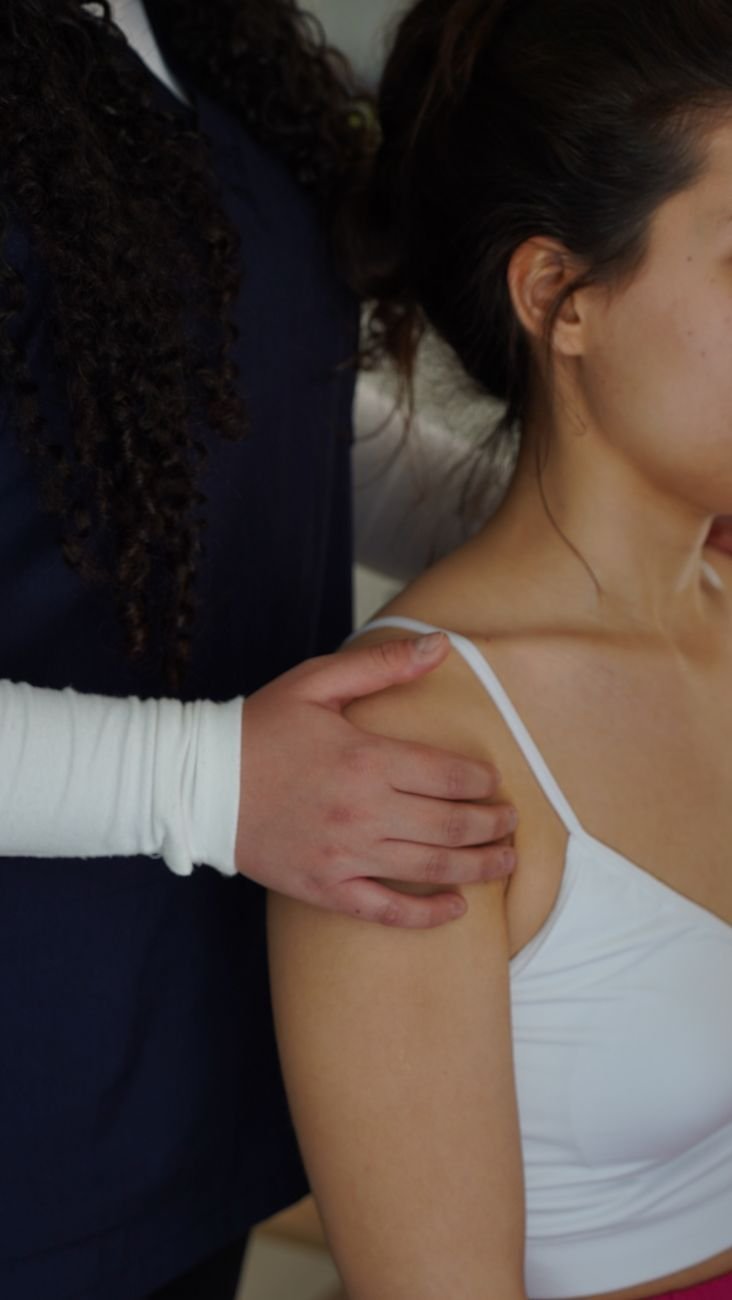
If biceps tendon pain is holding back your training, Impact Sports Rehabilitation works with clients across Eccles, Trafford, and Salford on genuinely individualised loading plans. Ask about an online consultation if you’re further afield.
Frequently Asked Questions
Will these exercises make my biceps tendon worse?
Done at the right stage and intensity for your specific tendon, structured loading is designed to help the tendon adapt rather than aggravate it, since tendons generally respond better to appropriate loading than complete rest. Progressing too quickly without guidance is the bigger risk, rather than the exercises themselves.
How do I know when to move from isometric to eccentric exercises?
This genuinely depends on how your specific tendon has responded to the earlier stage, so we wouldn’t want to guess without an assessment. A physiotherapist can assess your tendon’s readiness more precisely than judging purely by how it feels day to day.
How long does biceps tendonitis usually take to settle?
This varies considerably by severity and whether the shoulder or elbow tendon is involved, so we wouldn’t want to guess a fixed timeline without an assessment. Consistency with a properly staged programme tends to matter more than the exact number of weeks.
Does it matter whether the pain is near my shoulder or my elbow?
Yes, genuinely, proximal (shoulder area) and distal (elbow area) biceps tendon problems are different injuries that typically need different rehab approaches, so where your pain is located is a useful detail to bring to an assessment.
Can I keep training other body parts while this settles?
Many people find that training unaffected body parts is fine while managing biceps tendon pain, as long as movements that clearly load or aggravate the tendon are modified rather than continued as normal. Your practitioner can advise on what’s appropriate for your specific training split.
This article is provided for general educational purposes by Impact Sports Rehabilitation and does not constitute medical advice, diagnosis, or treatment. It describes general exercise categories, not a personalised rehab programme. Always seek the guidance of a qualified physiotherapist, sports therapist, or doctor for individual assessment and diagnosis before starting any new exercise programme, especially following an injury.