
Quick answer: Does kinesiology tape actually work? The evidence says it doesn’t meaningfully improve sports performance, and recent reviews have found it doesn’t reliably speed up recovery or reduce pain after a musculoskeletal injury either. Where it may genuinely help is with short-term comfort, swelling, and proprioceptive feedback, awareness of where a joint is in space, when used alongside proper rehab, not instead of it.
Walk into any gym or watch any major sporting event and you’ll see it, brightly coloured strips of kinesiology tape across shoulders, knees, and backs. It’s become so common that it’s easy to assume the evidence must be solid. So does kinesiology tape actually work, or is it mostly aesthetic at this point? Here’s an honest, evidence-based look.
What Current Research Generally Says About Kinesiology Taping
The research picture here is genuinely mixed, and it splits fairly cleanly along two lines, performance and recovery. On sports performance specifically, systematic reviews have found a real lack of compelling evidence, kinesiology tape hasn’t been shown to meaningfully improve power, speed, or other performance abilities in healthy athletes, despite how often it’s marketed and used as if it does.
On pain and recovery, the picture is similarly underwhelming, though slightly more nuanced. Some individual studies suggest tape may offer immediate, short-term relief for pain and modestly improve how a limb functions, but reviewers describe this evidence as genuinely uncertain, and more recent systematic reviews looking specifically at recovery and pain after a musculoskeletal injury have found moderate evidence that taping doesn’t reliably improve either outcome. In plain terms, the research doesn’t support the idea that kinesiology tape speeds healing or meaningfully reduces injury-related pain on its own.
What’s genuinely notable is the gap between how confidently kinesiology tape is marketed and how uncertain the underlying research actually is. A lot of the public validation for tape comes through endorsements, testimonials, and its sheer visibility on television during major sporting events, rather than through the kind of large, well-controlled trials that would be needed to properly establish an effect. That doesn’t mean tape is useless, but it does mean the near-universal presence of tape in professional sport reflects a perceived advantage more than a proven one, and that’s worth knowing before you decide how much to expect from it.
What Athletes Commonly Use Kinesiology Tape For
Given that performance and recovery evidence is weak, why is tape still everywhere? In practice, most athletes and active people use it for proprioceptive feedback, a gentle reminder of where a joint or muscle is in space and how it’s moving, and for managing swelling, particularly after a minor soft-tissue injury. It’s also commonly used as light, ongoing support during daily activity or training without the bulk of a rigid brace.
At Impact Sports Rehabilitation, Rocktape kinesiology taping tends to work best as a complement to a broader rehab plan rather than a standalone fix, supporting a joint through a specific activity while the underlying rehab work addresses the actual cause of the issue. It’s a similar honesty-first approach to how we talk about whether acupuncture works for sports injuries, both are genuinely useful complementary tools, not standalone cures.

The Colour Myth Most Articles Don’t Address
This is a genuinely useful gap most competing articles about kinesiology tape skip entirely. If you’ve spent any time on social media, you’ve probably seen claims that different tape colours do different things, black for support, blue for calming, pink for circulation, and so on. A randomised controlled trial specifically testing this looked at whether tape colour affected performance and corticomotor activity, essentially how the brain and muscles communicate, in healthy adults, and found no meaningful difference between colours.
In other words, the colour of your tape is a cosmetic choice, not a clinical one. This matters because it’s a genuinely useful, myth-busting detail that helps set realistic expectations, if colour doesn’t change the physiological effect, it’s a reasonable sign that some of what’s claimed about kinesiology tape more broadly is driven more by marketing and visibility on television than by rigorous evidence.
It’s worth applying the same healthy scepticism to some of the other specific claims that circulate about taping, that a particular cut or pattern “activates” a muscle, or that tape alone can correct a movement fault that’s been present for months. Some of these ideas have a plausible-sounding mechanism behind them, but plausible-sounding and well-evidenced are genuinely different things, and it’s fair to want to know which claims fall into which category before deciding how much weight to put on any single one.
How Taping Is Typically Applied For Different Purposes
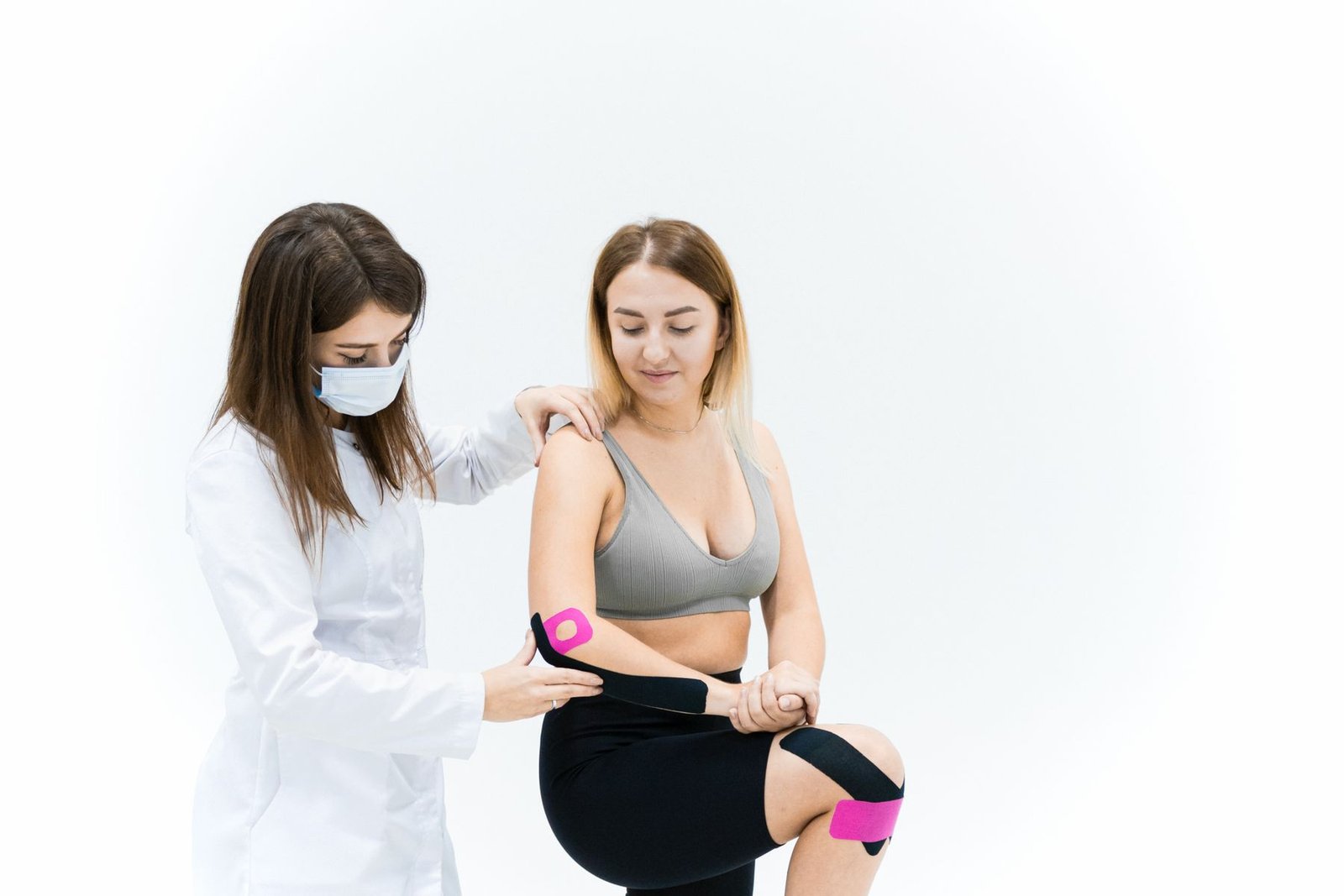
The application technique genuinely varies depending on what the tape is being used for. For proprioceptive feedback, tape is often applied with light to moderate tension over a muscle or joint to provide a subtle sensory cue during movement. For swelling management, a fan-shaped or lattice application with minimal tension is more common, aiming to create small channels in the skin that may support lymphatic drainage in the area.
For general support during activity, tape is typically applied along the direction of a muscle, from origin to insertion or vice versa depending on the goal, with tension adjusted based on whether the aim is to encourage or gently restrict a specific movement. Your practitioner will choose the application based on your specific presentation rather than a single one-size-fits-all pattern.
Skin preparation matters more than people often expect, clean, dry skin free of oils or lotion genuinely improves how well tape adheres and how long it lasts, and rounding the corners of each strip helps stop it lifting early at the edges during movement or showering. These are small, practical details that make a genuine difference to how useful a taping application actually is day to day, regardless of what it’s being used for.
When Tape Is Not An Appropriate Substitute For Proper Rehab
It’s worth being direct, kinesiology tape is not a treatment for an underlying injury, and given the current evidence, it shouldn’t be relied on as your main recovery strategy. Where it tends to fall short is when someone uses it instead of addressing the actual mechanical cause of a problem, weakness, poor movement pattern, or inadequate load management, rather than alongside that work.
If you experience worsening pain, numbness, swelling, or any symptom that concerns you, that’s a sign to seek professional advice rather than relying on tape to manage it. Many people find tape most useful as a light, supportive add-on once a proper rehab plan is already in place, not as the plan itself.
Who Might Benefit From Kinesiology Taping
Taping tends to suit people who want light, ongoing support during specific activities, or who find the sensory feedback genuinely helps them move more confidently while recovering from a minor issue, alongside a broader rehab plan. It’s also a reasonable option for managing mild, temporary swelling after a minor soft-tissue niggle.
Combat-sports athletes, including those training BJJ and grappling, often find taping genuinely useful for supporting a joint through a specific session or competition without the restriction of a rigid brace, particularly when returning to training after a minor niggle rather than a significant injury. Runners managing minor tracking issues around the kneecap, or gym-goers wanting a bit of extra sensory awareness around a joint during a heavy session, are two other groups who commonly find it a genuinely reasonable addition to their routine.
It’s less likely to be the right choice for anyone expecting a measurable performance boost, or hoping it will replace proper strengthening and rehab work for a genuine injury. In those situations, a full assessment and a real rehab plan will do considerably more than tape alone. People with certain skin sensitivities or adhesive allergies should also mention this beforehand, since reactions, while uncommon, do happen and are worth avoiding rather than discovering mid-training-block.
What To Expect When You Book Taping With Impact Sports Rehab
At Impact Sports Rehabilitation, Rocktape taping is applied with honest expectations set from the outset, as a supportive tool rather than a guaranteed fix. Your practitioner will assess what you’re actually dealing with, discuss whether taping genuinely fits your situation, and apply it as one part of a broader plan that may also include a rehabilitation consultation or sports massage.
If you’re weighing up whether taping is right for you, Impact Sports Rehabilitation works with clients across Eccles, Trafford, and Salford on genuinely honest, tailored assessment and treatment. Ask about an online consultation if you’re further afield.
Frequently Asked Questions
Is kinesiology tape basically just a placebo?
Not entirely, many people do find genuine sensory and comfort benefits from taping, but the research doesn’t support it meaningfully improving performance or speeding recovery from an injury. In our experience, it’s most useful as light, supportive feedback alongside proper rehab, not as a treatment on its own.
How long does tape typically stay on?
Kinesiology tape is usually designed to stay on for several days, often around three to five, and can typically get wet in the shower without falling off. Your practitioner can advise on the right duration for your specific application and skin sensitivity.
Can taping replace proper physio or rehab exercises?
No, and this is genuinely important to understand, taping is a supportive tool, not a substitute for addressing the underlying cause of an injury through proper rehab. We’d always recommend a full assessment so tape, if used, is one part of an actual plan rather than the only thing being done.
Does the colour of the tape actually matter?
Research specifically testing this found no meaningful physiological difference between tape colours, so colour choice is genuinely more about personal preference than any real clinical effect. Don’t let colour claims you’ve seen online influence your expectations of what tape can do.
Is it safe to apply kinesiology tape myself at home?
Light taping for general comfort can be reasonable to try yourself, but for a specific injury or condition, having a practitioner assess the area and apply tape correctly tends to work better than guessing at technique. If you’re unsure, or your symptoms are ongoing, it’s worth getting a proper assessment first.
This article is provided for general educational purposes by Impact Sports Rehabilitation and does not constitute medical advice, diagnosis, or treatment. Kinesiology taping’s evidence base is mixed and evolving, and it does not treat or resolve any specific injury on its own. Always seek the guidance of a qualified physiotherapist, sports therapist, or doctor for individual assessment and diagnosis before starting any new treatment, especially following an injury.