

Quick answer: The stretches for tech neck that actually work target the specific muscles that get pulled tight by prolonged forward head posture, mainly the upper trapezius, levator scapulae, and chest muscles, while also strengthening the deep neck flexors and mid-back muscles that go weak alongside them. Stretching alone often gives only temporary relief because it doesn’t address that second half of the problem. Neck pain that’s severe, radiates down the arm, or comes with numbness or tingling should be assessed by a clinician rather than managed with stretching alone.
If you’ve already tried a handful of neck stretches from the internet and the relief never quite lasts, you’re not doing anything wrong, the advice you found was probably just incomplete. Stretches for tech neck genuinely do help, but only when they’re targeting the right muscles and paired with the other half of the picture that most quick-fix articles leave out entirely. Here’s a more honest, complete look at what’s actually happening in your neck and shoulders, and the stretches, and habits, that genuinely make a lasting difference.
What’s Actually Happening To Your Neck
Tech neck describes the pattern that builds up from spending long stretches of the day with your head tipped forward and down, looking at a phone, laptop, or tablet screen. For every inch your head shifts forward of your shoulders, the effective load your neck muscles have to support increases substantially, since your head, which weighs a fair amount on its own, is no longer sitting directly over your spine where your skeleton can share the work.
What this does to your muscles isn’t uniform, and understanding that is genuinely the key to fixing it properly. The muscles at the back of your neck and across the top of your shoulders, particularly the upper trapezius and levator scapulae, end up working constantly just to hold your head up against that forward-shifted load, and over time they get short, tight, and understandably sore. At the same time, the deep muscles at the front of your neck, the ones that should be helping stabilise your head in a neutral position, and the muscles between your shoulder blades, get lengthened and switched off from disuse. You end up with one set of muscles overworked and tight, and another set weak and underused, and that combination is exactly why stretching the tight side alone rarely gives lasting relief.
Stretches That Target The Real Problem Areas
With that picture in mind, the stretches worth prioritising are the ones that actually target the muscles doing the overworking. A chin tuck stretch, gently drawing your head straight back as if making a double chin without tilting up or down, directly counters the forward head position and gently stretches the muscles at the base of your skull. Hold it for a comfortable few seconds and repeat it through the day rather than treating it as a one-off.
The levator scapulae stretch, reaching one hand over your head to the back of your skull and gently guiding your chin down and slightly across toward your armpit, targets a muscle that runs from the neck to the shoulder blade and tends to be one of the tightest, most reliably sore spots in tech neck. A chest opener, clasping your hands behind your back and gently lifting your chest, stretches the pectoral muscles that shorten as your shoulders round forward with prolonged screen use, which matters more than people realise since tight chest muscles actively pull your shoulders, and by extension your head, further into that forward position. An upper trapezius stretch, tilting your ear toward your shoulder with gentle overpressure from your hand, rounds out the core set most people genuinely need.
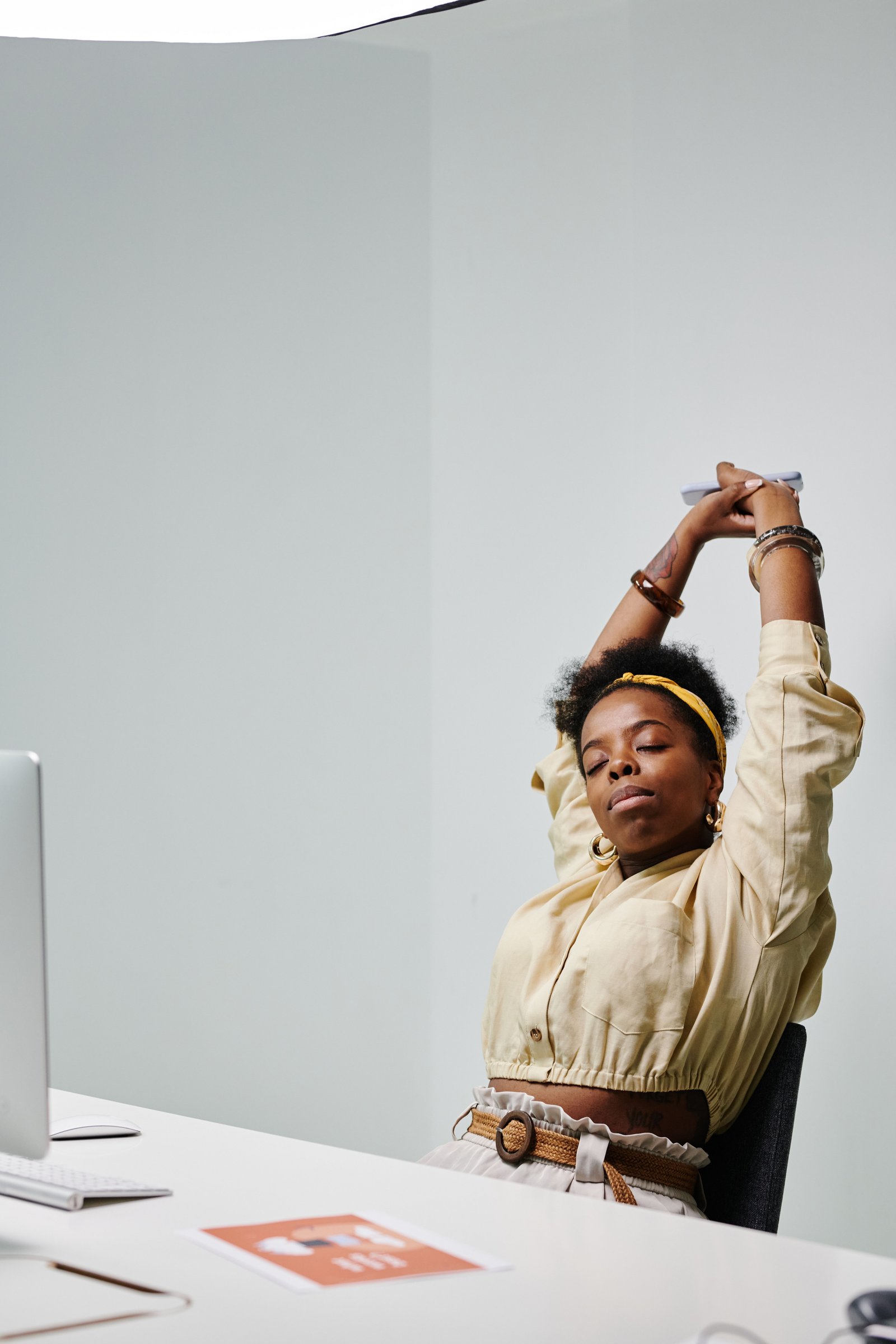
Why Stretching Alone Often Isn’t Enough
This is genuinely the part most tech neck articles skip entirely, and it’s the reason so many people stretch consistently and still feel stuck. Stretching addresses only one half of the muscle imbalance, the tight, overworked side. It does nothing to rebuild the weakened deep neck flexors and mid-back muscles that let your head drift forward in the first place, which means the moment you’re back at your desk, those same tight muscles are being asked to do the same unsupported work all over again, and the tightness simply rebuilds.
Genuine, lasting relief comes from pairing stretching with strengthening the muscles that have gone quiet. Deep neck flexor work, gently nodding your chin as if saying a small “yes” while keeping the back of your neck long, rather than the larger chin tuck used as a stretch, retrains the muscles that should be holding your head in a neutral position without the upper trapezius having to compensate. A wall-supported version, standing with your back and head against a wall and gently nodding while keeping contact, gives useful feedback on whether you’re actually engaging the right muscles rather than just tensing your jaw. Scapular squeezes, gently drawing your shoulder blades back and together and holding for a few seconds, rebuild the mid-back strength that helps keep your shoulders, and your head, from drifting forward throughout the day. Research on postural muscle imbalances generally supports this combined approach, and in our experience, clients who add even a small amount of this strengthening work alongside their stretching notice a more lasting difference than stretching alone ever gave them.
It’s also worth being realistic about the timeline here. A pattern of tightness and weakness that’s built up gradually over months or years of screen use doesn’t reliably reverse in a few days of any routine, however well targeted. Many people find noticeable change over several consistent weeks rather than overnight, and that’s genuinely a normal, expected pace for this kind of postural retraining, not a sign the routine isn’t working.
Simple Habit Changes That Make Stretching Actually Work
Stretches and strengthening work far better when they’re not fighting the same posture for eight or more hours a day in between sessions. Raising your phone or laptop screen closer to eye level, even partially, reduces how far forward your head has to tip in the first place, which means less load building up for your stretches to have to undo later. A simple stand or a stack of books under a laptop, or holding your phone higher rather than in your lap, makes a genuinely meaningful difference over a full day.
Building in a short movement break every twenty to thirty minutes, even just standing, rolling your shoulders, and doing a couple of chin tucks, prevents the sustained static loading that causes most of the damage in the first place, since it’s the duration of the forward position that matters as much as the position itself. Many people find that setting a simple recurring reminder, rather than relying on remembering, is what actually makes this habit stick past the first few days.
Sleep position is a genuinely overlooked piece of this too. A pillow that’s too high or too flat can push your neck into an unhelpful position for several hours a night, quietly working against everything the day’s stretching and strengthening achieved. Finding a pillow height that keeps your neck roughly in line with the rest of your spine when lying on your back or side is a small change that, alongside your desk setup, rounds out a genuinely full-day approach rather than just a few minutes of effort surrounded by hours of the same posture that caused the problem.
How Sports Rehab Helps When Stretching Isn’t Cutting It
If you’ve genuinely been consistent with stretching and habit changes and the tightness keeps coming back, that’s usually a sign the muscles need more targeted, hands-on support than a home routine alone can give. Sports massage can help release deeply held tension in the upper trapezius and levator scapulae that’s built up over months or years, giving your strengthening work a genuinely better starting point. Acupuncture is another supportive option some clients find helpful for persistent muscular tension that hasn’t fully responded to stretching and strengthening alone.

Building A Two-Minute Routine You’ll Actually Do
The most effective routine is genuinely the one you’ll actually stick to, not the longest or most comprehensive one on paper. A realistic two-minute version might look like this: a chin tuck held for five seconds and repeated five times, a levator scapulae stretch held for twenty to thirty seconds on each side, a chest opener held for twenty to thirty seconds, and five to ten gentle scapular squeezes to bring in a little of that strengthening work alongside the stretching.
Doing this once at a natural break point, after lunch, or before you leave your desk for the day, and again if you notice tightness building, tends to be far more sustainable than an elaborate fifteen-minute routine that quietly gets skipped after the first week. Consistency across most days genuinely beats a longer routine done occasionally, and a short routine you’ll actually keep up is worth more than an ideal one you won’t.
If tech neck has become a daily nuisance that stretching alone hasn’t fully resolved, Impact Sports Rehabilitation works with clients across Eccles, Salford, Trafford, and the wider Greater Manchester area on exactly this kind of persistent postural tension. Ask about an online consultation if you’re further afield and want guidance on building a routine around your specific setup and symptoms.
Frequently Asked Questions
Why do my tech neck stretches feel good at the time but the tightness comes right back?
This is genuinely one of the most common frustrations we hear, and it’s usually because stretching alone only addresses the tight muscles, not the weakened ones that let your head drift forward in the first place. Adding some deep neck flexor and scapular strengthening work alongside your stretches tends to give more lasting relief.
How long until stretches for tech neck actually start working?
This genuinely varies from person to person depending on how long the tightness has been building and how consistently the routine is followed, so we wouldn’t want to promise a specific timeframe. Many people find that combining stretching with strengthening and some habit changes brings noticeably more lasting relief than stretching alone.
Could my neck pain actually be something more serious than tech neck?
It’s a fair thing to wonder, and most tech neck is a postural and muscular issue rather than anything more serious. That said, pain that’s severe, radiates down your arm, or comes with numbness, tingling, or weakness should genuinely be assessed by a clinician rather than treated as ordinary tech neck.
Is it bad that I can hear or feel clicking in my neck when I stretch?
Occasional clicking or popping without pain is usually nothing to worry about and is a common finding in a lot of people, tech neck or not. If it’s accompanied by pain, or the clicking becomes more frequent and bothersome, it’s worth mentioning to a clinician rather than assuming it’s automatically fine.
Can a desk job really cause this much neck pain, or am I just being dramatic?
You’re genuinely not being dramatic, sustained forward head posture from long hours at a screen is a well recognised cause of exactly this kind of neck and shoulder tightness. In our experience, plenty of clients are surprised how much difference addressing their setup and building a proper stretching and strengthening routine actually makes.
This article is provided for general educational purposes by Impact Sports Rehabilitation and does not constitute medical advice, diagnosis, or treatment. Tech neck is usually a postural and muscular issue, but neck pain that is severe, radiates down the arm, or is accompanied by numbness, tingling, or weakness should be assessed by a qualified clinician rather than managed with stretching alone. Always seek the guidance of a doctor or other qualified health provider with any questions about your specific symptoms.


