
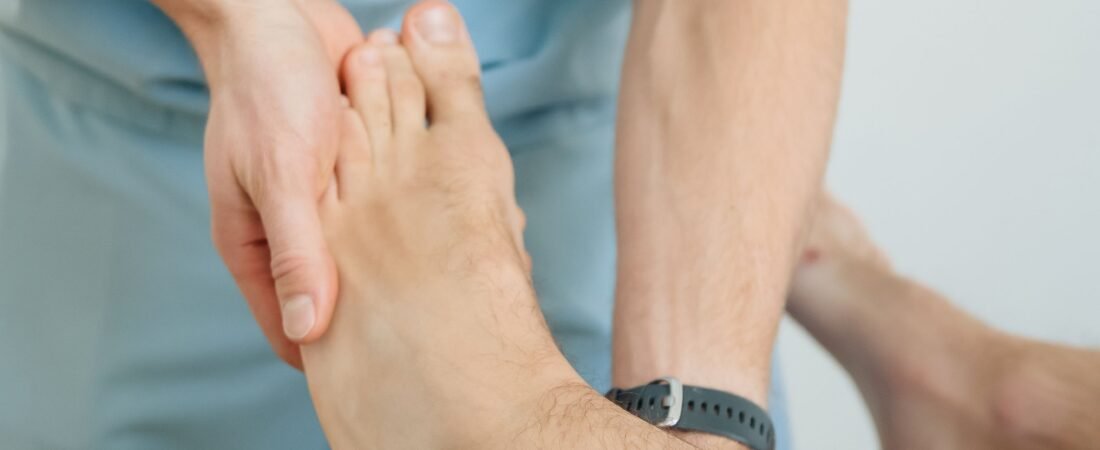
Quick answer: A deltoid ligament sprain is an injury to the strong, triangular ligament complex on the inside of your ankle, not the deltoid muscle in your shoulder, despite the confusingly identical name. It happens when the foot is forced outward at the ankle, and it’s considerably less common than the everyday ankle sprain, which usually involves the outer ligaments instead. Recovery ranges from a few weeks for a mild sprain to several months for a severe tear, and because more severe grades can involve a fracture, a proper assessment matters more here than with a typical ankle sprain.
Being told you’ve sprained your deltoid ligament, after rolling your ankle, understandably throws a lot of people. The deltoid is the muscle that gives your shoulder its rounded shape, so hearing that name attached to an ankle injury feels like it must be a mistake. It isn’t, your ankle has its own, completely separate deltoid ligament, and in our experience clearing up that confusion first genuinely helps people actually take in the rest of what they’re being told about their injury. Here’s a clear, honest guide to what this ligament actually is, what a sprain here really means, and what genuinely helps you recover.
Deltoid Ligament Or Deltoid Muscle? Clearing Up The Confusion
The name is a coincidence of anatomy, not a typo. Both structures are called “deltoid” because deltoid simply means triangle-shaped in Greek, and it turns out your body has more than one triangular structure worth naming that way. The deltoid muscle in your shoulder and the deltoid ligament in your ankle share a shape description and nothing else, they’re in completely different parts of the body, made of completely different tissue, and have nothing to do with each other functionally.
The deltoid ligament sits on the inside of your ankle, running from the bony bump on the inner side, the medial malleolus, down to several bones in your foot, forming a broad, fan-shaped band rather than a single cord. It’s genuinely one of the strongest ligaments in the ankle, which is actually part of why injuries to it are relatively uncommon compared to the ligaments on the outer ankle. Once that naming confusion is out of the way, the rest of this actually makes a lot more sense.
What The Deltoid Ligament Does In Your Ankle
This ligament’s main job is stopping your ankle from rolling too far outward, a movement called eversion, where the sole of your foot turns away from your other leg. It works alongside the bones and other soft tissue on the inside of your ankle to keep the joint stable during everyday movement, walking on uneven ground, and the sudden direction changes involved in sport.
Because it’s made up of several distinct bands rather than one single ligament, different parts of the deltoid ligament complex can be affected depending on exactly how the ankle was forced, which is part of why a proper assessment matters more here than a quick look might suggest. Its sheer strength compared to the ligaments on the outer ankle also means that when it does give way, the forces involved tend to be significant, which is worth bearing in mind when it comes to ruling out associated injuries.
You may also see this structure referred to as the medial ligament complex, since it sits on the medial, or inner, side of the ankle. If you want more general background on this side of the ankle, our guides to medial ankle ligaments and medial ankle sprains cover the broader anatomy and everyday sprains in this area, though a deltoid ligament sprain specifically refers to this particular ligament complex rather than the wider medial ankle region.
Grading A Deltoid Ligament Sprain
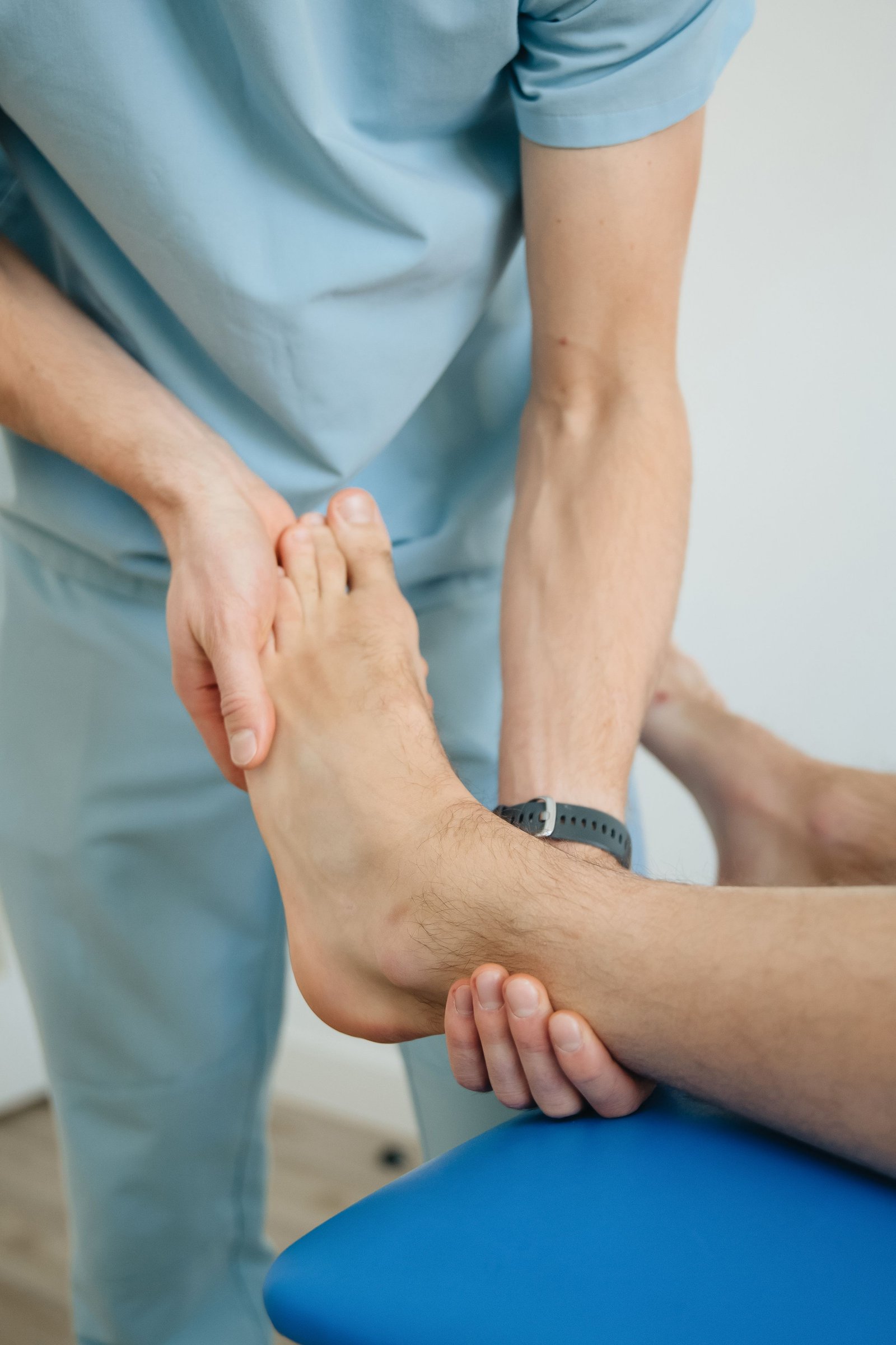
Like most ligament injuries, deltoid ligament sprains are graded on a three-point scale. A grade 1 sprain involves the ligament being stretched with only microscopic tearing, mild pain, and minimal swelling, and walking is usually still possible, if uncomfortable. A grade 2 sprain is a partial tear, with more noticeable swelling, bruising, and a genuine sense of instability in the ankle, and walking becomes considerably more painful.
A grade 3 sprain is a complete rupture of the ligament, involving severe swelling, substantial bruising, and typically an inability to bear weight on the affected foot at all. Because the forces involved in a deltoid ligament injury are often significant, more severe sprains can occasionally come with an associated fracture, which is exactly why anyone unable to bear weight, or genuinely unsure how bad the injury is, should get it properly assessed rather than assuming it’s a straightforward sprain.
It’s also worth knowing that a deltoid ligament sprain can happen alongside a syndesmosis injury, damage to the ligaments higher up between the two lower leg bones, since a significant outward-rolling force at the ankle can affect both structures at once. This is another reason a proper clinical assessment matters more here than with a straightforward outer-ankle sprain, since an isolated deltoid ligament grading doesn’t automatically rule out other structures being involved in the same injury.
Treatment And Realistic Recovery Times
Treatment for a confirmed deltoid ligament sprain generally follows a similar early pattern to other ankle ligament injuries, rest, ice, gentle compression, and elevation in the first few days, followed by protected movement and a structured rehab programme once the acute swelling has settled. Bracing or supportive strapping is commonly used in the earlier stages, particularly for grade 2 and 3 injuries, to protect the ligament while it heals.
Recovery genuinely varies by grade, and we’d rather give you a realistic range than a false promise. Milder sprains often settle within a few weeks with guided rehab, moderate injuries frequently take somewhere in the region of two to three months, and more severe tears, particularly any involving an associated fracture, can take several months for a full recovery. Where the ligament doesn’t respond adequately to rehab over an extended period, or a fracture needs fixing, surgical input may occasionally be needed, though this is the less common path for an isolated deltoid ligament injury.
Immobilisation in a boot or cast is sometimes used for a period with more severe sprains, particularly where there’s an associated fracture or genuine ongoing instability, before transitioning into the more active rehab phase. How long that immobilisation phase lasts, if it’s needed at all, is very individual, which is another reason a generic timeline found online rarely matches what actually happens with a specific injury like this one.
How Sports Rehab Supports Proper Healing
Getting the loading progression right after a deltoid ligament sprain, not rushing weight-bearing before the ligament can genuinely tolerate it, but also not staying overly protective for longer than necessary, makes a real difference to how well this ligament ultimately heals. A Rehabilitation Consultation builds that progression around your specific grade and how your ankle is actually responding, rather than a generic timeline.
Rocktape taping is a tool some clients find useful during the later stages of rehab and the return to sport, offering light support and proprioceptive feedback around the inner ankle as confidence and strength rebuild. Most clients notice that having someone actively guide each stage of loading, rather than following a printed sheet regardless of how the ankle is genuinely responding, meaningfully lowers the risk of re-injury.

Returning To Sport Without Re-Injury
A safe return to sport after a deltoid ligament sprain is a staged process, not a single test of whether the ankle feels okay. Early stages focus on restoring full pain-free range of motion and reducing swelling, before building into progressive strengthening targeting the muscles that support the ankle from all sides, not just the injured ligament itself.
Balance and proprioceptive training becomes particularly important in the later stages, since an ankle that’s been significantly sprained often loses some of its positional awareness even once strength has largely returned, and this ligament’s role in resisting outward-rolling forces means genuine confidence in lateral stability matters before returning to cutting, pivoting, or contact sport. Rushing back before this staged progression is genuinely complete is one of the more common reasons a deltoid ligament sprain ends up re-injured or leaves the ankle feeling persistently unstable.
Sport-specific movement comes last, gradually reintroducing the cutting, pivoting, and change-of-direction demands your particular sport actually involves, rather than jumping straight from general fitness back into full training or match play. Many clients find that this final stage, done properly rather than skipped, is what actually determines whether the ankle holds up under real competitive pressure or lets them down at the worst possible moment.
If you’ve been told you have a deltoid ligament sprain and want a clear picture of your grade and a genuine recovery plan, rather than generic ankle sprain advice, Impact Sports Rehabilitation works with athletes and active clients across Eccles, Salford, Trafford, and the wider Greater Manchester area on exactly this kind of injury. Book a Rehabilitation Consultation once you’ve had an appropriate assessment, or ask about an online consultation if you’re further afield.
Frequently Asked Questions
Wait, is a deltoid ligament sprain actually in my shoulder or my ankle?
It’s genuinely in your ankle, not your shoulder, the shared name is just a coincidence since both structures happen to be triangle-shaped. Your ankle’s deltoid ligament is a completely separate structure from the deltoid muscle in your shoulder, with no functional connection between the two.
How do I know if my deltoid ligament sprain is serious?
Significant swelling, substantial bruising, or an inability to put weight on the foot at all point toward a more serious grade 2 or 3 injury rather than a mild sprain. If you’re genuinely unsure, that uncertainty is worth a proper assessment, particularly since more severe deltoid ligament injuries can occasionally involve a fracture.
Why haven’t I heard of this injury before, when everyone talks about ankle sprains?
Deltoid ligament sprains are genuinely less common than the typical ankle sprain, which usually affects the ligaments on the outer ankle instead. That’s exactly why it can feel like a confusing, unfamiliar diagnosis compared to the ankle sprains you’ve probably heard friends or teammates describe before.
Will I need a scan for a deltoid ligament sprain?
Not always, many milder sprains are diagnosed through a clinical assessment alone, but because more severe injuries here can occasionally involve a fracture, imaging is more often considered than with a typical outer-ankle sprain. Your treating clinician will guide whether it’s genuinely needed for your specific injury.
How long until I can play sport again after a deltoid ligament sprain?
This depends heavily on the grade and how consistently you follow a genuine rehab progression, with milder sprains often allowing a return within a matter of weeks and more severe tears taking considerably longer. Many clients at Impact Sports Rehabilitation find a guided, staged return gives them far more confidence than simply waiting for a set number of weeks to pass.
This article is provided for general educational purposes by Impact Sports Rehabilitation and does not constitute medical advice, diagnosis, or treatment. Deltoid ligament sprains can occasionally involve an associated fracture, so anyone with significant swelling, bruising, or an inability to bear weight should be assessed by a qualified medical professional rather than self-diagnosing; nothing in this article should be used to self-grade the severity of an ankle injury. Always seek the guidance of a doctor or other qualified health provider with any questions about your specific injury or condition.