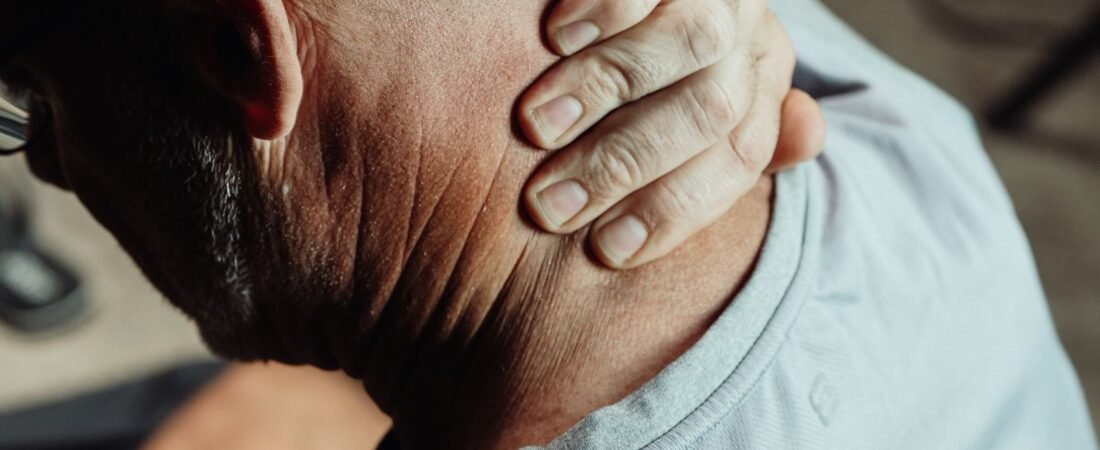
Quick answer: Pain in shoulder and neck often shows up together because the two areas share muscles, nerves, and movement patterns, so one problem, such as an irritated nerve or tight upper trapezius, can be felt in both places. But sometimes it’s two separate issues happening at the same time, like a stiff neck and an irritated rotator cuff. A useful clue is whether moving your neck or moving your arm brings the pain on. Chest pain, shortness of breath, arm weakness, or numbness need urgent medical attention.
If you’re dealing with pain in shoulder and neck at the same time, it’s natural to wonder whether it’s one problem or two. Maybe the pain started in your neck and now seems to have spread into your shoulder, or perhaps your shoulder has been niggling for weeks and now your neck feels tight too. This combination is one of the most common things we see in clinic, and it’s also one of the most confusing for people trying to work out what’s going on.
In this guide we’ll explain why the shoulder and neck so often hurt together, when it’s genuinely one connected problem, when it’s actually two separate issues, the red flags you should never ignore, practical relief that helps both areas, and how a proper assessment untangles the picture. We won’t diagnose your pain here, and if anything about your symptoms worries you, please get checked.
Why Pain In Shoulder And Neck So Often Shows Up Together
The neck and shoulder are closely linked. Several muscles span both areas, most notably the upper trapezius, which runs from the base of the skull and neck out to the tip of the shoulder, and the levator scapulae, which connects the neck to the top of the shoulder blade. When these muscles are tight, overworked, or irritated, the pain can be felt anywhere along their length.
The nerves supplying the shoulder and arm also start in the neck. They leave the spine between the vertebrae, travel through the side of the neck, and run down past the shoulder into the arm. So irritation of a nerve in the neck can be felt in the shoulder, upper arm, or further down.
Movement links them too. Every time you lift your arm, your shoulder blade, collarbone, and upper spine all need to move together. If one part of that chain is stiff or weak, the others often compensate, which can lead to strain in both areas. Add in long hours at a desk, looking down at a phone, carrying heavy bags, or overhead training, and it’s easy to see why combined pain is so common.
When It’s One Connected Problem
Most content assumes neck and shoulder pain are always linked, without explaining how. In practice, there are a few genuine scenarios where one problem causes pain in both areas.
The first is a trapped or irritated nerve in the neck, known as cervical radiculopathy. A disc or narrowed space in the neck can irritate a nerve root, and the pain is often felt over the shoulder blade, the top of the shoulder, and down the arm, sometimes with pins and needles, numbness, or weakness. Typically, moving or tilting the neck, particularly looking up or turning towards the painful side, makes the shoulder and arm symptoms worse, while moving the shoulder itself may not.
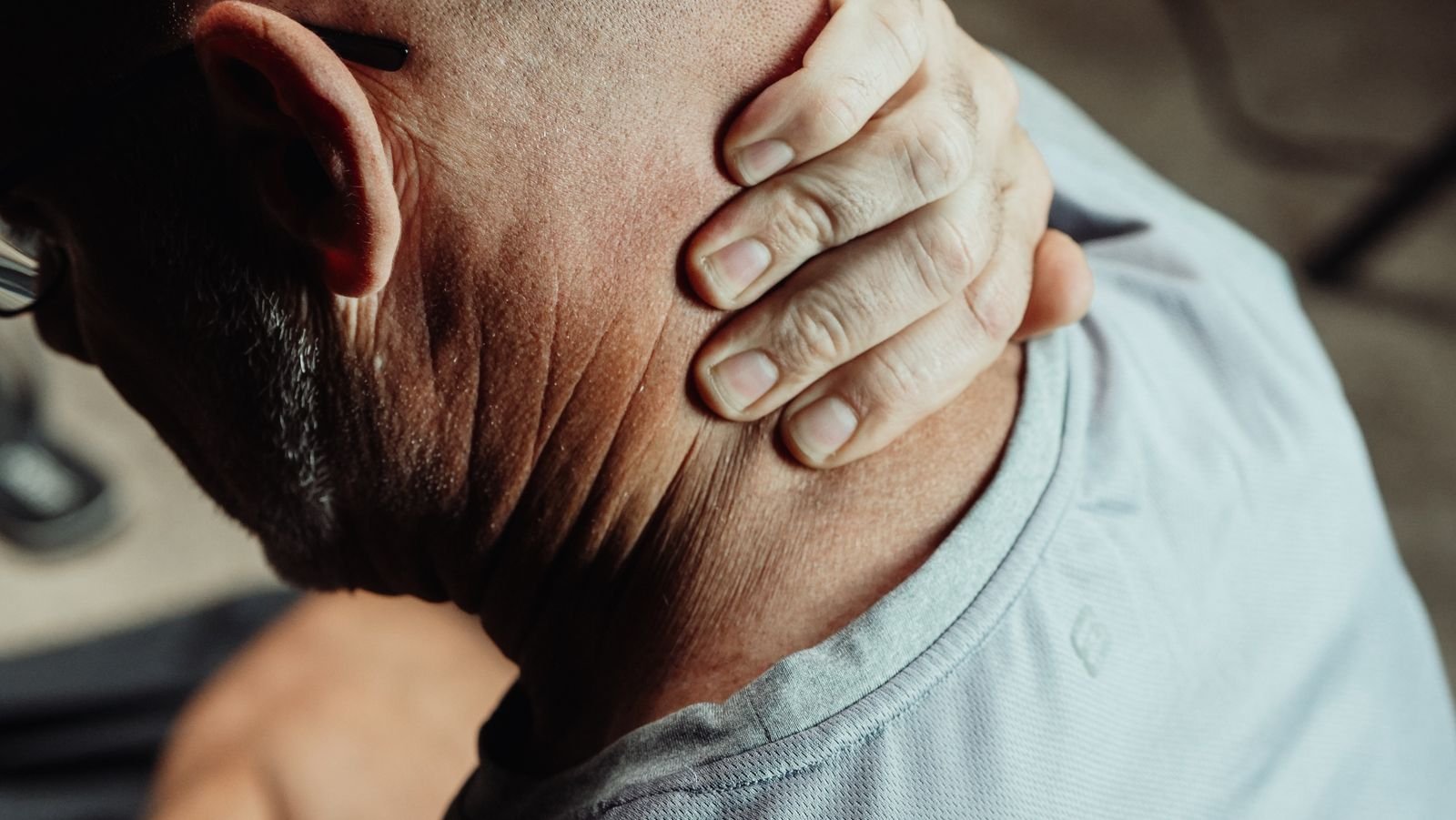
The second is referred pain from the neck joints. The small joints in the lower neck can refer an aching pain into the top of the shoulder and around the shoulder blade, even without nerve symptoms. The third is muscular pain in the upper trapezius or levator scapulae, where tight, tender areas, often called trigger points, cause pain across the neck and top of the shoulder together. Our guide to trap pain covers this pattern in more detail.
Sometimes the chain works in reverse. A painful shoulder can make people hunch, hold their arm stiffly, and overuse their neck muscles, so neck tension develops as a knock-on effect of the shoulder problem.
When It’s Actually Two Separate Issues
Just as often, two separate problems happen to be present at the same time. A common example is rotator cuff irritation in the shoulder alongside general neck stiffness, both made worse by the same desk setup or training programme, but each with its own source.
There are some clues that point towards a separate shoulder problem. Shoulder pain that’s worse when lifting your arm, reaching overhead or behind your back, or lying on that side, especially pain felt on the outer upper arm, is more likely to be coming from the shoulder itself. Pain that’s mainly in the neck, worse when turning or tilting your head, and not changed by moving your arm, is more likely to be coming from the neck.
A simple self-check can help you notice which pattern fits, as long as it’s done gently and stopped if anything feels sharp. Sit tall and slowly turn and tilt your head in each direction, noting whether your shoulder or arm symptoms change. Then, keeping your neck still, slowly lift your arm out to the side and overhead, and reach behind your back. If the neck movements bring on the shoulder pain, the neck is more likely to be involved. If the arm movements do, the shoulder itself is more likely. This isn’t a diagnosis, but it’s useful information to share at an assessment.
When both patterns are present, it may be two issues, and both may need treatment. This matters because treating only one area often leaves the other unresolved, and many people assume their treatment didn’t work when it simply only addressed half the problem. If your shoulder pain seems to be coming from the rotator cuff, our guide to rotator cuff rehab may help.
Red Flags For Pain In Shoulder And Neck That Need Urgent Medical Attention
Most pain in the shoulder and neck is musculoskeletal, but some symptoms need urgent medical attention. Call 999 if you have chest pain, pressure, or tightness, especially spreading into the left shoulder, arm, neck, or jaw, or if you’re short of breath, sweating, feel sick, or dizzy, as this can be a sign of a heart problem.
Seek urgent medical help if you develop new weakness in an arm, numbness or tingling that’s spreading or getting worse, clumsiness in your hands, difficulty walking or balancing, or problems with bladder or bowel control, as these can indicate pressure on the spinal cord or nerves. You should also get prompt medical advice for neck and shoulder pain with fever, unexplained weight loss, a history of cancer, severe night pain that doesn’t ease with rest, or pain after a significant fall or accident. Pain at the very tip of the shoulder that isn’t affected by moving your arm or neck can occasionally be referred from organs in the chest or abdomen, and should be checked by a doctor.
Practical Relief That Addresses Both Areas
Once serious causes have been ruled out, there are some practical steps that help many people with musculoskeletal neck and shoulder pain. Start with your daily setup. Bring screens up to eye level, keep your keyboard close, take regular breaks from long periods of sitting, and avoid cradling your phone between your ear and shoulder. If you carry a heavy bag, switch sides or use a rucksack.

Gentle movement is usually better than rest. Shoulder rolls, shoulder blade squeezes, chin tucks, and gentle neck turns and tilts within a comfortable range can ease stiffness. A gentle upper trapezius stretch, tilting your ear towards the opposite shoulder, often helps tension across the neck and shoulder. Our guide to stretches for tech neck offers more ideas. Warmth can help tight muscles relax. Over time, strengthening the muscles around the shoulder blade and upper back helps support both areas.
Stop any exercise that causes sharp pain, spreading pins and needles, or symptoms travelling down your arm, and get assessed.
How Sports Rehab Untangles What’s Actually Going On
At Impact Sports Rehabilitation, we start by screening for anything that needs medical referral, then work out whether your pain is one connected problem or two separate ones. That involves testing neck movement and shoulder movement separately, checking whether neck movements reproduce your shoulder or arm symptoms, assessing nerve function, strength, and sensation, and looking at how your shoulder blade and upper back move.
Once we know where the pain is coming from, treatment is matched to the cause. Sports massage can help ease tight muscles across the neck and shoulders, and acupuncture may help some people with muscular neck and shoulder pain. We combine these with targeted exercises, practical advice on posture and workload, and a plan to address both areas if two issues are present.
If pain in your shoulder and neck is getting in the way of your work, training, or sleep, Impact Sports Rehabilitation in Eccles, Greater Manchester can work out what’s actually going on and build a plan that addresses the real cause. We see clients from Eccles, Salford, Trafford, and across Manchester, and online consultations are available if you’re further away. Book in and let’s untangle it properly.
Frequently Asked Questions
Can a neck problem cause shoulder pain?
Yes, irritation of a nerve or joint in the neck can refer pain into the shoulder, shoulder blade, and arm. If moving your neck makes your shoulder pain worse, the neck may be involved.
Why does my neck and shoulder hurt on the same side?
Shared muscles such as the upper trapezius, irritated nerves in the neck, or one-sided habits like carrying bags or sleeping position can all cause pain on one side. It can also be two separate problems on the same side.
When is shoulder and neck pain serious?
Seek urgent help for chest pain, shortness of breath, arm weakness, spreading numbness, or problems with balance or bladder control. Pain with fever, unexplained weight loss, or after a significant injury also needs prompt medical advice.
Should I rest or move with neck and shoulder pain?
Gentle movement within a comfortable range is usually better than complete rest for musculoskeletal pain. Avoid movements that cause sharp pain or spreading arm symptoms, and get assessed if things aren’t improving.
Can sports massage help shoulder and neck pain?
Many people find sports massage helps ease tight muscles across the neck and shoulders. At Impact Sports Rehabilitation, we use it alongside exercise and advice once we’ve identified what’s driving the pain.
How do I know if it’s a trapped nerve?
Nerve pain often feels sharp, burning, or electric, may travel down the arm, and can come with pins and needles, numbness, or weakness. Moving the neck often makes it worse, and a proper assessment can confirm it.
This article is for educational purposes only and is not a substitute for professional medical diagnosis or treatment. Shoulder and neck pain can occasionally be referred from elsewhere, so seek urgent medical attention for any red flag symptoms. Impact Sports Rehabilitation offers in-person and online consultations to help assess and manage musculoskeletal pain.