
Quick answer: Hip flexor rehab exercises work best in stages: gentle, pain-free movement and isometric holds early on, progressive strengthening such as supported marches and banded knee lifts once pain settles, then faster, sport-specific work like running drills, sprints, and kicking before full return. Each stage should be earned by how your hip responds rather than by the calendar. If your injury is recent, severe, or you’re not sure what it is, get it assessed before starting.
If you’ve strained a hip flexor, you’ll know how much it gets in the way. Walking up stairs, getting out of the car, sprinting, or kicking a ball can all suddenly feel risky. The right hip flexor rehab exercises can help you rebuild strength and confidence, but only if they’re matched to where you are in your recovery. Jumping straight into sprint drills when the muscle is still healing is one of the most common reasons this injury keeps coming back.
This guide follows on from our article on hip flexor strain symptoms, so if you’re still unsure what you’re dealing with, start there. Here, we’ll walk through a simple, staged approach, from early movement to sprinting and kicking, and explain the mistakes that most often delay recovery. A quick but important note: if your injury happened recently, involved a pop or sudden sharp pain, causes significant bruising or difficulty walking, or you’re not sure what’s going on, please get it assessed before starting any exercise programme.
Matching Hip Flexor Rehab Exercises To Your Stage Of Healing
Your hip flexors are a group of muscles at the front of the hip, mainly the iliopsoas, which runs from your lower spine and pelvis to the top of the thigh bone, and the rectus femoris, part of the quadriceps that crosses both the hip and knee. They lift your knee, drive your leg forward when you run, and generate power when you kick. A strain happens when one of these muscles is overloaded, often during sprinting, kicking, or sudden changes of direction.
Like any muscle injury, a hip flexor strain heals through overlapping phases. In the early phase, the tissue is sensitive and needs protection from big loads, but gentle movement still helps. As it settles, the healing tissue needs progressively more load to become strong and organised. In the final phase, it needs to handle the speed and force of your sport. That’s why a one-size-fits-all list of exercises doesn’t work very well. The right exercise depends on where you are, and moving between stages should be guided by how your hip responds, not just how many days have passed.
Early-Stage Exercises To Restore Movement Safely
In the first few days to weeks, depending on severity, the aim is to keep the hip moving without aggravating it. Walking within comfort is usually encouraged, and you may need to shorten your stride for a while. Gentle heel slides, lying on your back and slowly sliding the heel of the injured leg towards your bottom and back again, help restore movement. Small, pain-free hip circles while lying down can help too.
Isometric exercises, where the muscle contracts without moving the joint, are a useful early strengthening tool. Lie on your back with your knee bent, place your hand on your thigh, and gently push your knee up into your hand without letting it move. Hold for around ten seconds at low effort, and repeat five to ten times. Many people find these reduce pain while starting to load the muscle safely.
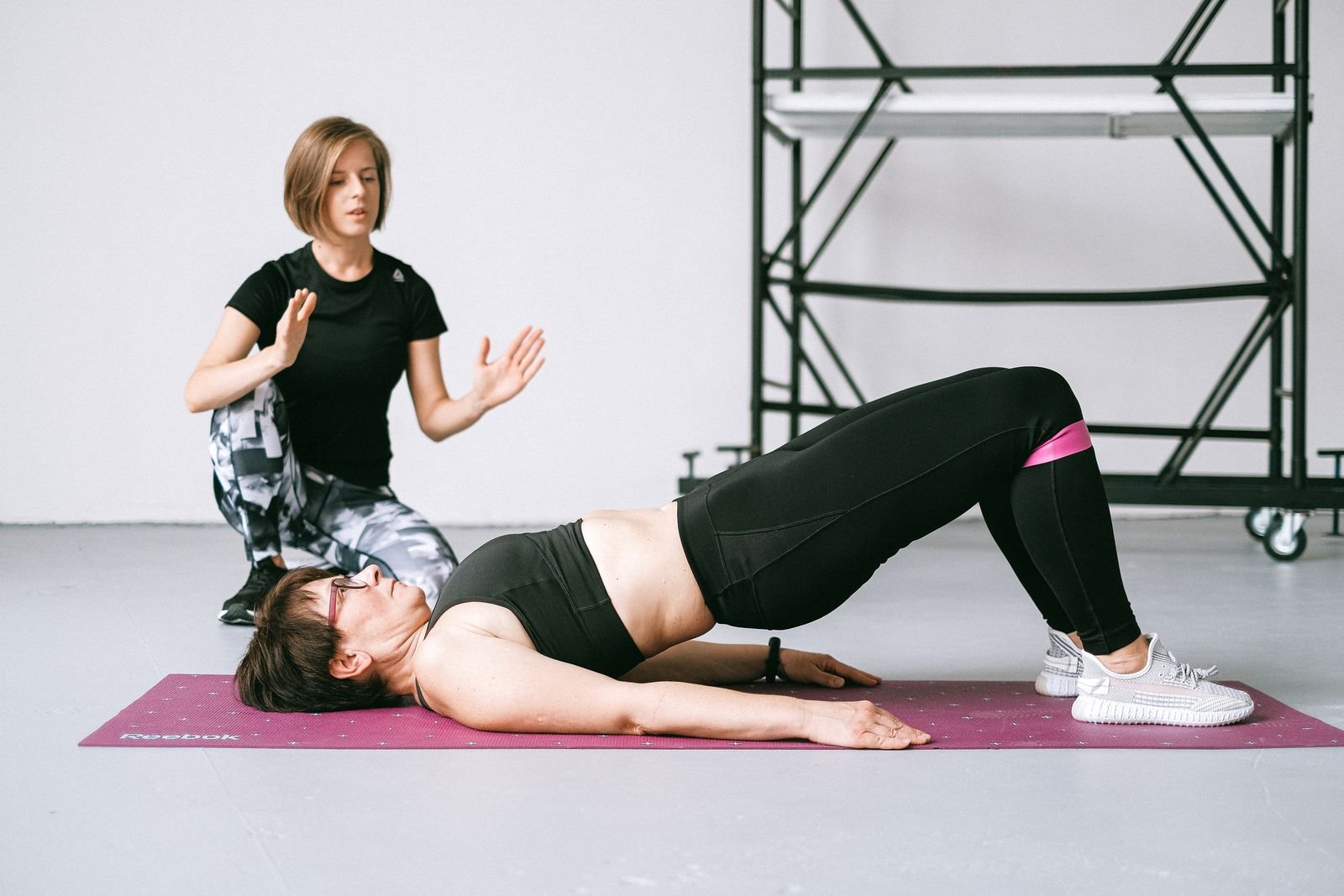
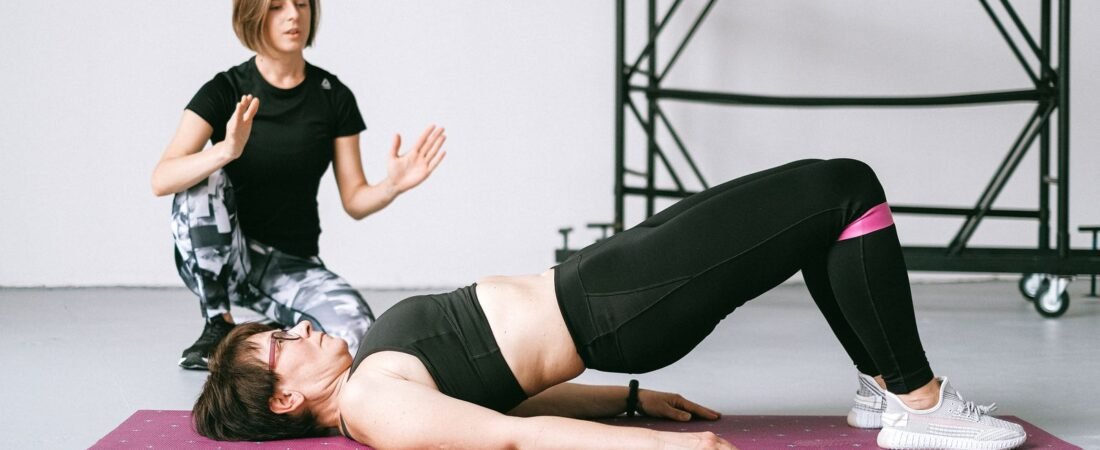
Glute bridges are also helpful at this stage, since strong glutes support the hip and reduce strain on the front of it. Lie on your back with knees bent and feet flat, then gently lift your hips while squeezing your glutes. A general rule for all early exercises is that mild discomfort that settles quickly is acceptable, but sharp pain, or pain that lingers into the next day, means you need to ease back.
Mid-Stage Strengthening Once Pain Has Settled
Once walking is comfortable and the isometric exercises feel easy, it’s time to start loading the hip flexors through movement. Supine marching is a good starting point. Lie on your back with your knees bent and slowly lift one foot off the floor, bringing your knee towards your chest before lowering it with control. Progress to doing it with your legs straight, as a straight leg raise, once that feels easy.
Standing hip flexion with a resistance band is the next step. Loop a band around your ankle, anchor it behind you, and slowly drive your knee forward and up against the resistance, then lower with control. Start with light resistance and focus on smooth movement, aiming for three sets of ten to fifteen. Seated knee lifts, sitting tall on a chair and lifting the knee a few centimetres, are a tougher variation that challenges the muscle in its shortened position, which is often where weakness shows after a strain.
At this stage, it also helps to strengthen the muscles around the hip, including the glutes, adductors, and core. Split squats, step-ups, side planks, and single-leg balance exercises all help build a more resilient hip. Gentle kneeling hip flexor stretches can be reintroduced, but avoid forcing the stretch while the muscle is still healing.
Late-Stage Hip Flexor Rehab Exercises Before Sprinting Or Kicking
The final stage is about speed and power. Even if your hip feels completely normal walking and jogging, sprinting and kicking place much higher demands on the hip flexors, especially the rectus femoris. Start with running drills such as A-marches, A-skips, and high knees at a controlled pace, then build up the speed gradually.
Progress your running from easy jogging to strides at around sixty to seventy percent effort, then to faster strides, and finally to accelerations and full-speed sprints over several sessions. If you play a kicking sport, follow a similar ladder: short passes, then longer passes, then shooting at increasing power, then kicking under fatigue. Change of direction and reactive drills should also be added before you return to matches. Keep an eye on the total volume too, since twenty hard sprints or fifty long kicks in one session is a very different load from five, even at the same intensity.
Exercises that load the hip flexor at speed and in a lengthened position are especially important, as this is where many strains happen. Controlled lunges with an exaggerated knee drive, banded fast knee drives, and gradually progressed bounding all help prepare the muscle for the real demands of sport.
How A Guided Program From Sports Rehab Helps
Every hip flexor strain is slightly different. The muscle involved, the severity, your sport, and your history all affect how quickly you can progress. In a rehabilitation consultation at Impact Sports Rehabilitation, we assess exactly which structures are involved, measure your strength and flexibility, and build a progression with clear milestones for each stage. We also look for other contributors, such as glute or core weakness, previous groin or hamstring injuries, and sudden changes in your training load. If deeper hip flexor pain or a tight psoas is part of your picture, our guide to psoas muscle pain may also help.
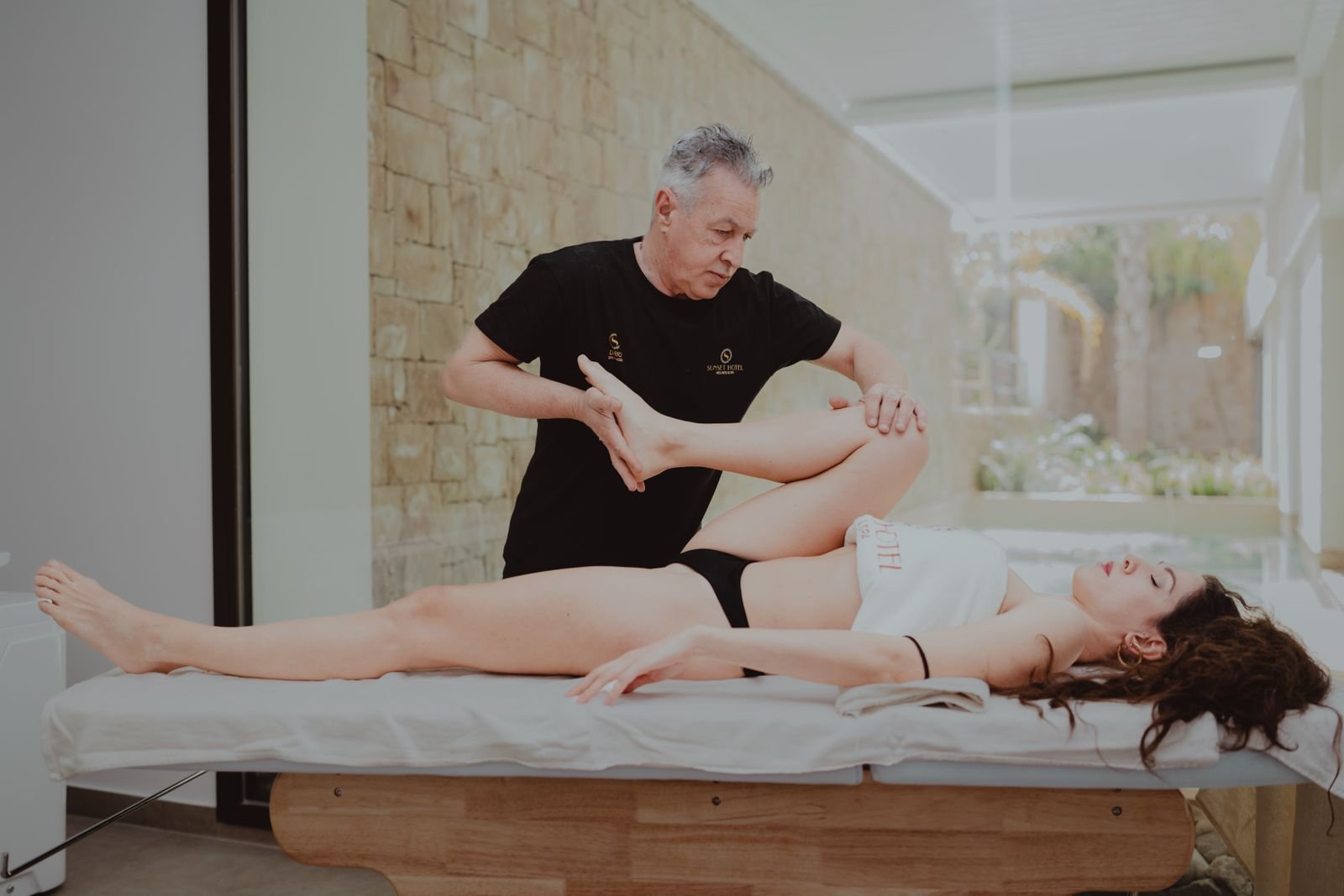
Supportive treatments can make the process more comfortable. Sports massage can help with tightness in the surrounding muscles, and Rocktape taping can provide some support during early return to activity. These work alongside your exercise programme rather than replacing it.
Common Mistakes That Delay Recovery
The biggest mistake we see is progressing too fast once pain eases. Hip flexor strains often feel much better long before the muscle is fully ready for sprinting or kicking. Pain usually settles once the initial healing is under way, but strength, especially at speed and in the stretched position, can take much longer to return. Many people feel fine walking and jogging, jump straight back into full training, and strain the muscle again on the first sprint or long kick. In our experience, those re-injuries often take longer to recover from than the original strain.
A better approach is to progress based on criteria rather than dates. Before returning to full sport, you should be able to perform resisted hip flexion without pain, including at the top of the movement, have strength similar to your other side, tolerate a gentle hip flexor stretch comfortably, and complete progressive sprints and kicks with no pain during, or the next day. If any of these cause symptoms, stay at your current stage a little longer.
Other common mistakes include stretching aggressively too early, skipping glute and core strengthening, relying only on rest, and returning to full matches without first building up speed and kicking volume in training.
If you’re recovering from a hip flexor strain and want a clear plan to get back to running, kicking, or training safely, Impact Sports Rehabilitation in Eccles, Greater Manchester can guide you through each stage. We work with athletes and active people across Eccles, Salford, Trafford, and Manchester, and online consultations are available if you’re further away. Book in and let’s build your return to sport properly.
Frequently Asked Questions
How long does it take to rehab a hip flexor strain?
It depends on the severity of the strain and the demands of your sport. Mild strains may settle within a few weeks, while more significant strains can take longer, and progressing based on how your hip responds is more reliable than following a fixed timeline.
Should I stretch my hip flexor after a strain?
Gentle stretching can help later in recovery, but aggressive stretching early on can aggravate a healing muscle. Focus on pain-free movement and strengthening first, then gradually reintroduce stretching as the muscle settles.
Can I still run with a hip flexor strain?
Easy running may be possible once walking is comfortable and early strength exercises feel easy, but sprinting should wait until later in the programme. If running causes pain during or the next day, ease back to the previous stage.
Why does my hip flexor keep getting injured?
Repeated hip flexor strains often happen because return to sport was rushed, strength was not fully restored, or factors such as training load and glute weakness weren’t addressed. Impact Sports Rehabilitation can help identify what’s driving the recurrence and build a plan to reduce the risk.
Is it normal to feel some discomfort during rehab exercises?
Mild discomfort that settles quickly is often acceptable, especially in the mid and late stages. Sharp pain, pain that changes how you move, or pain that lingers into the next day is a sign to reduce the load.
When should I see someone about my hip flexor?
If you can’t walk comfortably, have significant bruising, felt a pop at the time of injury, or aren’t improving after a couple of weeks, it’s worth getting assessed. Ongoing groin or hip pain can also come from other structures that need a different approach.
This article is for educational purposes only and is not a substitute for professional medical diagnosis or treatment. The right exercises depend on the severity and stage of your injury, so please seek assessment if your injury is recent, severe, or unclear. Impact Sports Rehabilitation offers in-person and online consultations to guide your recovery.


