
Quick answer: Neck pain on the left side at the base of the skull is most often musculoskeletal, coming from tight or overworked muscles, an irritated joint in the upper neck, or an irritated nerve on that side, and one-sided habits like how you sleep, sit, or carry things often play a part. Pain that always stays on the same side is a useful clue for a clinician, but it isn’t a diagnosis on its own. Sudden, severe pain, pain after a neck injury, or pain with fever, dizziness, visual changes, weakness, or slurred speech needs urgent medical attention.
Neck pain left side base of skull is a surprisingly specific complaint, and if that’s what you’re dealing with, you’ve probably noticed that most articles about base of skull pain talk about it as if it always sits in the middle or on both sides. When your pain is clearly on one side, it’s natural to wonder whether that means something different. In many cases it does change the likely cause, and in our clinic, which side hurts is one of the first details we pay attention to.
In this guide we’ll explain why one-sided pain is worth looking at separately, the common causes of left-sided pain at the base of the skull, what that pattern can suggest, the red flags you should never ignore, and practical steps to ease one-sided tension. We won’t be diagnosing your pain here. If your symptoms are severe, unusual for you, or not improving, please get them assessed properly.
Why One-Sided Pain Is Worth Paying Attention To Separately
The base of the skull is a busy area. Several small muscles connect the top of the neck to the skull, the upper neck joints allow most of your head’s nodding and turning, and the occipital nerves run up through these muscles to supply the back of the scalp. Pain spread evenly across the base of the skull, on both sides, often reflects general muscle tension from posture, stress, or fatigue. When pain sits firmly on one side, though, it suggests that something on that side is being loaded, irritated, or compressed more than the other.
Clinicians also pay attention to whether one-sided pain stays on the same side every time. Headaches that come from the neck, known as cervicogenic headaches, are typically side-locked, meaning they start in the neck and spread up the same side of the head each time, often with reduced neck movement on that side. Migraines can also be one-sided, but they tend to switch sides between attacks and come with features like sensitivity to light or nausea. That difference alone doesn’t diagnose anything, but it helps guide where to look.
Common Causes Of Neck Pain Left Side Base Of Skull
The most common cause we see is one-sided muscle tension. The small suboccipital muscles, along with the upper trapezius and levator scapulae, can become tight and sensitive on one side when they’re asked to work harder than the other. Trigger points in these muscles commonly refer pain up into the base of the skull and around the side of the head.
The upper neck joints are another frequent source. The joints between the top three vertebrae can become stiff or irritated on one side, particularly after a sudden movement, a long period in an awkward position, or a minor knock. Pain from these joints often refers to the base of the skull and can feel deep and achy, with turning your head towards the painful side often making it worse.
Nerve irritation is a third possibility. The greater occipital nerve on each side passes through the muscles at the base of the skull. When it’s irritated, the pain is often different from a muscle ache, more sharp, shooting, or electric, travelling from the base of the skull up the back of the head, sometimes with tenderness or altered sensation of the scalp.
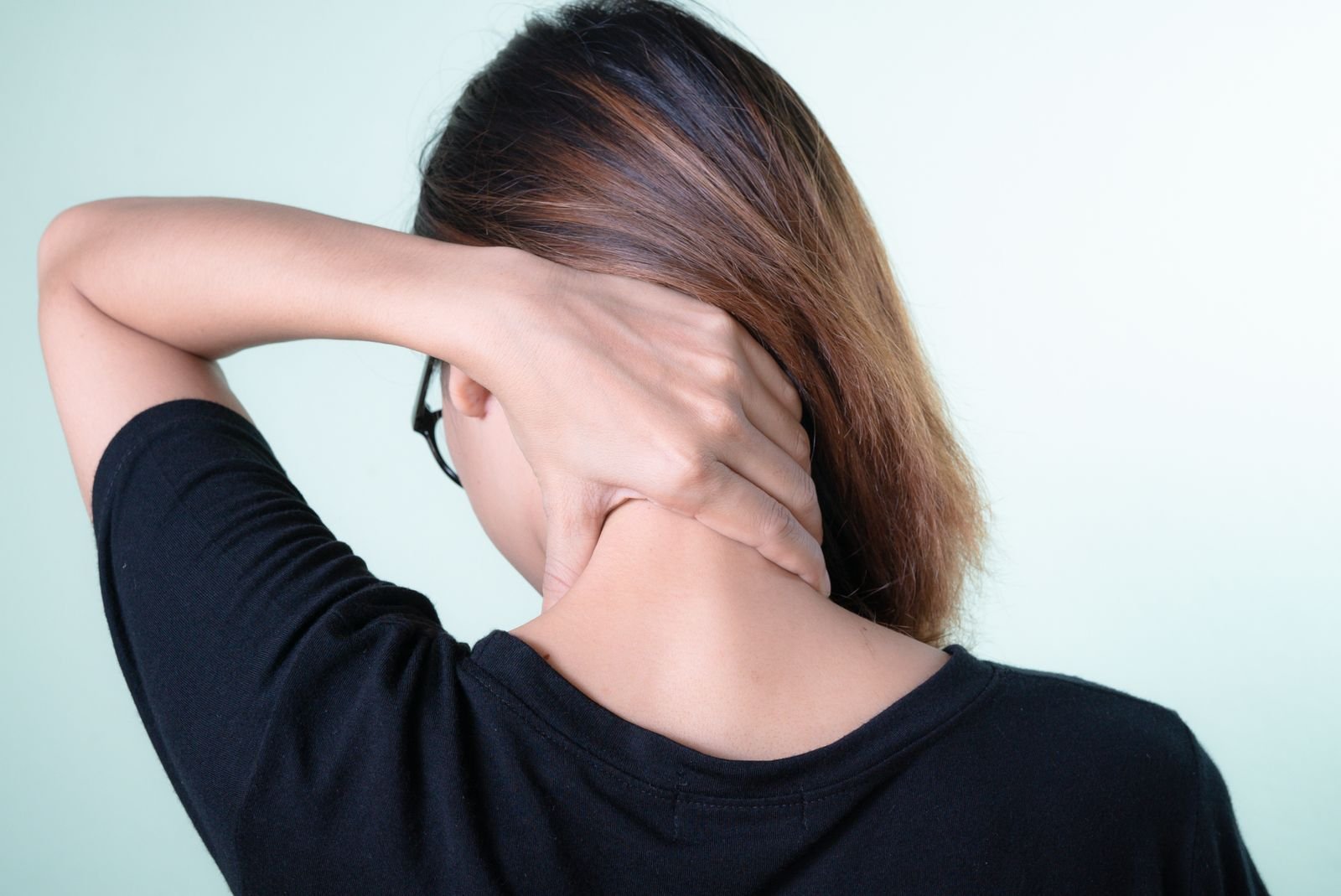
Underlying many of these are one-sided habits. Sleeping on one side with a pillow that’s too high or too low, cradling a phone between your ear and left shoulder, a monitor set off to one side, always carrying a bag on the same shoulder, breathing to one side when swimming, or rotating repeatedly to the same side in sport can all load one side of the upper neck more than the other.
What Neck Pain Left Side Base Of Skull Can Suggest About The Cause
One-sided presentations narrow things down in a way that generalised pain doesn’t. If your pain is always on the left, worsens with certain neck movements, and comes with stiffness turning or tilting your head, that pattern points towards the neck itself, whether muscles, joints, or both. If the pain is sharp, shooting, and follows a line up the back of your head, nerve irritation becomes more likely. If it moves between sides, comes in attacks, and brings nausea or light sensitivity, a headache disorder such as migraine might be worth exploring with your GP.
It’s also worth noticing what you do on the left. Many people realise their pain lines up with a one-sided habit, such as a desk setup, a sleeping position, or a sport, which gives a useful starting point for change. Keeping a simple diary for a week or two, noting when the pain appears, how long it lasts, and what you were doing beforehand, often reveals a pattern you wouldn’t otherwise spot, and it’s genuinely helpful information to bring to an assessment. For a broader look at base of skull pain that isn’t specifically one-sided, see our guides to pain at the base of the skull and headaches at the base of the skull.
Red Flags That Need Urgent Attention
Although most one-sided neck pain is musculoskeletal, some symptoms need urgent medical attention, and you should call 999 or go to A&E if they appear. A sudden, severe headache that reaches its peak within seconds or minutes is an emergency. So is new one-sided neck pain and headache combined with dizziness, double vision, slurred speech, difficulty swallowing, weakness, numbness, or loss of balance, since in rare cases one-sided neck pain can be caused by an injury to an artery in the neck, particularly after trauma or a sudden neck movement.
Seek urgent medical advice for neck pain with fever and a stiff neck, especially with a rash or sensitivity to light, pain after a significant fall, collision, or car accident, or pain with unexplained weight loss, a history of cancer, or pain that is worse at night and doesn’t ease with rest. If anything about your symptoms feels unusual or alarming, trust that instinct and get checked. Our article on severe neck pain and headache at the base of the skull goes into these warning signs in more detail.
Practical Relief Specific To One-Sided Tension
Once serious causes have been ruled out, small changes aimed at the side that hurts can make a real difference. Start by looking for the one-sided habit. Move your monitor so it’s directly in front of you, use a headset rather than cradling your phone, switch which shoulder carries your bag, and check whether your pillow keeps your neck level when you lie on your side.
Gentle movement usually helps more than rest. Slow chin tucks, gently drawing your chin back to lengthen the back of the neck, can ease tension at the base of the skull. A gentle side-bending stretch, tilting your right ear towards your right shoulder to stretch the left side, held for twenty to thirty seconds, often feels good for left-sided tension. Turning your head slowly in a comfortable range, without forcing it, helps maintain movement in the upper neck.
Warmth over the left side of the neck can help tight muscles relax, and gentle pressure with your fingertips along the base of the skull is often soothing. Avoid aggressive cracking or forceful self-manipulation of the neck. If stretches or pressure cause sharp, shooting pain, or symptoms spread into your arm, stop and get assessed.
How Sports Rehab Assesses One-Sided Presentations
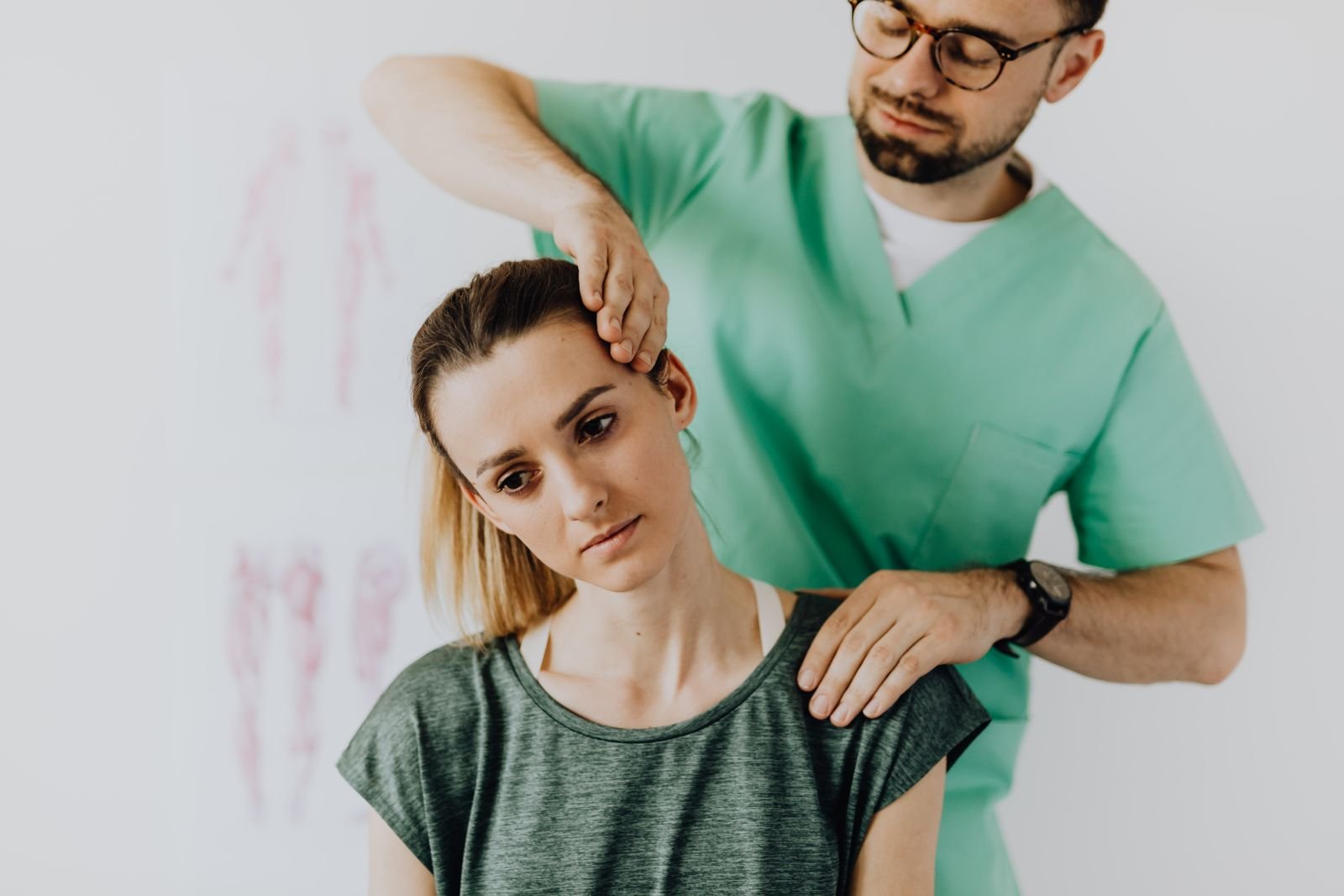
When someone comes to Impact Sports Rehabilitation with one-sided pain at the base of the skull, we start by screening for anything that needs medical referral, then build a clear picture of how the pain behaves. We compare both sides of the neck for movement, muscle tension, joint stiffness, and nerve sensitivity, and we look at posture, shoulder blade control, and the habits that might be loading one side more than the other.
Treatment is then matched to what we find. Sports massage can help ease tight muscles in the upper neck and shoulders, and acupuncture may help some people with muscular neck pain and tension-type headaches. We combine these with mobility and strengthening exercises and practical changes to your workstation, sleep setup, or sport, so the pain is less likely to keep coming back.
If one-sided pain at the base of your skull keeps coming back, Impact Sports Rehabilitation in Eccles, Greater Manchester can assess what’s driving it and build a plan that addresses the cause, not just the symptoms. We see clients from Eccles, Salford, Trafford, and across Manchester, and online consultations are available if you’re further away. Book in and let’s get your neck moving comfortably again.
Frequently Asked Questions
Why does my neck only hurt on the left side at the base of my skull?
Most often it’s because something on that side is working harder, such as tight muscles, a stiff upper neck joint, or an irritated nerve, frequently linked to one-sided habits like sleeping position or desk setup. A proper assessment can help pinpoint the cause.
Should I be worried about one-sided neck pain and headache?
Most one-sided neck pain is musculoskeletal and not dangerous. However, sudden severe pain, pain after an injury, or pain with dizziness, vision changes, weakness, slurred speech, or fever needs urgent medical attention.
Can stress cause pain on one side of my neck?
Stress can increase muscle tension and make you more sensitive to pain, and many people hold that tension more on one side. It’s often one piece of the puzzle alongside posture and habits.
Is my pillow causing my left-sided neck pain?
It might be part of it, particularly if you mostly sleep on one side and wake up stiff. A pillow that keeps your head level with your spine when lying on your side is usually a good starting point.
What kind of treatment helps one-sided neck pain at the base of the skull?
Many people find a combination of hands-on treatment, gentle mobility, strengthening, and fixing one-sided habits works well. At Impact Sports Rehabilitation, we tailor this after a full assessment, which may include sports massage or acupuncture as part of a wider plan.
When should I see someone about it?
If the pain lasts more than a couple of weeks, keeps returning, affects your sleep or work, or comes with pins and needles or headaches, it’s worth having it assessed. Any red flag symptoms need urgent medical attention instead.
This article is for educational purposes only and is not a substitute for professional medical diagnosis or treatment. One-sided neck pain and headaches can occasionally have serious causes, so seek urgent medical attention for any red flag symptoms. Impact Sports Rehabilitation offers in-person and online consultations to help assess and manage musculoskeletal neck pain.