

Quick answer: MCL physical therapy exercises follow a staged progression, starting with gentle, protective movement to restore range of motion, moving into targeted strengthening once the ligament can tolerate more load, and finishing with higher-level work before returning to cutting or pivoting sport. Which exercises are appropriate depends on the grade of your specific injury, so this is general guidance rather than a fixed programme.
If you’ve been diagnosed with an MCL sprain, you’ve probably already found plenty of warnings about what not to do, and now you’re looking for the other half of the picture, a genuine, positive plan for what MCL physical therapy exercises actually look like at each stage. That’s exactly what this guide covers, a clear, staged progression built around restoring stability and strength around the knee without stressing the healing ligament along the way. Whether you’re just out of your initial diagnosis or a few weeks into recovery already, this article walks through what a sensible, structured approach to MCL rehab genuinely involves.
What MCL Physical Therapy Is Trying To Achieve
The core goal of MCL rehab is straightforward to state even if it takes real time to achieve, restoring full strength, range of motion, and stability around the knee, particularly the ability to resist inward, or valgus, force, without asking the healing ligament to do more than it’s currently ready for. This means the exercise progression isn’t just about generally strengthening the leg, it’s specifically about rebuilding the knee’s capacity to handle side-to-side and rotational stress, since that’s precisely the kind of load the MCL is designed to resist and precisely what got overloaded in the original injury. One thing worth understanding early on, since most guides present rehab as a strict checklist of separate boxes to tick off, is that in reality these stages overlap considerably, you’ll likely still be doing range-of-motion work well into your strengthening phase, and still doing foundational strengthening once you’ve started more dynamic, sport-specific drills, rather than cleanly finishing one stage before starting the next. It’s worth mentioning too that grade genuinely shapes the whole timeline, research suggests a grade one sprain, a mild overstretch without real tearing, often progresses through these stages considerably faster than a grade two or three sprain, where real fibre tearing has occurred and the ligament needs more time and a more conservative early approach, sometimes including a period of bracing, before strengthening can safely begin in earnest.
Early-Stage Exercises To Protect The Healing Ligament
Immediately after diagnosis, the priority is protecting the ligament while gently restoring comfortable movement, rather than any kind of strengthening yet. Gentle, pain-free range-of-motion work, straightening and bending the knee within a comfortable range while lying or sitting, helps prevent stiffness without stressing the ligament. Quadriceps isometrics, tensing the thigh muscle with the leg straight and holding without moving the joint, are often introduced early since they help maintain muscle activation without any knee movement at all. Depending on the grade of injury, many people are also given a hinged knee brace during this stage specifically to limit unwanted side-to-side movement while allowing forward-and-back motion, and following your clinician’s specific guidance on brace use matters more than any generic advice at this point. Gentle weight-bearing as tolerated, often with crutches initially for more significant grades, and simple ankle pumps to support circulation round out this early, protective stage. Ice and elevation in the first few days can help with comfort and swelling, and while it’s tempting to rush through this stage because the exercises themselves feel almost too gentle to matter, this early protective period is genuinely doing important work, giving the ligament fibres the calm environment they need to begin healing properly before any real load is introduced.
Mid-Stage Strengthening Once You’re Ready
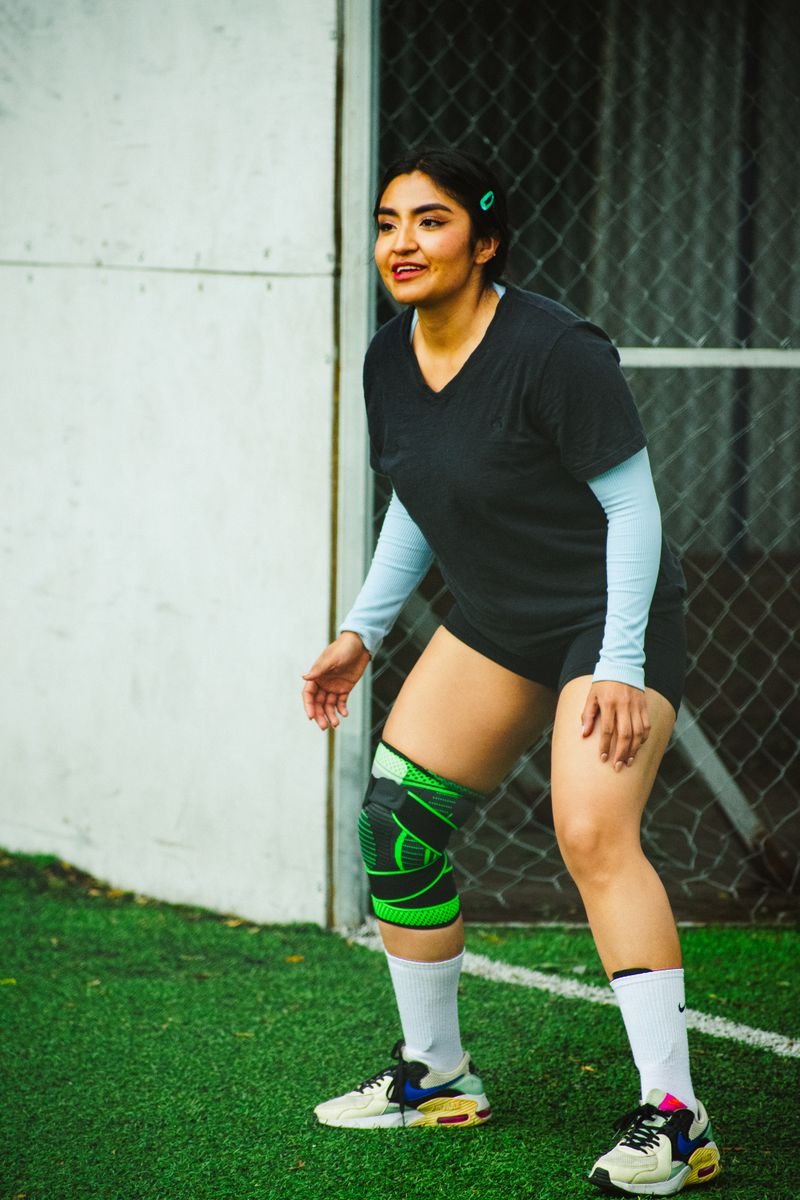
Once early symptoms have settled and you’ve been cleared to progress, the focus shifts to building genuine strength through a straight-line, controlled range of motion. Straight-leg raises, mini squats staying within a comfortable, controlled range, and standing hamstring curls all build strength without introducing the side-to-side stress the MCL is still recovering from. Step-ups performed straight forward, rather than at an angle, and controlled leg press work with the knees tracking straight over the toes, help build the kind of functional strength needed for everyday movement and, eventually, sport. Balance work is typically introduced here too, starting on a stable, flat surface, since a stable knee under single-leg load is a genuinely important building block before any faster or less predictable movement is introduced later. Throughout this stage, the guiding principle is straight-line, controlled loading, building real strength while continuing to protect the ligament from the specific direction of stress it’s still recovering from. Many people notice a genuine boost in confidence once mid-stage strengthening is properly underway, the knee starts feeling reliably strong through everyday movement again, though it’s worth resisting the temptation to fast-track into lateral or rotational work just because straight-line strength has returned, since these are genuinely different demands on the healing ligament.
Late-Stage Exercises Before Returning To Sport
The final stage before returning to cutting, pivoting, or contact sport introduces more dynamic, multi-directional movement, but only once you’ve demonstrated solid strength and control through the earlier stages. This typically includes controlled lateral movement, gentle side-stepping and light lateral band walks progressing gradually in speed and resistance, single-leg hop and landing drills to rebuild confidence and control under more realistic loading, and eventually sport-specific movements like straight-line running progressing to cutting and change-of-direction drills. The jump from mid-stage straight-line work to this level of multi-directional loading is genuinely the biggest step in the whole programme, which is exactly why it’s typically introduced gradually and carefully rather than all at once, and why many people find working with a therapist through this specific transition particularly valuable. A useful marker many therapists use before progressing into this stage is comparing single-leg strength and control between the injured and uninjured leg, since a meaningful gap between the two sides is a fairly reliable sign that more mid-stage work is still needed before adding the unpredictability of cutting and pivoting movements on top.
Exercises To Be Cautious With
Certain categories of movement need particular caution throughout MCL rehab, especially anything involving lateral lunges, uncontrolled pivoting, or exercises that let the knee collapse inward under load. Our companion article on MCL exercises to avoid covers this in specific detail, including exactly why these movements are risky and what to substitute in their place, so rather than repeating that guidance here, the short version is simply this, if a movement involves your knee moving side to side or rotating under load, it needs to be introduced deliberately and only once you’ve been cleared for that stage, not assumed safe just because it doesn’t hurt in the moment. This matters more than it might seem, since ligament tissue doesn’t always give clear, immediate pain feedback the way muscle strain does, so a movement can feel completely fine in the moment while still placing genuine stress on tissue that hasn’t finished healing.

How Sports Rehab Builds This Around Your Specific Injury
Since appropriate exercises depend heavily on the grade and stage of your specific MCL injury, working with a properly individualised programme genuinely matters rather than following a generic exercise list found online. At Impact Sports Rehabilitation, a rehabilitation consultation starts with confirming the grade of your injury and where you currently sit in the healing process, since this directly shapes which stage of exercises is appropriate right now. From there, the programme is built and adjusted around how you’re actually progressing, with supportive tools like sports massage or kinesiology taping brought in where genuinely useful alongside the exercise progression itself, rather than a one-size-fits-all sheet that doesn’t account for your specific injury grade or how you’re actually responding week to week. Many clients find that having someone experienced check in on progress between stages, confirming readiness rather than guessing based on how confident the knee feels, is what makes the difference between a smooth recovery and one interrupted by an avoidable setback.
If you’ve been diagnosed with an MCL sprain and want a clear, properly staged exercise plan built around your specific injury grade, rather than a generic list, a rehabilitation consultation at Impact Sports Rehabilitation in Eccles, Greater Manchester can give you exactly that. We work with runners, footballers, gym-goers, and combat-sports athletes throughout Eccles, Trafford, Salford, and the wider Manchester area, and online consultations are available if you’re further afield.
Frequently Asked Questions
How do I know what grade my MCL sprain is?
This genuinely needs a proper clinical assessment, since grading involves testing how much the knee moves under specific stress compared to your uninjured side, which isn’t something you can reliably judge yourself at home. Getting this confirmed early is worth it, since it directly determines which exercises and timeline are actually appropriate for you.
Do I need a brace for MCL physical therapy exercises?
Many people with more significant MCL sprains are given a hinged knee brace during the early stages specifically to limit side-to-side movement while healing, though this genuinely depends on the grade of injury and your clinician’s specific guidance. Milder grade one sprains don’t always need one, so this is very much an individual decision rather than a blanket rule.
How long until I can get back to running or sport?
Recovery genuinely varies quite a bit depending on the grade of injury and how consistently you progress through rehab, so there’s no single timeline that applies to everyone. Research suggests milder sprains often progress faster than more significant ones, but the safest approach is progressing based on how your knee is actually responding rather than a fixed date on a calendar.
Is it normal for my knee to still feel a bit unstable during mid-stage exercises?
A mild sense of caution or awareness during exercise is fairly common as you rebuild confidence, but genuine instability, your knee actually giving way or feeling like it might buckle, is different and worth mentioning to your therapist rather than pushing through. This distinction between normal caution and genuine instability is exactly the kind of thing a proper assessment helps clarify.
Can sports massage or taping actually help during MCL rehab, or is that separate from the exercises?
Many clients find that sports massage and kinesiology taping work well as supportive tools alongside an active exercise programme, helping with comfort and confidence rather than replacing the exercises themselves. At Impact Sports Rehabilitation we often build these in alongside the staged exercise progression when it genuinely seems useful for a particular client.
What if I did an exercise from the “avoid” list without realising, does that mean I’ve undone my progress?
A single instance generally isn’t a disaster, and many people find that simply noticing it, stopping, and monitoring how the knee feels over the next day or two is a sensible response rather than assuming the worst. If you notice increased pain, swelling, or a sense of instability afterward, that’s a good reason to get reassessed rather than continuing to guess.
This article is educational and general in nature, and is not a substitute for professional medical diagnosis or treatment. Appropriate exercises depend on the grade and stage of your specific MCL injury, and this guidance should not replace an individualised rehabilitation plan or a fixed recovery timeline. Impact Sports Rehabilitation offers rehabilitation consultations to confirm your injury grade and build an appropriate staged programme.


