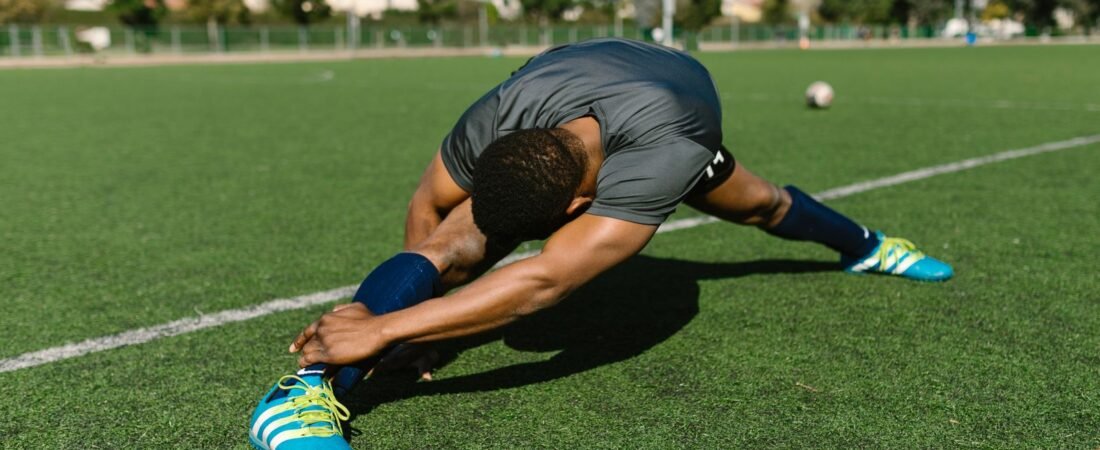
Quick answer: Learning how to stretch knee tendons effectively actually starts with a small but important clarification, tendons themselves have very limited stretch capacity, so genuine flexibility improvement around the knee comes from working the surrounding muscle-tendon units and joint mobility, not the tendon fibres directly. With that understood, a proper warm-up, targeted quad, patellar, hamstring, and calf work, and correct hold times can genuinely improve how the knee feels day to day.
If your knee feels tight or stiff, especially after sitting for a while or first thing in the morning, it’s completely natural to search for how to stretch knee tendons and start working through whatever routine comes up first. Before diving into the practical steps, though, it’s worth understanding what you’re actually trying to change, since this small piece of clarity makes the rest of the routine genuinely more effective rather than just something you’re doing on autopilot. This guide walks through exactly what’s being stretched, a proper step-by-step routine covering the muscles that influence how your knee feels, and the technique details that actually make a lasting difference.
A Quick Clarification On What’s Actually Being Stretched
Here’s something that almost no other guide on this topic explains clearly, and it genuinely changes how you should approach the whole routine. Tendons themselves are dense, relatively stiff connective tissue with quite limited capacity to lengthen, they’re built to transmit force efficiently between muscle and bone, not to stretch the way a muscle can. When people talk about stretching a tendon, what they’re usually, and more accurately, trying to improve is the flexibility of the whole muscle-tendon unit, the muscle belly plus its tendon working together, along with general mobility through the knee joint itself. Research consistently shows that most of the range-of-motion improvement from a stretching routine comes from the muscle becoming more pliable and your nervous system tolerating a greater stretch before triggering a protective response, rather than the tendon fibres actually lengthening. This isn’t just a technical distinction either, understanding it changes what you should focus on, working the quadriceps, hamstrings, and calves that attach around the knee, rather than trying to directly stretch the patellar tendon itself, which is genuinely difficult to influence in isolation and isn’t really where the useful flexibility gains come from anyway. It’s a bit like the difference between a rope and the pulley it runs through, you can loosen the rope, but pulling directly on the pulley itself won’t achieve much, the tendon plays a similarly fixed, structural role compared to the muscle doing the actual lengthening.
Step One: Warming Up Before You Stretch
Stretching cold tissue is both less effective and slightly riskier than stretching after a brief warm-up, since warmer muscle is more pliable and tolerates a stretch further before reaching its comfortable limit. A genuinely simple five to ten minute warm-up, gentle walking, easy stationary cycling, or marching on the spot, raises tissue temperature and blood flow enough to make the following steps noticeably more effective. This doesn’t need to be intense or tiring, the goal is simply raising your body temperature slightly and getting some easy movement through the knee and surrounding joints before asking the muscles to lengthen under a stretch. Skipping this step and going straight into a deep stretch on cold muscle is one of the more common reasons people find stretching uncomfortable or unproductive, since cold tissue simply doesn’t yield the same way, no matter how long you hold the position for.
Step Two: Quadriceps And Patellar Tendon Mobility
The quadriceps muscle group runs down the front of the thigh and attaches via the patellar tendon just below the kneecap, so tightness here is one of the most common contributors to a knee that feels stiff or restricted. A standing quad stretch, standing on one leg, gently bending the other knee and bringing the heel toward your glutes while holding onto something stable for balance, is the classic and genuinely effective option, keeping your knees close together and hips level rather than arching your lower back to force the stretch further. For anyone who finds standing balance tricky, a side-lying version on the floor works just as well, using a strap or towel around the ankle if reaching the foot directly isn’t comfortable yet. Gentle kneecap mobility, lightly moving the kneecap side to side and up and down with your leg relaxed and straight, can also help with the sense of tightness right around the patellar tendon area itself, complementing the quad stretch rather than replacing it.
Step Three: Hamstring And Calf Flexibility For Knee Comfort
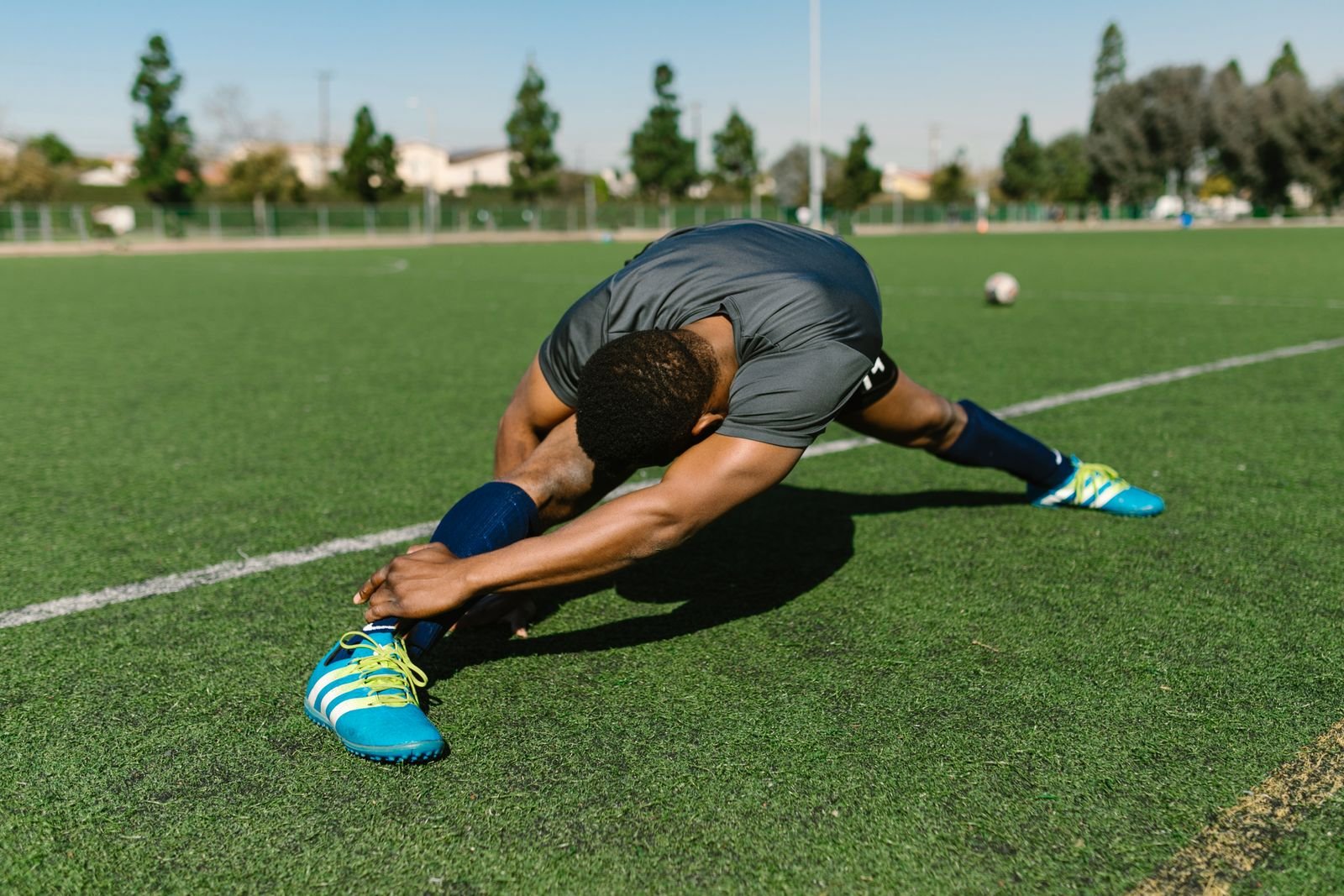
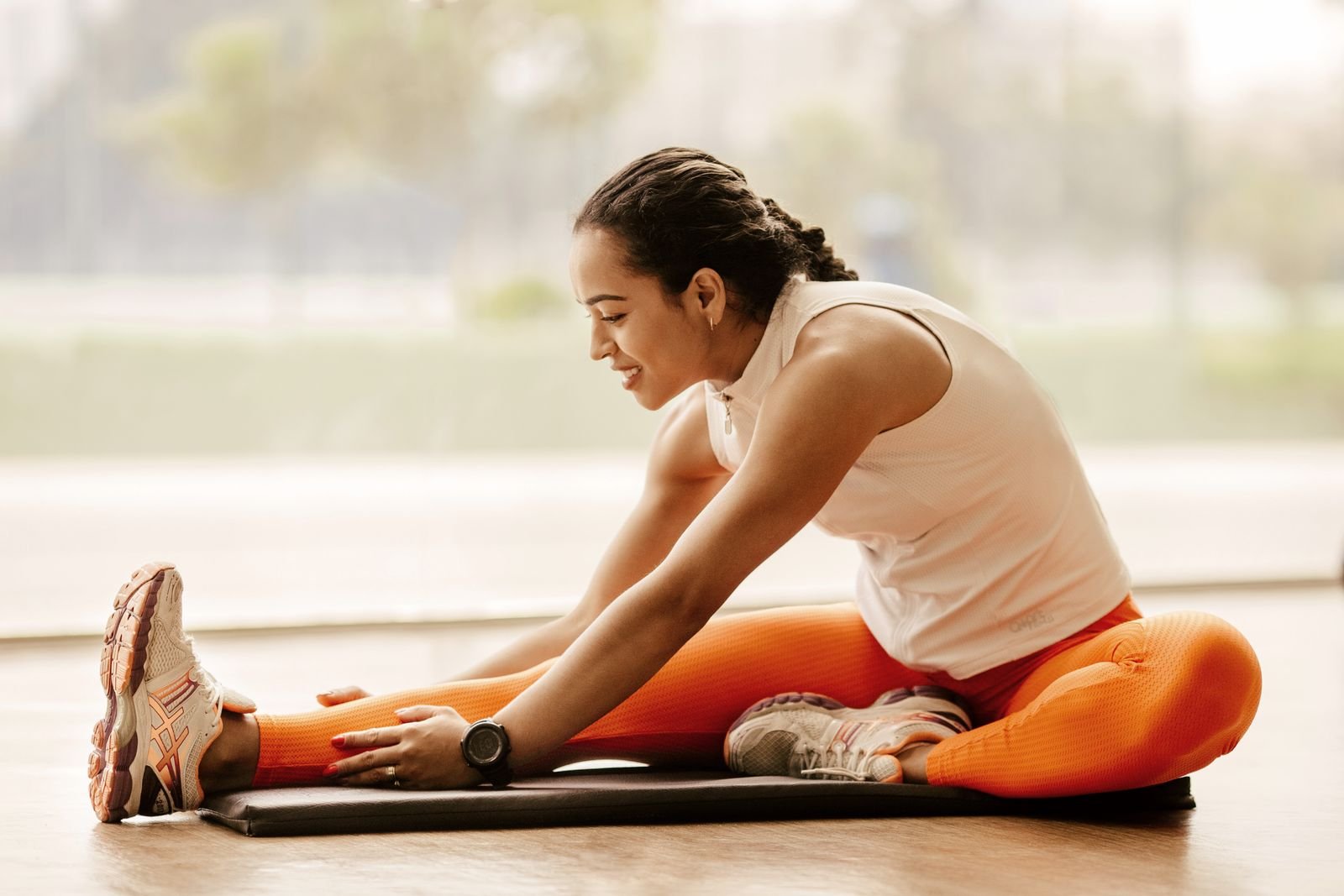
The hamstrings and calves both cross the knee joint and directly influence how it moves and feels, so a genuinely useful routine has to include them rather than focusing on the front of the knee alone. For the hamstrings, a seated or standing forward fold with a slight bend in the knees, or lying on your back and gently drawing one straight leg toward you with a strap around the foot, both work well, and the goal is a comfortable pulling sensation through the back of the thigh, never sharp pain behind the knee itself. For the calves, standing in a staggered lunge position with your back heel pressed into the floor and leaning gently forward targets the larger gastrocnemius muscle, while bending the back knee slightly during the same position shifts the stretch to the deeper soleus muscle, both of which influence ankle and knee mechanics during walking and running. Many people underestimate how much tight calves specifically contribute to a knee feeling restricted, since the two joints work closely together during almost every lower-body movement. A tight calf can subtly alter how your foot and ankle move during walking or running, which in turn changes the load pattern travelling up through the knee, so addressing calf flexibility alongside the more obvious thigh muscles often makes a genuinely noticeable difference that stretching the front of the knee alone doesn’t achieve on its own.
Step Four: Holding It Properly For It To Actually Work
Technique and timing matter just as much as which stretches you choose, and this is where a lot of well-intentioned routines fall short. Holding each stretch for somewhere around fifteen to thirty seconds, breathing steadily rather than holding your breath, tends to produce genuinely better results than a quick five-second bounce or pulse, since research suggests the muscle needs a bit of sustained time to actually relax into the stretch rather than reflexively resisting it. The sensation you’re aiming for is a comfortable, mild pulling feeling, definitely not sharp or shooting pain, and easing off slightly if you feel any discomfort directly in the joint itself rather than the muscle belly is a sensible habit. Repeating each stretch two to three times, and doing this kind of routine consistently, several times a week rather than as an occasional one-off, is what most reliably builds lasting flexibility change over time, since the improvements from any single stretching session tend to fade within a day or so without regular repetition. Range-of-motion gains from a single stretching session genuinely do carry over for a period afterward, often for around twenty minutes or so, but the lasting change that makes a real day-to-day difference comes from repeating this pattern consistently over weeks, not from any single particularly thorough session.
How Sports Rehab Builds This Into A Wider Plan
While a home stretching routine is genuinely useful on its own, it works even better as part of a broader, individually tailored approach, particularly if your knee stiffness has an underlying cause worth identifying. At Impact Sports Rehabilitation, mobility and flexibility work like this is often built into a wider treatment plan alongside sports massage, which can help address deeper tightness and restriction that a self-directed stretching routine alone doesn’t always reach. A therapist can also help identify whether your knee stiffness is coming mainly from the muscles you’d expect, or from a less obvious source, which genuinely changes what kind of stretching and mobility work is actually going to help versus just feeling generally good in the moment.
If your knee stiffness isn’t improving with a home stretching routine, or you’d like a proper assessment of what’s actually driving the tightness, Impact Sports Rehabilitation in Eccles, Greater Manchester offers rehabilitation consultations that go beyond a generic stretching list. We work with runners, footballers, gym-goers, and combat-sports athletes throughout Eccles, Trafford, Salford, and the wider Manchester area, and online consultations are available if you’re further afield.
Frequently Asked Questions
Is it bad that I can’t actually feel a stretch directly in my kneecap tendon itself?
No, that’s actually expected, since tendons have limited stretch capacity and most people genuinely feel these stretches in the muscle belly, the front or back of the thigh, or the calf, rather than directly in the tendon itself. If you are feeling a stretch directly at the joint line or kneecap, easing off slightly is a sensible precaution.
How often should I actually be doing this to notice a real difference?
Many people find doing a routine like this several times a week, rather than as an occasional one-off, produces genuinely noticeable improvement over a few weeks, since the effects of any single session tend to fade within a day without regular repetition. Consistency generally matters more than doing an especially long or intense session occasionally.
Can stretching make my knee stiffness worse instead of better?
Stretching into sharp pain, or stretching a knee that’s currently swollen, inflamed, or recently injured, can genuinely aggravate things rather than help, which is exactly why a proper assessment matters if you have any of those symptoms. For general day-to-day stiffness without an acute injury, a gentle, comfortable stretching routine is generally well tolerated and often helpful.
Is stretching enough, or do I need strengthening too?
For a lot of people, flexibility work alone genuinely helps with day-to-day comfort, but many clients find that pairing stretching with appropriate strengthening produces more complete, lasting improvement, especially if the stiffness is related to how the knee is being loaded during activity. This is exactly the kind of thing a broader assessment at Impact Sports Rehabilitation can help clarify for your specific situation.
I have ongoing knee pain, should I still try these stretches?
If you have current knee pain, swelling, or a recent injury, it’s genuinely worth getting a proper assessment before starting a stretching routine, since the right approach depends on what’s actually going on with the joint. This guide is aimed at general stiffness and flexibility rather than treatment for an existing injury, and pushing into pain is never the goal regardless of the cause.
Why does my knee feel tighter in the morning than later in the day?
This is a really common experience and relates to reduced movement and fluid circulation overnight, alongside a natural drop in tissue temperature while you sleep, both of which tend to ease once you’ve been up and moving for a while. Many people find a gentle version of this routine first thing in the morning genuinely helps with that initial stiffness before the rest of the day gets going.
This article is educational and general in nature, and is not a substitute for professional medical diagnosis or treatment. This guidance covers general flexibility work rather than treatment for an acute injury, so anyone with current knee pain, swelling, or a recent injury should get a proper assessment before starting a stretching routine. Impact Sports Rehabilitation offers rehabilitation consultations to help identify what’s genuinely contributing to your knee stiffness.