
An armbar is a joint lock submission that hyperextends the elbow by isolating and controlling the arm while applying pressure against the joint from the opposite direction it naturally bends. It’s one of the most fundamental submissions in BJJ and grappling, and one of the reasons it’s so effective is exactly why it’s so hard on the elbow, the joint has very little natural room to move in that direction before something gives.
Armbar: Explained Simply (And Why It’s So Hard On Your Elbow)
Whether you’re newer to grappling and trying to understand what actually happens when someone locks in an armbar, or you’ve just tapped out of one and want to understand what happened to your arm, here’s a genuinely accessible look at the mechanics of this submission, why it puts so much specific stress on the elbow, and what the real injury research actually shows.
What An Armbar Actually Is, In Simple Terms
An armbar works by isolating one arm, typically trapping it between the legs or across the body, while the hips are used to create leverage against the elbow joint from the front, forcing it to straighten well past its normal range. The elbow is a hinge joint, built to bend and straighten within a specific range, and an armbar deliberately pushes it beyond that range using the much stronger hip and leg muscles against the comparatively weaker arm.
This isn’t a technique explanation for training purposes, since teaching submission mechanics for competitive use is outside a sports rehabilitation clinic’s scope, but understanding the basic mechanism genuinely helps make sense of why the resulting injuries look the way they do. It’s also worth understanding why the armbar is so widely used across grappling disciplines, BJJ, judo, and MMA alike, it requires relatively little size or strength advantage compared with many other submissions, since it relies primarily on leverage and body positioning rather than raw power, which is part of why it’s taught early and used often at every level of experience.
Why This Submission Targets The Elbow Specifically
Most armbar content online is written for training purposes and skips the actual biomechanics, which is a genuine gap, since understanding what’s physically happening is useful information in its own right. The elbow joint relies heavily on a specific ligament, the ulnar collateral ligament, running along the inner side of the joint, to prevent it from bending backward past straight. Real research on armbar-related injuries has found this ligament, along with the common flexor tendon on the inner elbow, is among the structures most frequently affected when an armbar is applied with real force.
The forearm’s rotation at the point the armbar is applied genuinely matters too, research suggests hyperextension with the forearm in a neutral, thumb-up position is a particularly common injury mechanism, since this position offers less natural protective tension through the surrounding muscles than other forearm positions might. Real MRI-based research on injured grapplers has consistently pointed to the same small cluster of structures being affected, the ulnar collateral ligament, the common flexor tendon where it attaches near the inner elbow, and sometimes bruising of the bone itself where the joint surfaces briefly impact under load, which is a genuinely useful thing to know if you’re trying to understand what an assessment might actually be checking for.
What Happens To The Joint When It’s Applied
As the elbow is forced past its normal straightening range, the ulnar collateral ligament and surrounding joint capsule are placed under increasing tension, first stretching, and if the force continues, potentially tearing. The muscles crossing the elbow, particularly the wrist flexors and forearm pronators, provide some dynamic protection by resisting the hyperextending force, which is part of why forearm and grip strength can genuinely offer some protective benefit, though this has real limits once enough force is applied. If the force continues past what these structures can absorb, the joint itself can be forced apart, in the most severe cases resulting in dislocation.
It’s worth noting this progression isn’t necessarily linear or predictable in the moment, a joint that feels like it’s simply reached an uncomfortable stretch can be genuinely close to a more significant structural limit, without the person applying or receiving the submission necessarily being able to tell the difference by feel alone in real time.
Why Tapping Early Genuinely Matters
The margin between “uncomfortable stretch” and “actual tissue damage” in an armbar is genuinely narrow, and speed matters as much as force. A fast, explosively applied armbar is particularly risky precisely because it doesn’t give the body’s normal pain and protective reflexes enough time to kick in before real force has already been applied, unlike a slower, more controlled application where there’s more opportunity to feel the joint approaching its limit and tap in time.
This is exactly why the instinct to “ride it out a bit longer” to avoid tapping, or being caught by a fast, unexpected application, is a genuinely common way armbar injuries happen, rather than pure carelessness on anyone’s part.
Training context matters here too. Injuries are more commonly reported during competition and hard sparring than during controlled technical drilling, largely because the speed and force involved genuinely differ, which is a useful thing to keep in mind when weighing up how much intensity is appropriate for a given training session versus how much recovery time you genuinely have banked.
Common Injuries That Result When It Goes Too Far
At the milder end, a stretched or mildly strained ulnar collateral ligament without significant structural damage is a genuinely common outcome, often settling with appropriate rest and rehab, though even a milder strain can leave the joint feeling subtly different, a slight looseness or occasional clicking, for a while afterward. At the more significant end, a partial or full ligament tear, injury to the common flexor tendon, or bruising of the bone itself where the joint surfaces have impacted can occur, and in the most severe cases, a genuine dislocation of the elbow joint is possible.
Swelling and joint effusion, fluid building up within the joint itself, is a commonly seen finding on imaging following a significant armbar injury, and can persist for a while even after the initial sharp pain has settled, which is worth knowing if your elbow still looks or feels puffy days after the initial incident rather than assuming that alone means something is seriously wrong.
How Sports Rehab Supports Recovery If You’ve Been Injured By One
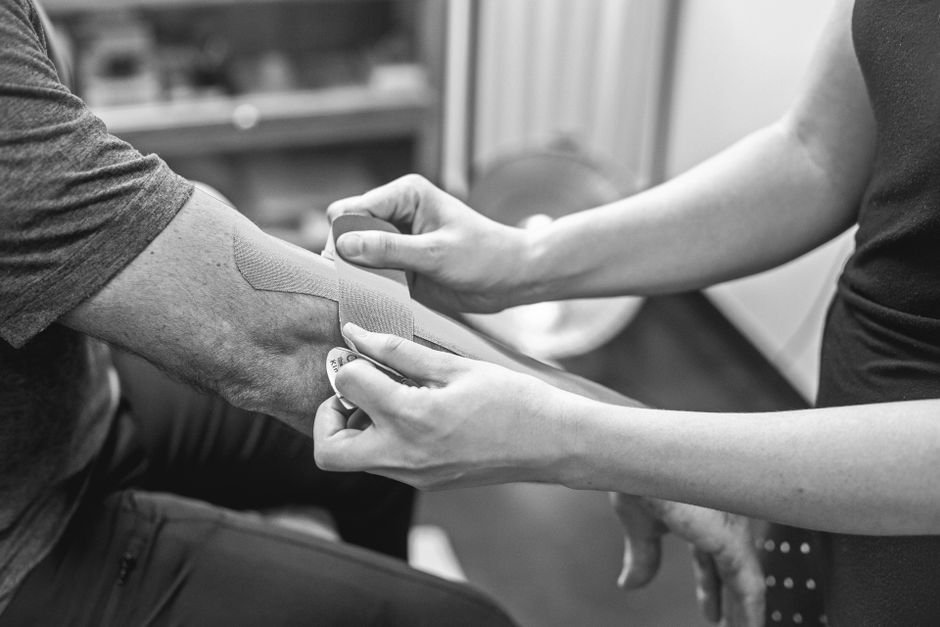
At Impact Sports Rehabilitation, an assessment for an elbow injury following an armbar confirms exactly what’s been affected and builds a recovery plan around your specific injury and your return-to-training goals. This runs alongside our rehabilitation consultations, and given the clinic’s genuine familiarity with combat-sports and BJJ-specific injuries, the rehab plan accounts for the real demands of getting back on the mats, not just general daily function. A grappling-specific return-to-training plan looks meaningfully different from a generic elbow rehab programme, since grip strength, the specific positions your sport demands, and confidence under live resistance all need to be rebuilt, not just pain-free general movement.
If you’ve tapped out of an armbar and your elbow still doesn’t feel right, Impact Sports Rehabilitation works with clients across Eccles, Trafford, and Salford. Ask about an online consultation if you’re further afield.
Frequently Asked Questions
I tapped in time, could my elbow still be injured?
Yes, genuinely, even tapping at what feels like the right moment doesn’t guarantee no damage occurred, particularly with a fast or forceful application. If you have ongoing pain, swelling, or reduced movement afterward, it’s worth getting it properly assessed rather than assuming tapping in time means everything is automatically fine.
How do I know if it’s a sprain or something more serious?
Signs like significant swelling, visible deformity, or a real inability to straighten or bend the elbow point toward something more significant than a mild sprain, but a proper assessment is the only reliable way to tell the difference. We wouldn’t want to diagnose your specific injury without seeing you.
Can I keep training if my elbow feels a bit off after an armbar?
This genuinely depends on what’s actually going on, so it’s worth getting assessed before deciding rather than training through discomfort and risking making it worse. Sharp pain, instability, or a sense the joint isn’t moving normally are reasons to stop and get checked rather than push through.
How long does recovery from an armbar injury typically take?
This varies considerably depending on what’s actually been affected and how significant the injury is, so we wouldn’t want to guess a fixed timeline without an assessment. Milder ligament strains often improve over weeks with appropriate rehab, while more significant injuries can take considerably longer.
Does building forearm strength actually help prevent this injury?
Many people find that stronger forearm and grip muscles offer some genuine protective benefit by resisting the hyperextending force, though this has real limits and doesn’t make the joint immune to injury from a fast or forceful armbar. It’s one useful factor among several, not a guarantee.
Is it normal for my elbow to still click or feel loose weeks after tapping out of an armbar?
This is genuinely worth getting assessed rather than assuming it will resolve on its own, since lingering clicking or a sense of looseness can sometimes point to a ligament that hasn’t fully recovered its normal stability. We wouldn’t want to guess at your specific situation without seeing you.
This article is provided for general educational purposes by Impact Sports Rehabilitation and does not constitute medical advice, diagnosis, or treatment, and does not predict or diagnose injury for the reader specifically. Persistent elbow pain, swelling, or reduced movement following an armbar should be properly assessed.