

Quick answer: Plantar tendonitis refers to irritation of one of the actual tendons running along the sole and inner side of the foot, distinct from the far more commonly discussed plantar fasciitis, which affects the plantar fascia, a different, non-tendon tissue on the bottom of the heel. The two can feel similar but involve genuinely different structures and often respond to different approaches. This is general education, not a diagnosis of your specific foot pain.
If you’ve been told you might have plantar tendonitis and assumed it’s just another name for plantar fasciitis, you’re not alone, the two get mixed up constantly. Here’s a straightforward, honest explanation of what plantar tendonitis actually is, why it’s genuinely different from plantar fasciitis, and why that distinction actually changes how it’s treated.
What Plantar Tendonitis Actually Is
Plantar tendonitis refers to irritation or inflammation of a tendon running along the sole or inner side of the foot, most often the posterior tibial tendon or one of the flexor tendons that help support the arch and control foot movement. Unlike the plantar fascia, which is a broad band of connective tissue, a tendon is the fibrous structure that connects a specific muscle to bone, meaning tendon issues are directly linked to how that particular muscle is functioning and being loaded.
This might sound like a small distinction, but it genuinely changes how the problem is approached, since a tendon issue reflects how that muscle-tendon unit is coping with load, rather than simply excess strain on a passive band of tissue.
Other tendons crossing the sole of the foot, including the flexor tendons that help curl the toes and push off during walking, can also be affected in a similar way, though the posterior tibial tendon is generally the most commonly discussed given its central supportive role. The posterior tibial tendon specifically plays a genuinely important role in supporting the inner arch of the foot and controlling how the foot rolls during walking and running. When this tendon becomes irritated or starts to weaken, the arch can gradually lose some of its usual support, which is part of why catching and addressing this early matters more than it might first seem, rather than simply waiting to see if discomfort settles on its own.
Plantar Tendonitis Vs Plantar Fasciitis: Clearing Up The Confusion
This is genuinely underexplained in most foot pain content, which tends to default straight to plantar fasciitis as if it’s the only possible explanation for pain in this area. The plantar fascia and the tendons running along the sole of the foot are simply different structures. The fascia is a passive band of tissue running from the heel to the toes, while a tendon like the posterior tibial tendon is the working end of an actual muscle, meaning it’s a dynamic structure that can be directly strengthened and loaded as part of treatment, unlike the fascia, which responds differently to exercise-based approaches.
Pain location often gives a genuine clue too. Plantar fasciitis classically causes a sharp, stabbing pain right at the bottom of the heel, especially with the first steps in the morning, while tendon-related pain more often sits along the inner or underside of the foot and ankle, sometimes extending further along the tendon’s path rather than staying fixed at one point. Neither pattern is a certain diagnosis on its own, but it’s a genuinely useful clue worth mentioning at an assessment.
Timing of symptoms can also differ, plantar fasciitis is classically at its worst with the very first steps after rest, like getting out of bed, and often eases somewhat once you’ve been moving for a few minutes. Tendon-related pain more often builds gradually during activity itself, or shows up more noticeably afterward, rather than being concentrated purely in those first few steps. This distinction isn’t perfectly reliable on its own, but it’s exactly the kind of detail worth describing accurately to whoever assesses you, since it genuinely helps narrow down what’s actually going on.

Common Causes And Who’s At Risk
Plantar tendonitis is generally an overuse issue, developing when a tendon is repeatedly loaded beyond what it can currently tolerate, whether through running, prolonged standing, or a sudden increase in training volume or intensity. Footwear that doesn’t adequately support the arch, and biomechanical factors like flat feet or overpronation, where the foot rolls inward excessively during walking or running, can also increase load on these specific tendons over time. Worn-out or unsupportive footwear is a genuinely common, easily overlooked contributing factor too, since shoes that have lost their structure no longer offer the support they once did, quietly increasing the demand placed on the tendon itself without the person necessarily noticing the change.
People who’ve recently increased their training load quickly, changed footwear, or spend long periods on their feet for work are genuinely more commonly affected, though it can develop in anyone given the right combination of load and recovery time. Age can play a role too, tendons naturally become somewhat less resilient over time, which is part of why posterior tibial tendon issues in particular are seen more often in older adults, though younger, active people are far from immune, especially with a sudden change in training load.
Symptoms That Point To A Tendon Issue
Pain along the inner side of the foot or ankle, particularly during or after activity, rather than isolated to the bottom of the heel, is a genuinely common pattern with tendon involvement. Some swelling along the tendon’s path, and pain that worsens with specific movements like pushing off during walking or standing on tiptoe, can also point toward a tendon issue specifically rather than the fascia. A genuinely useful thing to notice, and mention at an assessment, is any visible change in your arch height or how your foot sits, since this can be a sign the tendon is struggling to do its usual supportive job.
How It’s Treated
Treatment typically centres on progressively loading the affected tendon in a structured way, since tendons generally respond well to appropriately dosed exercise, alongside addressing contributing factors like footwear or training load. Rest alone often isn’t the most effective approach for tendon issues, since some degree of ongoing, appropriately managed loading tends to support better long-term tendon health than complete avoidance.
Left unaddressed for a long time, particularly with the posterior tibial tendon specifically, ongoing tendon dysfunction can gradually progress toward a more significant flattening of the arch, sometimes described in stages by clinicians, which is a genuinely important reason not to simply push through persistent symptoms indefinitely without getting things checked. Catching this earlier rather than later generally makes for a considerably more straightforward recovery, which is exactly why an early assessment is worth prioritising over a “wait and see” approach once symptoms have been present for more than a couple of weeks. This isn’t meant to be alarming, most cases addressed reasonably early respond well to a structured, progressive approach, but it’s a genuine reason not to dismiss persistent inner-foot or ankle pain as something that will simply resolve on its own with time alone.
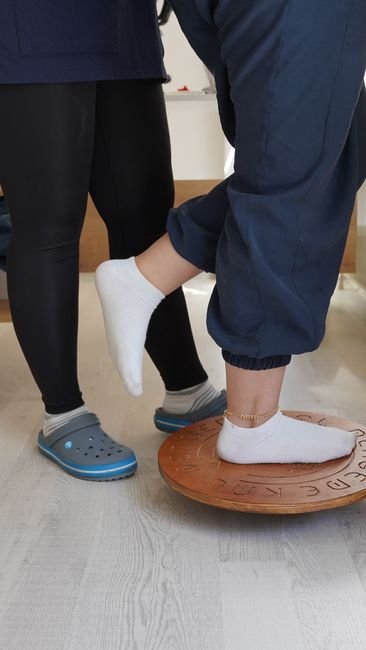
How Sports Rehab Supports Recovery
At Impact Sports Rehabilitation, an assessment for foot pain confirms whether a tendon, the fascia, or another structure is genuinely involved before building a recovery plan, rather than assuming based on symptoms alone. This runs alongside our rehabilitation consultations and Rocktape kinesiology taping service, both of which many people find genuinely useful as part of a wider recovery approach. A rehab programme for a tendon issue is typically built around progressively loading the specific tendon involved, guided by how it responds, rather than a generic “rest and stretch” approach handed to every foot pain case regardless of what’s actually causing it.
If you’re dealing with persistent foot pain and want to know exactly what’s involved, Impact Sports Rehabilitation works with clients across Eccles, Trafford, and Salford. Ask about an online consultation if you’re further afield.
Frequently Asked Questions
How do I know if I have plantar tendonitis or plantar fasciitis?
Pain location can offer a genuine clue, fasciitis classically causes sharp heel pain first thing in the morning, while tendon pain often sits along the inner foot or ankle, but a proper assessment is the only reliable way to confirm which structure is actually involved. We wouldn’t want to diagnose your specific pain without seeing you.
Can I keep running with plantar tendonitis?
This genuinely depends on severity and how the tendon responds to load, so it’s worth getting assessed before deciding rather than pushing through or stopping entirely on your own. Many people find some modified activity, rather than complete rest, forms part of a sensible recovery plan, but this needs to be guided by your specific situation.
How long does plantar tendonitis take to heal?
This varies considerably depending on severity and how consistently a loading programme is followed, so we wouldn’t want to give a fixed timeline without an assessment. Many people find meaningful improvement takes weeks of consistent, appropriately dosed exercise rather than a quick fix.
Will orthotics or different shoes actually help?
Many people find supportive footwear or orthotics genuinely helpful as part of a wider approach, particularly if biomechanical factors like overpronation are contributing, though they’re rarely a complete solution on their own. It’s worth discussing whether this applies to your specific situation at an assessment.
Is it actually possible to have both plantar fasciitis and a tendon issue at the same time?
Yes, genuinely, since both structures can be affected by similar contributing factors like footwear, training load, and foot mechanics. This is exactly why a proper assessment matters, rather than assuming only one structure is involved based on a quick guess.
Does plantar tendonitis mean my foot shape is permanently changing?
Not necessarily, many cases addressed reasonably early respond well to a structured loading programme without any lasting change to the foot itself. We wouldn’t want to speculate on your specific situation without an assessment, but this is genuinely a reason to get persistent symptoms checked sooner rather than later.
This article is provided for general educational purposes by Impact Sports Rehabilitation and does not constitute medical advice, diagnosis, or treatment, and does not diagnose the reader’s specific injury. Persistent or significant foot pain should be assessed by a qualified physiotherapist, sports therapist, or doctor.


