Quick answer: A rhomboid strain is a sudden, acute injury to one of the muscles between the shoulder blades, typically caused by a specific pulling, rowing, or twisting movement rather than posture alone, and generally responds well to protective early management followed by a gradual return to activity. This is general education, not a diagnosis of your specific pain, and a proper assessment is the right next step for confirmation.
A sudden pull or sharp twinge between your shoulder blades during a row, a swing, or an awkward lift is a genuinely common way a rhomboid strain announces itself. Here’s a plain-language look at what the rhomboid muscles do, what a strain typically feels like, and why it’s worth telling apart from the more general “rhomboid pain” a lot of other content lumps it in with.
What The Rhomboid Muscles Are And What They Do
The rhomboid major and rhomboid minor sit between your shoulder blade and spine, running diagonally across the upper back, and their main job is pulling the shoulder blade back and in toward the spine, the motion involved in rowing, pulling, and holding your shoulders back against gravity. Because they’re working almost constantly to stabilise the shoulder blade, whether you’re sitting at a desk or pulling a heavy weight, they’re a genuinely common source of upper back discomfort.
A rhomboid strain specifically refers to an actual tear or overstretch of the muscle fibres themselves, distinct from general tightness or fatigue in the area, which is an important distinction covered in more detail further down. Strains, like most muscle injuries, are also generally graded by severity, a mild overstretch of a few fibres tends to behave very differently to a more significant partial tear, which is another reason a proper assessment is genuinely useful rather than assuming the worst, or the mildest, case by default.
Common Causes Of A Rhomboid Strain
Quick, jerky motions during sport or daily activity are a genuinely common trigger, a rowing machine pulled too hard without warming up, a tennis or racket swing, or an awkward reach or twist can all place sudden, forceful demand on the rhomboids. Repetitive pulling movements, heavy rowing exercises done with poor form, or sustained overhead work can also strain the muscle over the course of a single session rather than through one obvious moment.
A sudden impact or direct blow to the upper back, a fall onto an outstretched arm, or a forceful grappling exchange in combat sports can also strain the rhomboids, which is a mechanism we see fairly often given the clinic’s experience working with BJJ and MMA athletes. Poor lifting technique, particularly rounding the upper back under load, is another frequently cited contributor.
Insufficient warm-up before an explosive pulling movement is worth calling out specifically, since tissue that hasn’t been adequately prepared tolerates sudden, forceful demand noticeably less well than tissue that’s had a chance to warm through gradually. Muscle fatigue toward the end of a heavy training session, when the rhomboids have already done considerable work stabilising the shoulder blade, is a similarly common contributing factor that’s easy to overlook when trying to pin down what actually caused a strain.
Rhomboid Strain Or Rhomboid Pain? Why The Distinction Matters
Most content on this topic, including our own broader rhomboid muscle pain guide, covers rhomboid discomfort as a general category, the kind of nagging, postural ache that builds up gradually from hours at a desk. A genuine rhomboid strain is a narrower thing, a discrete injury to the muscle fibres that typically has an identifiable moment it started, during a specific pull, twist, or impact, rather than developing slowly over a working day.
This matters because the two tend to respond differently in the early stages. Postural rhomboid pain often eases with movement, stretching, and desk-setup changes, while a genuine strain usually needs a period of relative protection first, since continuing to load a freshly strained muscle the way you might stretch out general tightness can aggravate it. Telling the two apart isn’t always straightforward from home, which is exactly why an assessment is useful if you’re not sure which one you’re actually dealing with.
How A Rhomboid Strain Typically Feels
A dull ache or sharp, stabbing discomfort between the shoulder blades is the classic presentation, often worse with specific movements like reaching overhead, pulling the shoulder blades together, or rowing motions, rather than being constant regardless of what you’re doing. Tenderness to direct touch over the muscle, sometimes alongside a feeling of tightness or spasm, is also commonly reported, and pain that clearly worsens with a specific pulling or rowing motion, rather than staying flat regardless of activity, tends to point more toward a genuine strain than general postural tightness.
Some people also notice the pain is more one-sided than the more diffuse, often bilateral ache typical of posture-related discomfort, though this isn’t a reliable rule on its own, and a proper assessment is the more dependable way to confirm what’s actually going on. Swelling or visible bruising is less common with rhomboid strains than with some other muscle injuries, given how deep and well-covered the muscle is, so its absence doesn’t rule out a genuine strain the way it might with a more superficial muscle.
General Management Approaches People Often Use
Early on, many people find that relative rest from the specific aggravating movement, rather than complete inactivity, alongside gentle pain-free motion helps more than pushing through or fully immobilising the area. Ice in the first day or two, followed by heat once the acute soreness has settled, is a commonly used approach for managing discomfort, and gentle, pain-free stretching is often introduced gradually rather than immediately.
Correcting obvious contributing factors, a desk setup that has you hunched forward for hours, or rowing technique that rounds the upper back under load, tends to support recovery and reduce the chance of the same strain recurring once you’re back to full activity. Deep tissue work and myofascial release, whether from a sports massage therapist or through gentle self-massage with a foam roller, is something many people find genuinely helpful once the acute, sharpest phase has settled, though it’s generally best introduced once the area can tolerate direct pressure comfortably rather than immediately after injury.
Gradually reintroducing the rowing or pulling movements that caused the strain, starting light and building load back up over time, tends to work better than either avoiding them indefinitely or jumping straight back to the weight you were using beforehand.
When Upper Back Pain Needs Professional Assessment
Pain that doesn’t start to ease within a week or two of sensible early management, that’s severe enough to limit daily activity, or that comes with numbness, tingling, or weakness down the arm, is worth getting properly assessed rather than continuing to self-manage, since those additional symptoms can point toward something involving the nerves or spine rather than the muscle alone. Pain following a significant fall or impact is also worth having checked promptly, both to rule out anything more serious and to confirm the right starting point for recovery. Persistent pain that hasn’t responded to a couple of weeks of sensible self-management is also a reasonable point to stop guessing and get an actual assessment, rather than continuing to try new things at home indefinitely.
Pain that spreads into the chest, or comes with shortness of breath or a tight, crushing quality rather than a clear muscular ache, warrants prompt medical attention rather than assuming it’s simply the rhomboids, since upper back and chest symptoms can occasionally overlap with more serious causes that need urgent assessment.
What To Expect When You Book An Assessment With Impact Sports Rehab
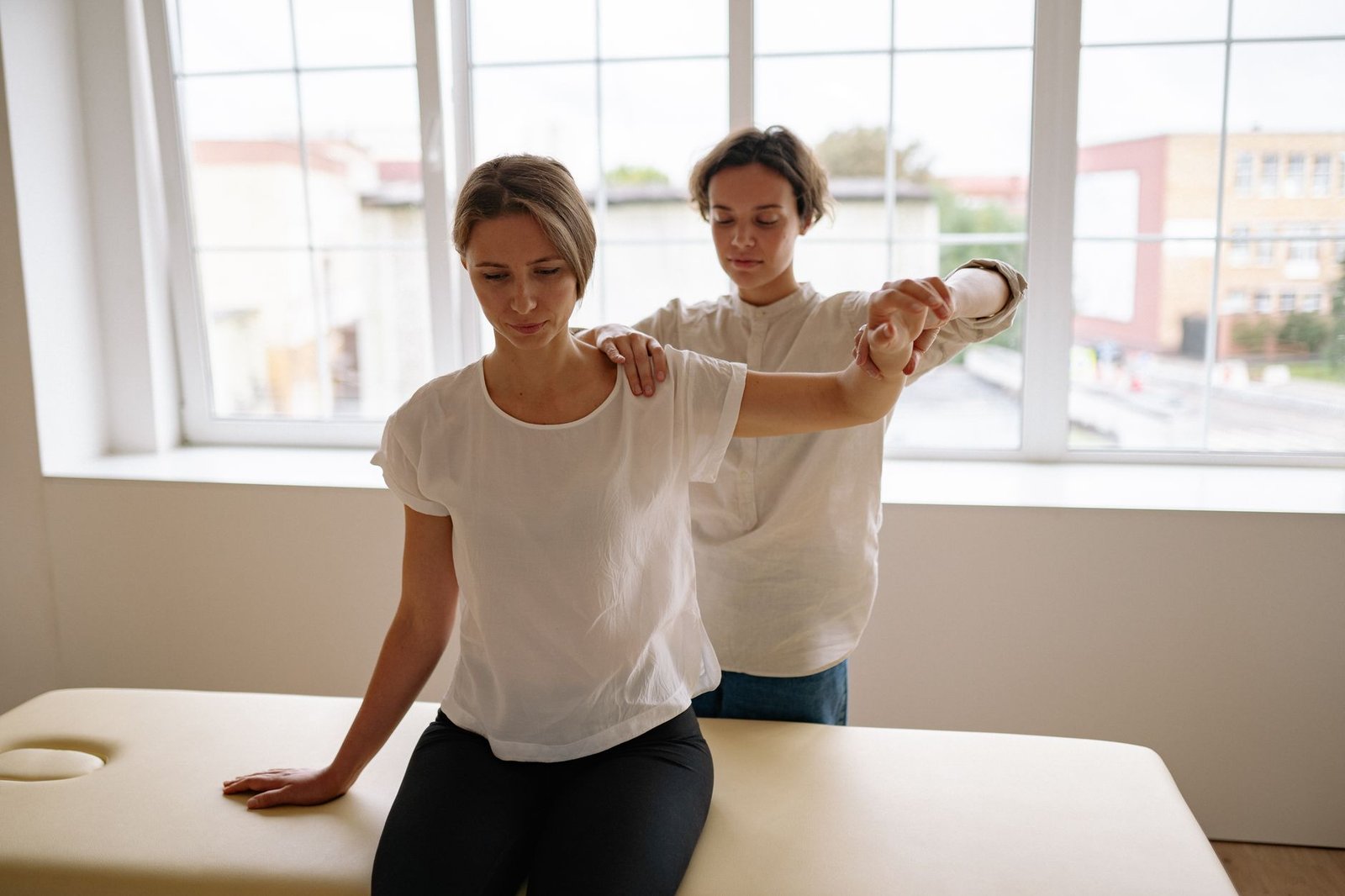
At Impact Sports Rehabilitation, an assessment for suspected rhomboid strain confirms whether you’re dealing with an acute strain or more general postural discomfort, and builds a recovery plan around whichever it actually is. This sits alongside our broader coverage of trap pain for the neighbouring muscle group, since the two are frequently confused with one another.
If you’re dealing with a suspected rhomboid strain, Impact Sports Rehabilitation works with clients across Eccles, Trafford, and Salford on thorough assessment and recovery support. Ask about an online consultation if you’re further afield.
Frequently Asked Questions
Is this muscular or could it be something related to my spine?
Most upper back pain between the shoulder blades is muscular, but a proper assessment is the reliable way to rule out anything involving the spine or nerves, particularly if you notice numbness, tingling, or weakness down the arm. We wouldn’t want to diagnose your specific pain without seeing you.
How long does a rhomboid strain typically take to settle?
This varies by severity, milder strains often ease within a couple of weeks with sensible management, while more significant ones can take longer, so we wouldn’t want to guess a fixed timeline without an assessment. A physiotherapist can give you a more specific sense based on your particular injury.
Is it safe to keep lifting or training with this pain?
Continuing to load the aggravating movement, heavy rowing or pulling in particular, tends to slow recovery in the early stages, so many people find backing off that specific movement while staying otherwise active works better than pushing through. A practitioner can advise on what’s appropriate for your specific stage of recovery.
Why does it hurt more when I reach overhead or row?
The rhomboids are directly involved in pulling the shoulder blades together, so movements like rowing, reaching overhead, or pulling naturally place more demand on a strained muscle than staying still. This pattern is actually a useful clue that points toward the muscle itself, though an assessment is still the best way to confirm.
Should I use heat or ice?
Many people find ice more useful in the first day or two to manage acute soreness, then switch to heat once the sharper discomfort has settled, to help relax the muscle and support movement. Your practitioner can advise on timing based on how your specific injury is progressing.
This article is provided for general educational purposes by Impact Sports Rehabilitation and does not constitute medical advice, diagnosis, or treatment, and does not diagnose the reader’s specific pain. Always seek the guidance of a qualified physiotherapist, sports therapist, or doctor for individual assessment and diagnosis, and stop and seek professional advice if you experience worsening pain, numbness, or weakness.