
Quick answer: An achilles tendinopathy rehab protocol typically follows a staged approach, starting with isometric loading to manage pain, then progressing through heavier strengthening work, and finally sport-specific loading, with progression judged by how the tendon responds rather than a fixed calendar. Most people see gradual improvement over several months, though individual timelines vary considerably. A proper assessment is the right starting point before beginning any protocol.
If you’ve been told you have Achilles tendinopathy, you’ve probably already discovered there’s no shortage of conflicting advice online about what an achilles tendinopathy rehab protocol should actually involve, some sources suggest rest, others suggest pushing through pain, and it’s genuinely hard to know which advice actually applies to your situation. Here’s a clear, staged overview of how rehab typically progresses, without pretending every case follows an identical timeline.
What Achilles Tendinopathy Is And Why A Staged Approach Is Used
Achilles tendinopathy describes a painful, often gradually worsening change in the Achilles tendon, usually related to how it’s been loaded over time rather than a single traumatic event. Unlike an acute injury with a clear before-and-after moment, tendinopathy tends to develop from a mismatch between the load placed on the tendon and its current capacity to handle that load, whether that’s a sudden increase in running volume, a change in training surface, or simply years of cumulative wear.
A staged approach is used because tendon tissue responds to loading in a fairly predictable way, too little load and the tendon doesn’t adapt, too much too soon and symptoms flare. Rehab protocols are built around gradually increasing demand on the tendon in a way that’s intended to encourage it to remodel and strengthen, rather than either resting it completely or pushing through pain indiscriminately.
It’s also worth understanding that Achilles tendinopathy tends to fall into one of two broad patterns depending on where along the tendon the symptoms sit, mid-portion, a few centimetres above where the tendon attaches to the heel bone, or insertional, right at the attachment point itself. The general staged-loading principle applies to both, but the specific exercises and ranges of movement used often differ between the two, which is one reason a proper assessment matters before starting a protocol rather than following a generic online programme that doesn’t distinguish between them.
The Early Stage: Isometric Loading To Manage Pain
Most staged protocols begin with isometric exercise, holding a muscle contraction without the joint actually moving, such as a sustained calf raise held in one position. Isometric loading is typically introduced early because it can begin loading the muscle-tendon unit in a way that many people tolerate even when pain limits their ability to do more dynamic movement.
This early stage is generally less about building significant strength and more about calming the tendon down while keeping it loaded rather than completely rested, since complete rest tends to leave the tendon deconditioned and doesn’t address the underlying loading mismatch that contributed to the problem in the first place. Isometric loading is typically introduced with a hold of somewhere around thirty to forty-five seconds, repeated for several sets, with the position adjusted to a knee-straight or knee-bent variation depending on which is more comfortable and where along the tendon the symptoms are located.
Alongside the exercise itself, early-stage management often includes some genuinely practical load adjustments outside the gym, temporarily reducing running volume or intensity, modifying footwear, or adjusting training surfaces, since the tendon still needs to cope with everyday walking and daily activity even while a formal programme is getting underway.
The Middle And Later Stages: Progressive Strengthening And Return To Sport
Once early-stage pain is more manageable, protocols typically progress to isotonic strengthening, exercises like standing and seated calf raises moved through a full range, gradually increasing resistance over weeks. Research on structured, staged loading programmes for Achilles tendinopathy has shown genuinely meaningful improvement using this kind of approach, with one study using a four-stage isometric-and-progressive-loading programme reporting substantial improvement in validated tendon symptom scores alongside measurable improvement on tendon ultrasound imaging over a twelve-month follow-up, with high adherence and no safety concerns reported.
The final stage typically introduces more demanding, sport-specific loading, plyometric work like hopping and bounding, and gradually reintroducing the specific movements your sport or training demands, since a tendon that tolerates a gym-based calf raise well doesn’t automatically tolerate the sudden, high-force demands of sprinting or grappling without a genuine bridge between the two. This stage is often where people are most tempted to rush, since strength has usually returned to a reasonable level by this point, but plyometric and high-speed loading places genuinely different demands on a tendon than controlled strengthening work, so a gradual build here matters just as much as it did earlier in the programme.
How Progression Is Typically Judged
Rather than a fixed number of weeks, progression through a protocol is typically judged by how the tendon responds to the current stage, using pain as a guide rather than an absolute stop signal. A commonly used general rule some clinicians apply is that mild discomfort during loading that settles within a day or so suggests the current load is appropriate, while pain that’s noticeably worse the next morning, or that persists beyond a day, suggests scaling back slightly before progressing further.
This individualised, response-based approach is genuinely why two people with what looks like the same diagnosis can end up on quite different timelines, tendon capacity, training history, age, and how consistently the programme is followed all influence how quickly someone can reasonably progress. Some clinicians also use a simple daily pain-rating scale, checking in on tendon soreness both immediately after loading and again the following morning, as a genuinely practical way of tracking whether the trend across a week or two is heading in the right direction, rather than fixating on how any single session felt.
Common Mistakes People Make Rushing A Tendinopathy Protocol
The most common mistake is skipping stages, jumping from early isometric work straight to sport-specific loading because symptoms feel manageable, without properly building the intermediate strengthening capacity in between. Another frequent issue is stopping the programme as soon as pain settles, rather than continuing through the later stages that actually build the tendon’s capacity to tolerate future load, which is a large part of why tendinopathy has a genuine tendency to return if rehab is cut short.
Complete rest for an extended period is another common misstep, since prolonged inactivity tends to leave the tendon deconditioned and doesn’t address the loading capacity issue that’s often central to the problem. Equally, pushing straight through significant pain without any modification tends to aggravate symptoms rather than build genuine tolerance.
A less obvious mistake is ignoring the factors outside the gym that continue loading the tendon regardless of how well the formal exercise programme is going, an unchanged running surface, unsupportive footwear, or a sudden spike in general activity can all quietly undermine an otherwise well-structured protocol. Consistency also matters more than people often expect, a protocol followed sporadically, with long gaps between sessions, tends to progress considerably more slowly than the same programme followed on a regular, predictable schedule.
What To Expect When You Book An Assessment With Impact Sports Rehab
At Impact Sports Rehabilitation, a rehabilitation consultation for suspected Achilles tendinopathy starts with understanding your specific training history, symptom pattern, and current tendon capacity, before building a staged plan that reflects where you’re actually starting from rather than a generic template. This is worked through alongside Rocktape taping or sports massage where appropriate as supportive tools alongside the loading programme itself, and your practitioner will reassess periodically to confirm you’re genuinely ready to move to the next stage rather than relying on how confident you feel in any single session. If you’re also working through the general categories of Achilles tendon exercises at home, a proper assessment helps confirm you’re progressing appropriately rather than guessing.
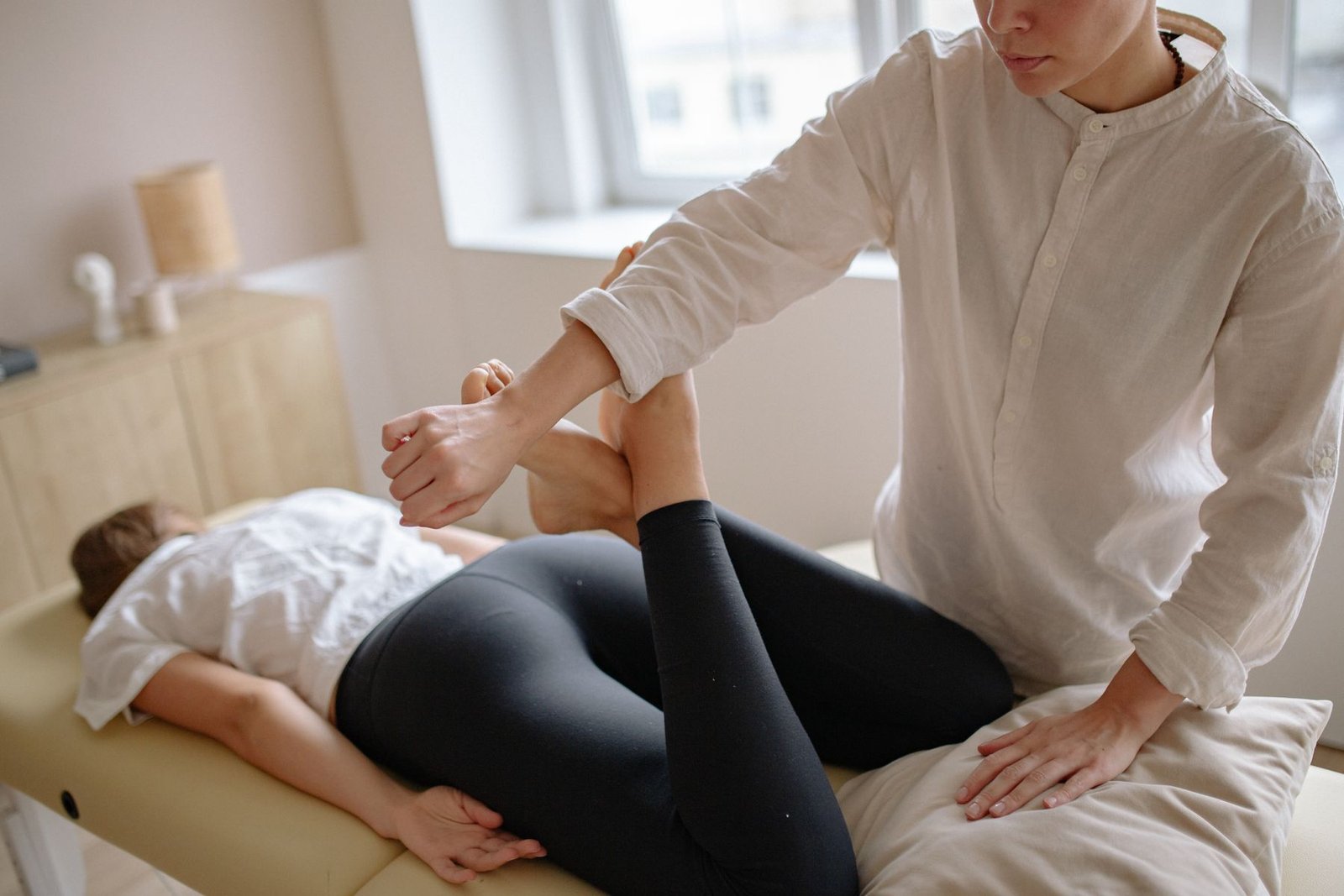
If Achilles pain is holding back your training, Impact Sports Rehabilitation works with clients across Eccles, Trafford, and Salford on building a genuinely staged, individualised rehab plan. Ask about an online consultation if you’re further afield.
Frequently Asked Questions
How long does a typical Achilles tendinopathy rehab protocol take?
Timelines vary considerably between individuals, but many staged protocols run over several months rather than weeks, since tendon tissue adapts relatively slowly compared to muscle. A physiotherapist or sports therapist can give you a more specific sense of timeline once they’ve assessed your particular presentation.
Should my pain fully disappear before I progress to the next stage?
Not necessarily, many protocols allow for mild, settling discomfort during the early and middle stages rather than requiring complete pain resolution before progressing. That said, any pain that’s worsening rather than settling is a sign to slow down and get reassessed rather than pushing forward regardless.
Is it safe to keep training while doing a tendinopathy protocol?
This depends heavily on your specific symptoms and what training you’re doing, some modified training alongside a protocol is often reasonable, while more aggressive training can genuinely interfere with progress. We’d recommend discussing your specific training load with whoever is guiding your rehab rather than assuming either extreme is automatically right.
Will I need surgery for Achilles tendinopathy?
The large majority of Achilles tendinopathy cases are managed successfully without surgery through a staged loading programme, with surgery typically only considered after a genuinely thorough trial of conservative rehab hasn’t resolved things. Your treating clinician is best placed to advise whether your specific case warrants that conversation.
Why do I keep re-aggravating it even when I follow the exercises?
This is a common frustration, and it’s often related to progressing too quickly between stages, inconsistent loading, or a training demand outside the gym that isn’t accounted for in the formal programme. Getting reassessed to identify what’s actually driving the setbacks, rather than assuming the exercises themselves are wrong, tends to be more productive than repeatedly restarting from scratch.
This article is provided for general educational purposes by Impact Sports Rehabilitation and does not constitute medical advice, diagnosis, or treatment. It outlines general stages a rehab protocol typically follows, not a personalised exercise prescription. Always seek the guidance of a qualified physiotherapist, sports therapist, or doctor for individual assessment and diagnosis before starting any new exercise programme, especially following an injury, and stop and seek professional advice if you experience worsening pain, numbness, or swelling.


