Quick answer: The best shoulder exercises for baseball players target the rotator cuff and the scapular stabilisers together, not the rotator cuff alone, since throwing relies on both working in sync. A typical routine includes external rotation work for the cuff, scapular retraction and wall slide drills for the shoulder blade, and progressive loading built around your position and throwing volume. Anyone with current shoulder pain, weakness, or a recent injury should get a proper assessment before starting, since these exercises aren’t appropriate for every stage of injury.
Search “baseball shoulder exercises” and you’ll find no shortage of rotator cuff drills, external rotations, internal rotations, the same handful repeated across most lists you’ll come across. They’re not wrong exactly, but they’re incomplete, and if you’ve been doing them faithfully and still feel like something’s missing, that’s probably why. Throwing a baseball at speed, over and over, across a season, puts the shoulder through demands that a generic gym shoulder workout was never built to prepare you for. Here’s a genuinely fuller picture of what actually protects a throwing shoulder, rotator cuff work included, but not rotator cuff work alone.
Why The Throwing Shoulder Needs Its Own Approach
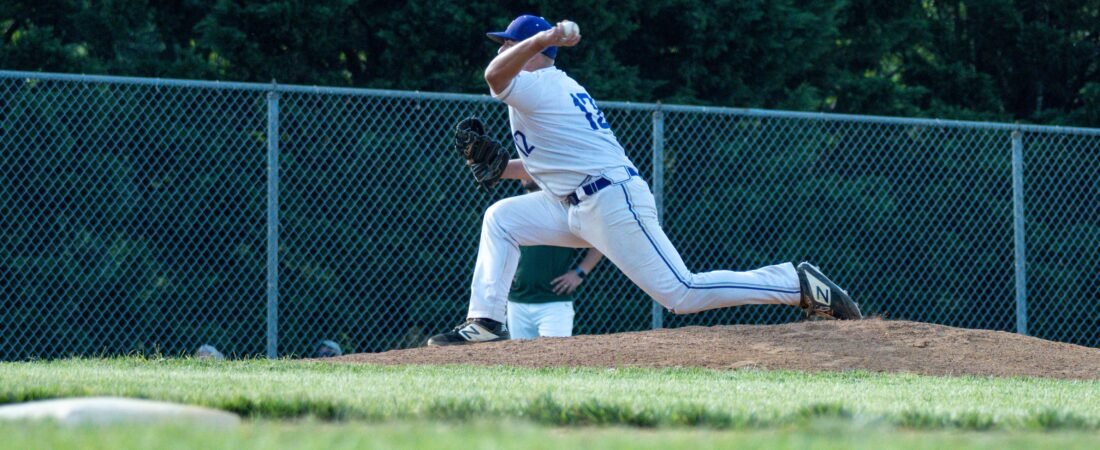
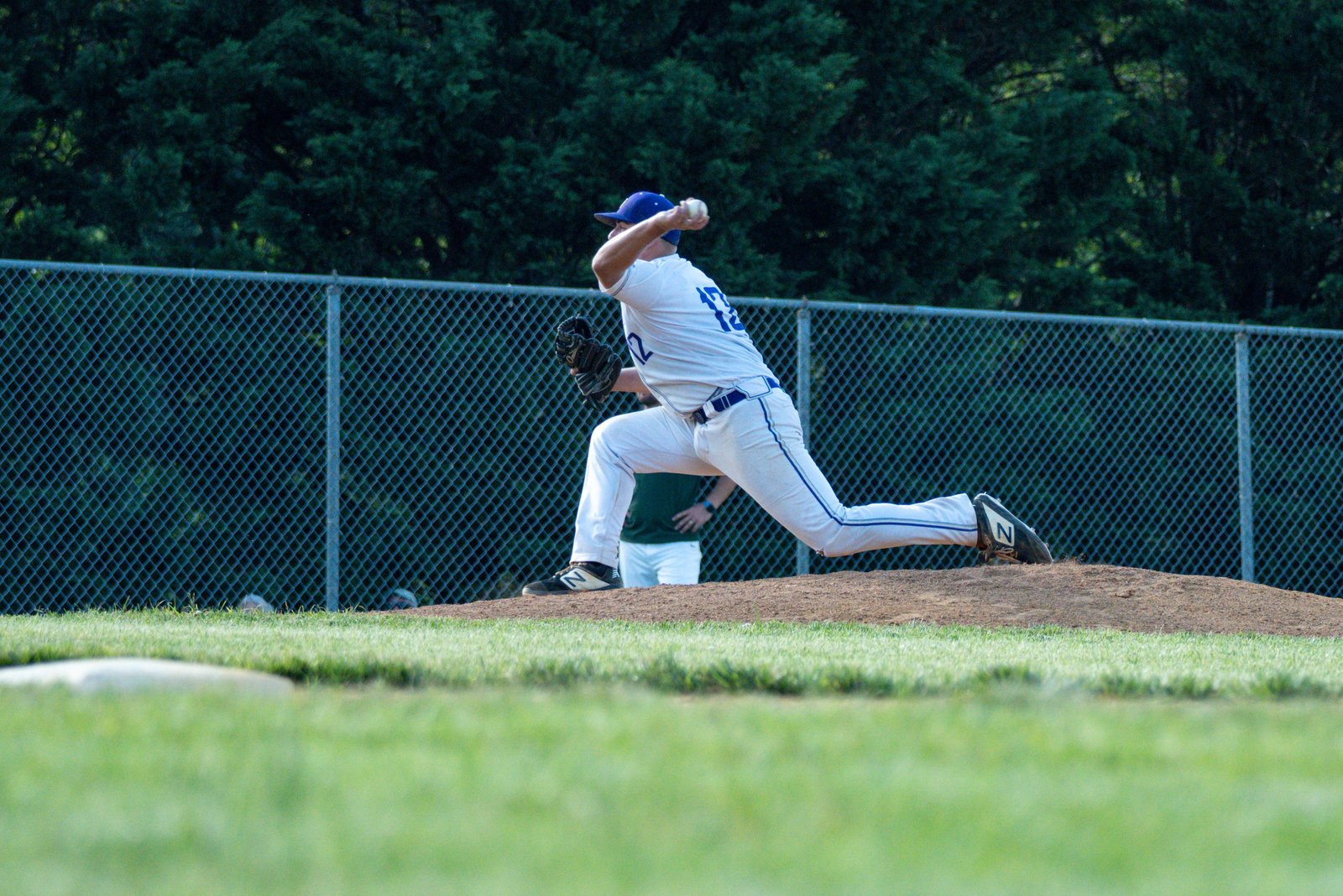
The throwing motion asks more of the shoulder than almost any other movement in sport. In the fraction of a second between the arm reaching maximum external rotation and the ball leaving your hand, the shoulder joint is decelerating an arm moving at genuinely extreme angular velocity, and doing it through a joint that’s built for mobility rather than raw stability. That’s a fundamentally different demand to what a footballer’s or gym-goer’s shoulder deals with, and it’s exactly why a generic shoulder programme, built around general strength and mobility, tends to leave gaps that only show up once you’re back on the mound or in the batter’s box throwing at real intensity.
The rotator cuff, four small muscles wrapping the shoulder joint, does a lot of that deceleration work, which is why cuff strengthening rightly gets so much attention in baseball training content. But the cuff doesn’t work in isolation. It sits on the shoulder blade, and if the shoulder blade itself isn’t stable and moving well, the cuff ends up working harder than it should to compensate, which is a genuinely common pattern we see in throwing athletes who’ve done plenty of cuff work but still feel something’s off. A proper approach trains both together, deliberately, rather than assuming cuff strength alone covers it.
Rotator Cuff Strengthening Exercises For Throwers
The deceleration phase, the moment right after ball release where the arm is rapidly slowing down, is where the rotator cuff, particularly the infraspinatus and teres minor, works hardest, so that’s the phase worth building strength around specifically. Dumbbell or band external rotation, with your elbow tucked against your side or a rolled towel and rotating the forearm outward, directly targets these deceleration muscles. Doing this slowly and with control matters more than the weight used, since the goal is building genuine capacity in the muscle fibres that actually slow your arm down after every throw, not moving heavy load quickly.
Internal rotation work, rotating the forearm inward against resistance, trains the subscapularis, which plays a real role in stabilising the front of the joint and helps accelerate the arm during the throw itself. Sleeper stretches, lying on your throwing side with your arm at 90 degrees and gently rotating it inward, address the posterior capsule tightness that develops in a lot of throwers over a season, a genuinely common finding that, left unaddressed, can quietly shift stress onto the cuff over time. Many throwing athletes find that a consistent, moderate-volume cuff routine done several times a week, rather than an occasional heavy session, tends to hold up better across a long season.
Scapular Stability Work Most Players Skip
This is genuinely the part most baseball shoulder exercise lists leave out almost entirely, and it matters more than most players realise. The shoulder blade isn’t a fixed anchor point, it’s meant to glide, rotate, and tilt through the throwing motion in a coordinated pattern called scapulohumeral rhythm, and when that pattern breaks down, a condition often called scapular dyskinesis, the whole kinetic chain of the throw gets disrupted well before the ball ever leaves your hand. A shoulder blade that isn’t moving and stabilising properly forces the rotator cuff and other small stabilisers to work overtime trying to compensate for a foundation that isn’t holding up its end.
Scapular wall slides, sliding your arms up and down a wall while keeping your shoulder blades engaged and your lower back flat, retrain the coordinated upward rotation the scapula needs through an overhead throwing motion. Prone Y-T-W raises, lying face down and lifting your arms into a Y shape, then a T shape, then a W shape, target the lower and middle trapezius and rhomboids, the muscles most responsible for pulling the shoulder blade into a stable, retracted position rather than letting it wing or tip forward under load. A simple scapular retraction hold, squeezing your shoulder blades back and slightly down and holding the position for several seconds, is a genuinely underused isometric drill that builds the endurance these stabilisers need to hold up across dozens of throws in a game, not just a handful of reps in the gym.
Band external rotation with your elbows bent to 90 degrees and held out from your body, rather than tucked to your side, adds a scapular stability demand on top of the cuff work itself, since it forces the shoulder blade to hold its position under load through a wider range. This version genuinely deserves a regular place in a throwing athlete’s routine alongside the more familiar tucked-elbow variation, not instead of it.
Building These Into A Weekly Routine
A practical routine folds rotator cuff and scapular work into the week around your actual throwing and hitting schedule, rather than treating it as a separate, occasional add-on. Many throwing athletes find that light band work, external rotation, scapular retraction holds, and a few wall slides, done as part of a genuine warm-up before throwing, primes the shoulder without fatiguing it before you actually need it. A more focused strengthening session, with slightly heavier resistance and full sets across the cuff and scapular exercises covered above, tends to fit best on a day with lighter throwing volume or a full rest day, giving the muscles time to adapt without competing against throwing fatigue.
Consistency across the week matters more than any single big session, since the shoulder is being asked to tolerate repeated high-velocity load throughout a season, not just survive one hard training day. Two to three focused sessions a week, alongside the lighter daily warm-up work, is a genuinely sustainable pattern most players can maintain without it eating into throwing or hitting practice. Skipping the routine during a busy stretch of games, then trying to make up for it with one long session, tends to be less effective than staying consistent even at a lighter volume.
How Sports Rehab Builds A Throwing-Specific Plan
Every throwing shoulder is carrying a slightly different history, previous niggles of soreness, a position that demands a specific arm slot, a scapula that moves slightly differently to the next player’s, and a generic exercise list can only account for so much of that. At Impact Sports Rehabilitation, a Rehabilitation Consultation looks at how your specific shoulder and scapula are actually moving and loading, and builds a throwing-specific strengthening plan around what’s genuinely relevant to your position, throwing volume, and any history of tightness or discomfort, rather than handing over the same generic sheet given to every player who walks through the door.
Signs Your Shoulder Needs Assessment, Not Just Exercise
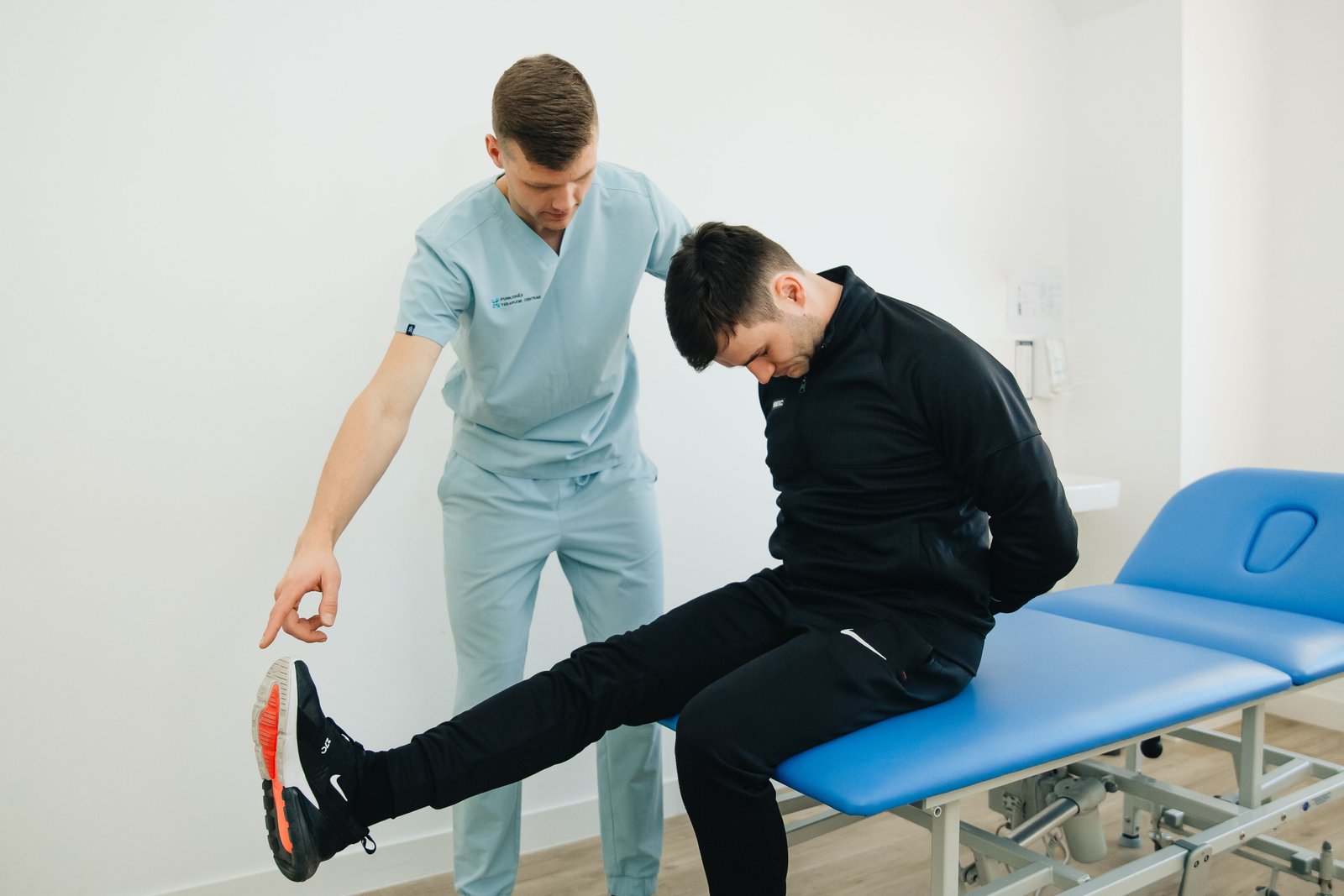
There’s a real, meaningful line between a shoulder that would benefit from more structured strengthening work and one that needs a proper assessment before any exercise programme continues, and it’s worth being honest about where that line sits. Pain during the throwing motion itself, rather than general muscle fatigue after a session, is a genuine signal worth taking seriously rather than working through. A noticeable drop in throwing velocity that isn’t explained by simple fatigue or a lighter training block, particularly if it’s come on gradually, can point to something beyond what strengthening alone will fix.
A feeling of instability, the shoulder feeling like it’s shifting or not quite staying in place during the throwing motion, is another signal that warrants assessment rather than continued self-directed exercise, since that sensation often points to something a strengthening programme alone won’t resolve safely without first understanding what’s actually happening in the joint. If any of this sounds familiar, it’s genuinely worth getting checked before adding load to a shoulder that might need a different kind of attention first.
If you’re a baseball or softball player looking to build a genuine, throwing-specific shoulder strengthening plan, or you’ve noticed something in your shoulder that doesn’t feel quite right, Impact Sports Rehabilitation works with throwing athletes and everyday sports players across Eccles, Salford, Trafford, and the wider Greater Manchester area on exactly this. Ask about an online consultation if you’re playing or training further afield.
Frequently Asked Questions
How many times a week should I actually do these baseball shoulder exercises?
Most throwing athletes find two to three focused strengthening sessions a week, alongside lighter band work as part of a throwing warm-up, is a sustainable pattern across a season. Your actual throwing volume and any history of shoulder tightness should shape the exact frequency, which is where a proper assessment genuinely helps.
Is it normal for my shoulder to feel tired after these exercises, or does that mean I’m doing something wrong?
A degree of muscle fatigue after a focused strengthening session is genuinely normal and expected, especially when you’re building capacity in muscles like the cuff that don’t get much direct attention elsewhere. Sharp pain, or fatigue that doesn’t ease off within a day or so, is different and worth getting looked at rather than pushing through.
I already do rotator cuff exercises, so do I really need to add scapular work too?
Genuinely, yes, and this is exactly the gap most baseball shoulder exercise lists leave out. The rotator cuff and the scapular stabilisers work as a team during throwing, and cuff strength alone often can’t fully compensate for a shoulder blade that isn’t stabilising properly through the motion.
Can these exercises actually prevent a shoulder injury from happening?
No exercise programme can promise that, and we wouldn’t want to claim otherwise. Many players find that consistent cuff and scapular strengthening supports a more resilient throwing shoulder over a season, but it works alongside proper throwing mechanics, workload management, and getting checked promptly if something feels off, not as a guarantee on its own.
Should I stop these exercises if my shoulder hurts during a game?
Pain during the throwing motion itself, rather than general muscle fatigue afterward, is worth taking seriously rather than continuing to train through. In our experience, getting a proper assessment at that point, rather than waiting to see if it settles on its own, tends to lead to a quicker and more reliable return than pushing on regardless.
This article is provided for general educational purposes by Impact Sports Rehabilitation and does not constitute medical advice, diagnosis, or treatment. These exercises are intended for uninjured or returning-to-play athletes and are not appropriate for every stage of injury. Anyone with current shoulder pain, weakness, or a recent injury should seek a proper assessment before starting an exercise programme. Always seek the guidance of a doctor or other qualified health provider with any questions about your specific injury.