

Quick answer: Pain in back of head at base of skull usually comes from tight suboccipital muscles, joint irritation in the upper neck, or nerve sensitivity in the area, most often linked to posture, stress, or sleeping position. Most cases are musculoskeletal and settle with time and appropriate treatment. A sudden severe “thunderclap” headache, pain following significant trauma, fever with neck stiffness, or symptoms like weakness, numbness, or vision changes need emergency medical attention immediately.
Pain that sits right at the point where your neck meets your skull has a way of making itself impossible to ignore, whether it’s a dull ache that builds through the day or something sharper that catches you when you turn your head. Understanding what’s actually there, and what’s likely behind the pain, is the first step to knowing what to do about it.
What’s Actually At The Base Of Your Skull
This area is genuinely busy anatomically. A group of small, deep muscles called the suboccipitals sit right where your skull meets the top of your spine, and their job is fine control of head position, small adjustments in tilt and rotation rather than big movements. Because they’re small and constantly active, especially when your head is held forward for long periods, they’re prone to becoming tight and tender.
Just below them, the upper joints of your cervical spine, particularly the very top two vertebrae, allow much of your neck’s rotation and can become a genuine source of pain when irritated. The greater and lesser occipital nerves also pass through this region, travelling up from the neck and through the muscles here before spreading sensation across the back of your scalp, which is why irritation in this area can sometimes produce pain that feels like it’s radiating rather than staying in one spot.
Understanding that muscles, joints, and nerves are all packed into this relatively small area helps explain why base-of-skull pain can feel different from person to person, and even from one episode to the next in the same person.
The Most Common Reasons This Area Gets Painful
Muscle tension is by far the most common everyday cause, often building gradually from a forward head posture at a desk, prolonged phone or screen use, or simply carrying stress in your shoulders and neck without fully realising it. This kind of tension tends to build through the day and often eases somewhat with movement or a change in position.
Sleeping position plays a bigger role than many people expect, particularly sleeping on your front with your head turned to one side for hours, or using a pillow that doesn’t properly support your neck’s natural curve. Minor strains, from an awkward movement, a poor night’s sleep, or simply overdoing a workout that involved a lot of neck engagement, can also leave this area sore for a few days without anything more serious going on.

How To Tell Muscular Pain From A Headache Originating Here
Most articles on this topic blur muscular base-of-skull pain and headache together as if they’re the same thing, which genuinely doesn’t help you understand what you’re dealing with. A useful distinction is that muscular pain tends to feel localised and tender to the touch, often worse with certain neck movements or after holding one position too long, and it usually responds to changing position, gentle movement, or direct pressure on the tender spot.
A headache originating from this area, by contrast, often spreads forward toward the forehead or behind one eye, can feel more constant regardless of neck position, and doesn’t necessarily ease with the same movement-based relief that helps muscular pain. If pressing directly on the tender muscles at the base of your skull genuinely reproduces or eases your main pain, that leans toward a muscular cause, whereas pain that feels present no matter what you do with your neck leans more toward a headache pattern.
If you suspect this is genuinely more headache than muscle, our companion article on headache at base of skull goes deeper into the specific headache types associated with this area and how to tell them apart.
Red Flags That Need Urgent Attention
Most base-of-skull pain, even when it’s genuinely uncomfortable, is musculoskeletal and not dangerous. That said, certain symptoms are exceptions that need emergency medical attention rather than home care or a routine appointment. A sudden, severe headache that comes on like a thunderclap, reaching maximum intensity within seconds or minutes, is one of the clearest warning signs.
Pain following significant trauma, such as a fall or a blow to the head, fever combined with neck stiffness, and any neurological symptoms like weakness, numbness, confusion, or vision changes, all warrant urgent medical assessment. These are uncommon presentations, but they’re exactly the kind of symptoms that shouldn’t be waited out.
How Sports Rehab Approaches This Kind Of Pain
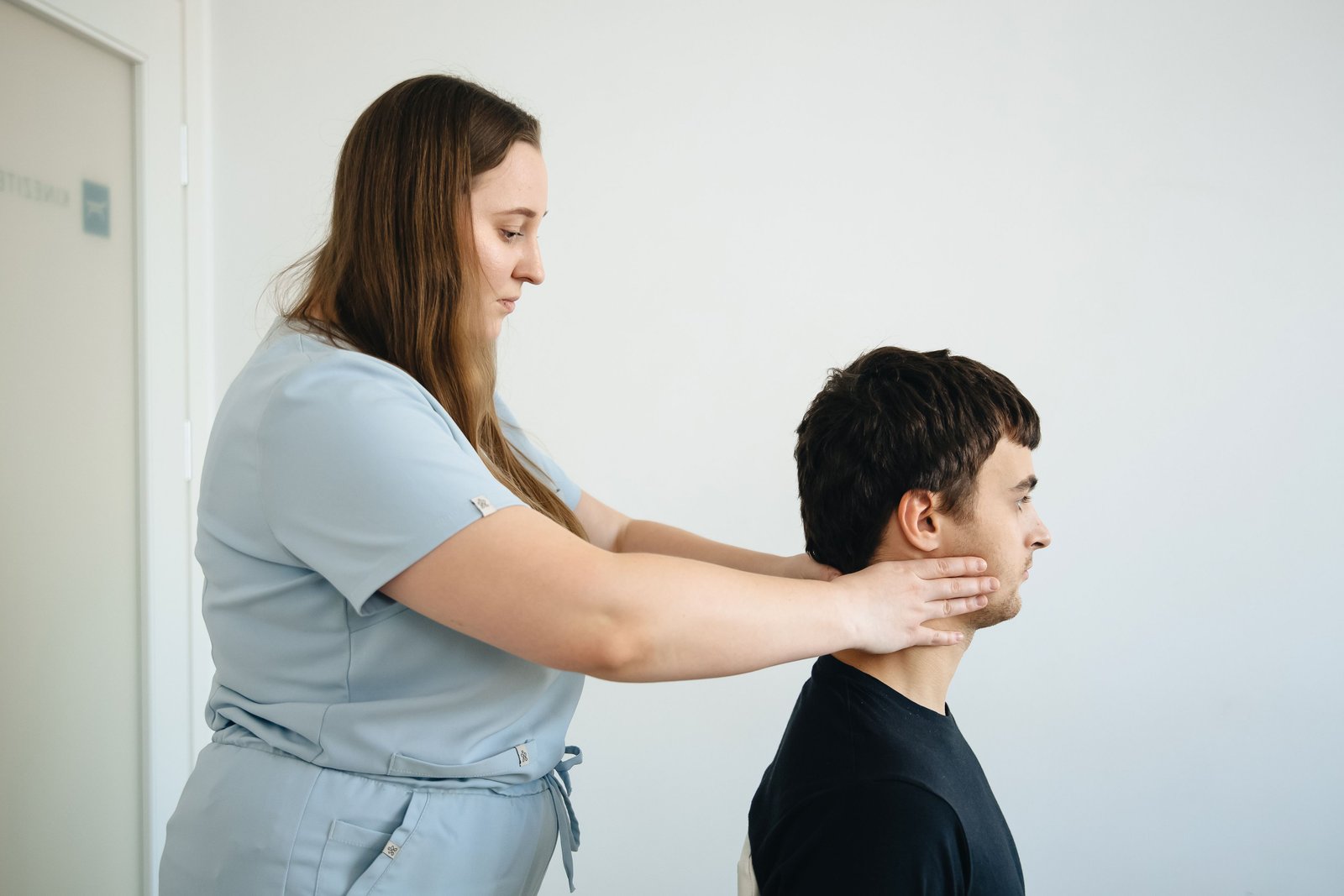
For musculoskeletal base-of-skull pain, once anything more serious has been ruled out, a proper assessment identifies whether muscle tension, joint restriction, or a combination of both is driving your particular pain, rather than treating it as one generic problem. Impact Sports Rehabilitation approaches this with hands-on treatment matched to what’s actually found on assessment.
Sports massage is often genuinely effective for releasing tight suboccipital muscles and the surrounding neck and shoulder tension that frequently accompanies this kind of pain. Some clients also find acupuncture helpful for managing persistent muscular tension in this area once serious causes have been appropriately ruled out.
When To See Someone Rather Than Wait It Out
Mild, occasional base-of-skull discomfort that improves with rest, movement, or a change in posture is reasonable to self-manage for a week or two. Pain that’s persistent beyond that, gradually worsening, or significantly affecting your daily activity is worth having properly assessed rather than continuing to guess at the cause.
Many people find that once they understand this is likely muscular rather than something more serious, the anxiety around the pain itself eases, even before the physical symptoms have fully resolved. If you’re genuinely unsure which category your symptoms fall into, that uncertainty itself is a reasonable enough reason to get checked.
If your neck-driven headache has already been identified and you’re looking for specific home exercises, our guide to cervicogenic headache treatment at home covers that in detail. If instead your neck pain and headache both feel unusually severe together, our companion article on severe neck pain and headache base of skull addresses that more concerning presentation specifically.
If pain at the base of your skull is becoming a regular problem, Impact Sports Rehabilitation works with clients across Eccles, Salford, Trafford, and the wider Greater Manchester area on identifying and treating the actual cause. Ask about an online consultation if you’re further afield.
Frequently Asked Questions
Is pain at the base of my skull something to be worried about?
In most cases, no, this kind of pain is musculoskeletal and related to muscle tension or joint irritation rather than anything serious. That said, sudden severe headache, pain after trauma, fever with neck stiffness, or neurological symptoms like weakness or numbness are exceptions that need urgent medical attention.
Why does the pain seem to get worse when I look down at my phone?
Looking down for long periods increases the load on the suboccipital muscles and upper neck joints, which is a very common trigger for this type of pain. Many people find taking regular breaks to bring their head back to a neutral position genuinely reduces how often this pain flares up.
Could this be something serious like a brain problem rather than just my neck?
It’s understandable to worry about that, but the vast majority of base-of-skull pain is musculoskeletal in origin rather than related to the brain itself. The red flag symptoms covered above, sudden severe headache, trauma, fever with stiffness, or neurological symptoms, are what would point toward something needing urgent attention rather than everyday muscular pain.
I’ve had this dull ache for weeks now, should I just keep waiting for it to go away?
Pain that’s persisted for weeks without improvement is worth having properly assessed rather than continuing to wait it out. In our experience at Impact Sports Rehabilitation, a lot of persistent base-of-skull pain responds well once the actual muscular or joint contributor is identified and treated directly.
Does bad posture at my desk really cause this kind of pain?
Yes, genuinely, a forward head posture held for hours at a desk places sustained load on exactly the muscles most commonly involved in this type of pain. Many people find that addressing their desk setup and taking regular movement breaks makes a real, noticeable difference over a few weeks.
This article is provided for general educational purposes by Impact Sports Rehabilitation and does not constitute medical advice, diagnosis, or treatment. Anyone experiencing a sudden severe headache, pain following significant trauma, fever with neck stiffness, or neurological symptoms such as weakness, numbness, or vision changes should seek emergency medical attention immediately; nothing in this article should be used to self-diagnose. Always seek the guidance of a doctor or other qualified health provider with any questions about your specific symptoms.